
The Migration Period (c. 300–700 CE): The …
Years: 244 - 387
The Migration Period (c. 300–700 CE): The Transition from Late Antiquity to the Early Middle Ages
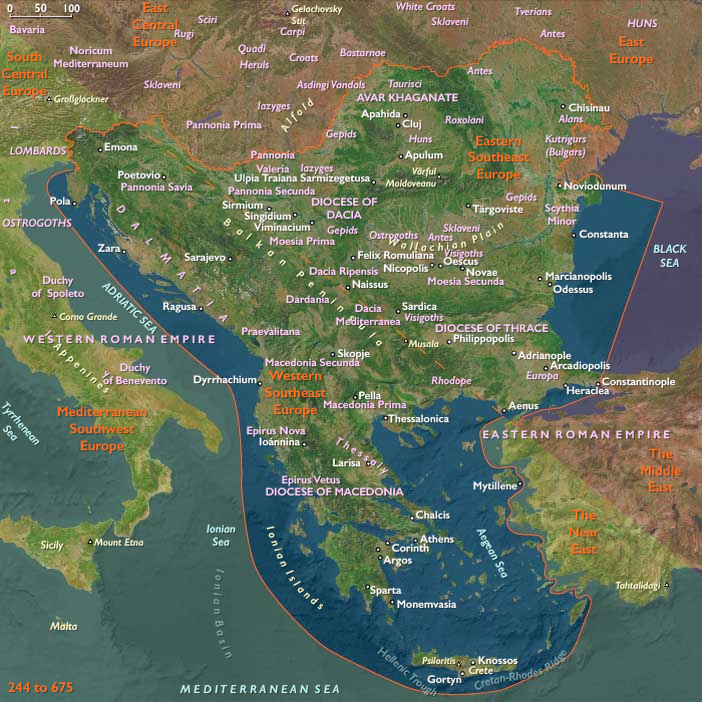
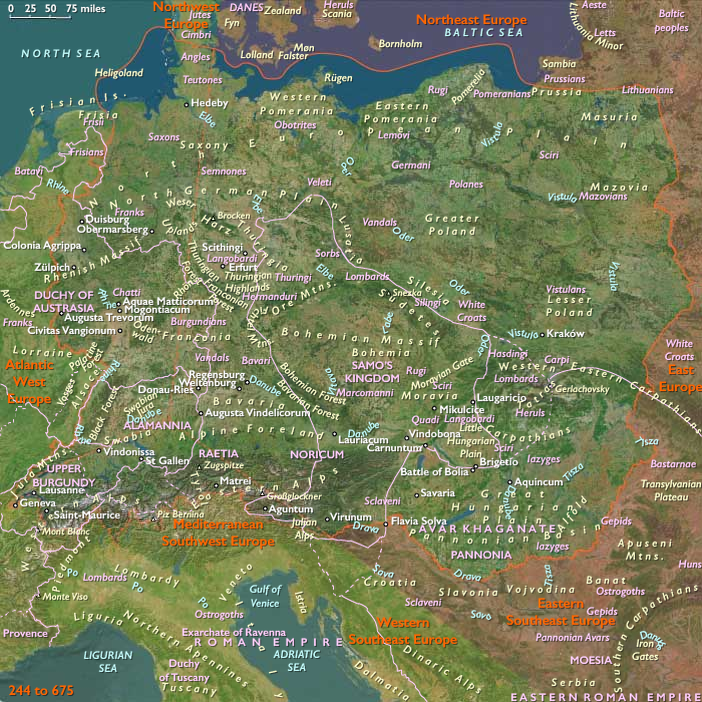
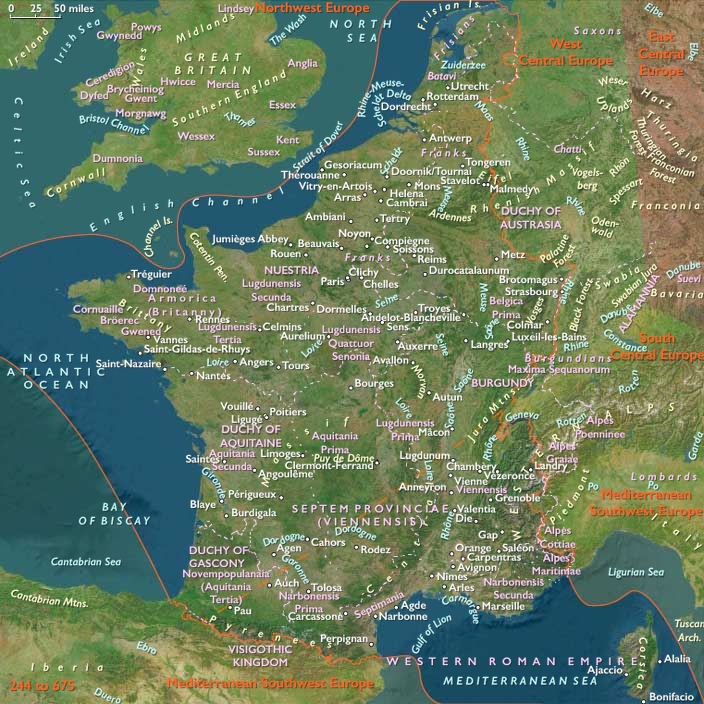
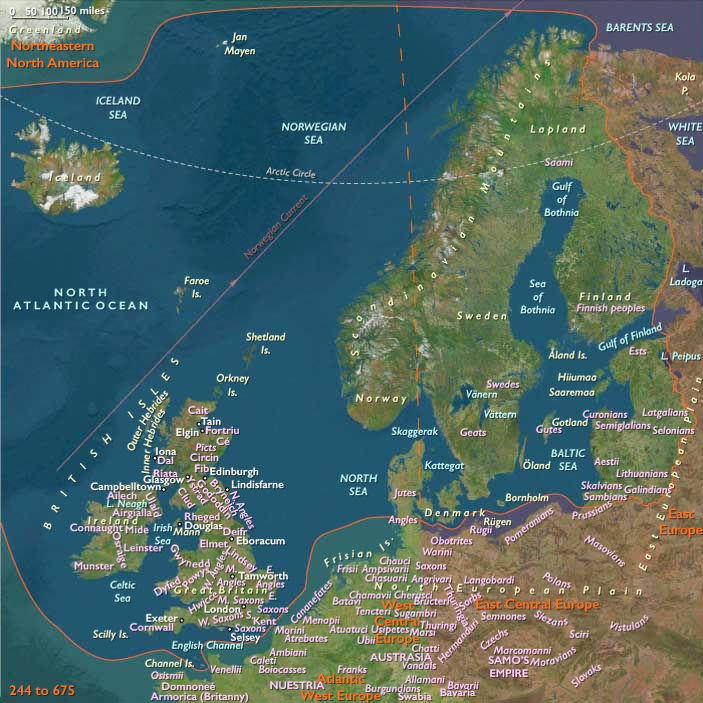
The Migration Period, also known as the Völkerwanderung ("wandering of peoples"), was a major human migration that took place in Europe between roughly 300 and 700 CE, marking the transition from Late Antiquity to the Early Middle Ages. From the Roman and Greek perspective, it is often referred to as the "Barbarian Invasions."
Causes of the Migration
Several factors contributed to the mass movement of peoples across Europe:
-
The Hunnic Incursions (4th–5th centuries)
- The Huns, a nomadic people possibly of Turkic or Mongolic origin, swept into Eastern Europe from Central Asia.
- Their advance forced Germanic and other tribes to flee westward, triggering further migrations.
-
Turkic and Steppe Migrations
- The early Turkic expansion and shifting power dynamics in Central Asia contributed to displacements among nomadic groups.
-
Population Pressures and Climate Change
- Environmental changes and resource depletion in certain regions may have compelled migrations.
- Overpopulation or crop failures in northern Europe might have prompted tribes to seek new lands.
Key Migratory Groups and Their Impact
- Goths – Split into Visigoths and Ostrogoths, they played key roles in the fall of the Western Roman Empire.
- Vandals – Migrated through Gaul and Spain, eventually sacking Rome in 455 CE before establishing a kingdom in North Africa.
- Suebi – Settled in northwestern Iberia, forming the Kingdom of Galicia (modern Portugal and Spain).
- Franks – Established the Frankish Kingdom, which evolved into modern France and Germany.
- Bulgars, Slavs, and Alans – Entered the Balkans and Eastern Europe, reshaping its ethnic and linguistic landscape.
Continuation of Migrations Beyond 700 CE
Migrations did not stop in 700 CE; instead, successive waves of nomadic and Slavic peoples continued reshaping Europe:
- Slavs – Expanded across Central and Eastern Europe, influencing later Slavic nations.
- Avars, Bulgars, and Hungarians – Established powerful steppe empires in Eastern Europe.
- Pechenegs, Cumans, and Tatars – Continued nomadic invasions into Byzantium and Kievan Rus’ in the medieval period.
Significance of the Migration Period
- Led to the decline of the Western Roman Empire (476 CE) and the foundation of early medieval European kingdoms.
- Marked the cultural and linguistic transformation of Europe, laying the groundwork for medieval political structures.
- Accelerated the fusion of Roman, Germanic, and steppe influences, which defined the social, legal, and economic systems of medieval Europe.
The Migration Period was a defining era in European history, setting the stage for feudal societies, the rise of new kingdoms, and the shaping of modern European nations.
Groups
- Vandals (East Germanic tribe)
- Goths (East Germanic tribe)
- Germans
- Suebi (Suevi), Realms of the
- Roman Empire (Rome): Non-dynastic
- Roman Empire: Tetrarchy
- Bulgars
- Roman Empire: Constantinian dynasty (Nicomedia)
- Roman Empire: Constantinian dynasty (Constantinople)
- Roman Empire: Valentinian dynasty (Rome)
- Roman Empire: Theodosian dynasty (Constantinople)
Topics
- Crisis of the Third Century (Roman Civil “War” of 235-84)
- Roman Gothic War, First
- Roman Gothic War, Second
- Roman Gothic War, Third
- Roman-Alemannic War of 271
- Aurelian's War against Tetricus
- Migration Period
- Visigothic Raids on the Roman Empire, Early
- Gothic-Sarmatian War
- Roman Gothic War, Fourth
- Roman War with the Quadi and Sarmatians
- Hun Raids on the Roman Empire
- Roman Gothic War, Fifth, or Gothic War (376–382)
- Fall of the Western Roman Empire
Subjects
Regions
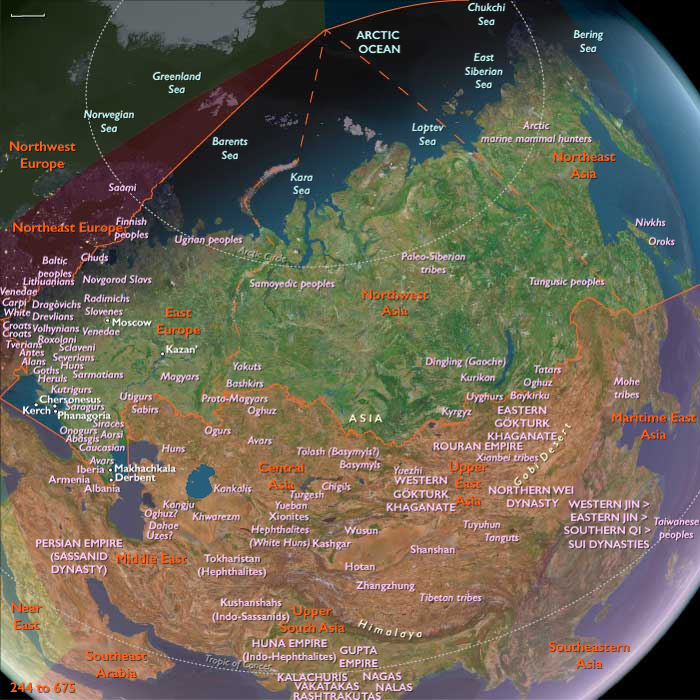
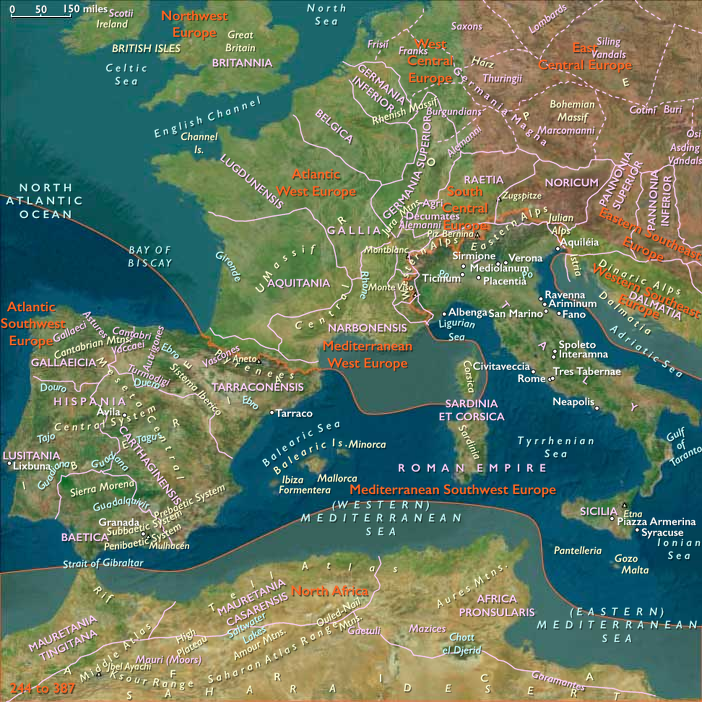
Subregions
- East Europe
- East Central Europe
- Eastern Southeast Europe
- Western Southeast Europe
- South Central Europe
- Mediterranean West Europe
- Mediterranean Southwest Europe
- Atlantic Southwest Europe
- Atlantic West Europe
- West Central Europe
- Northwest Europe
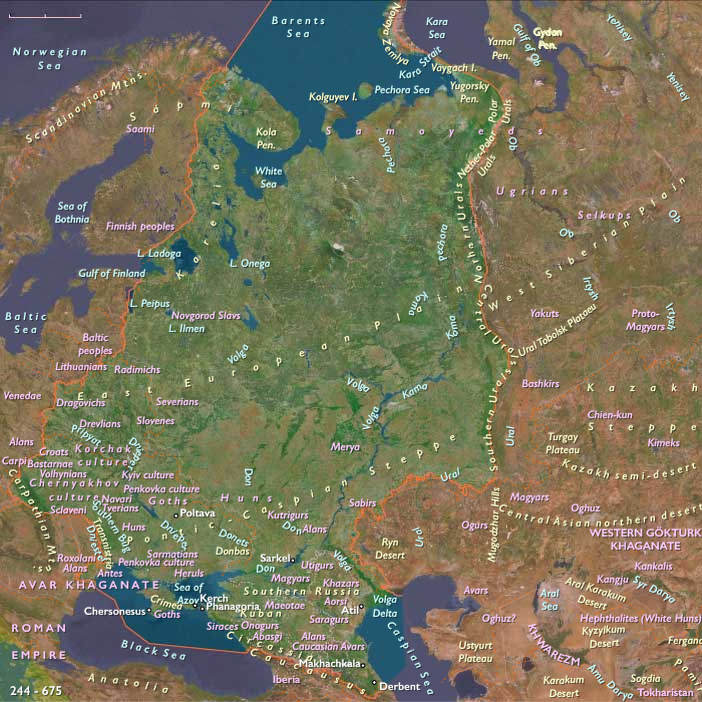
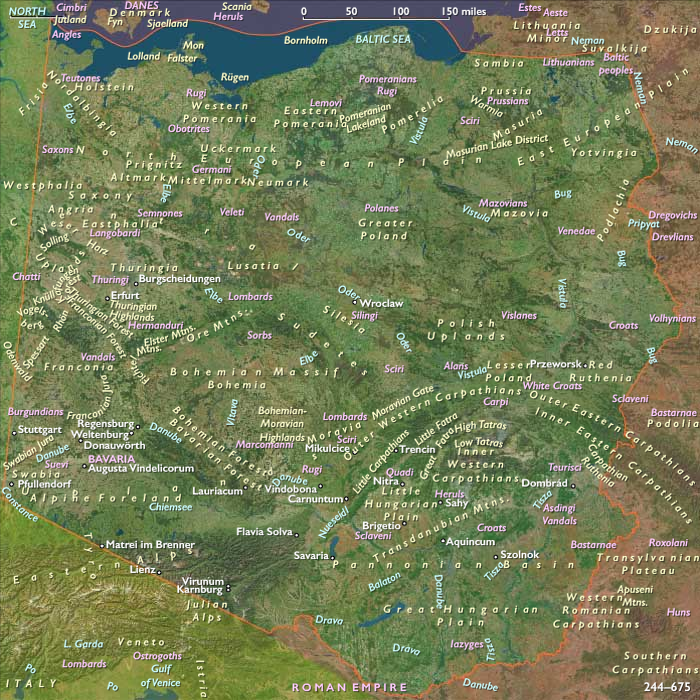
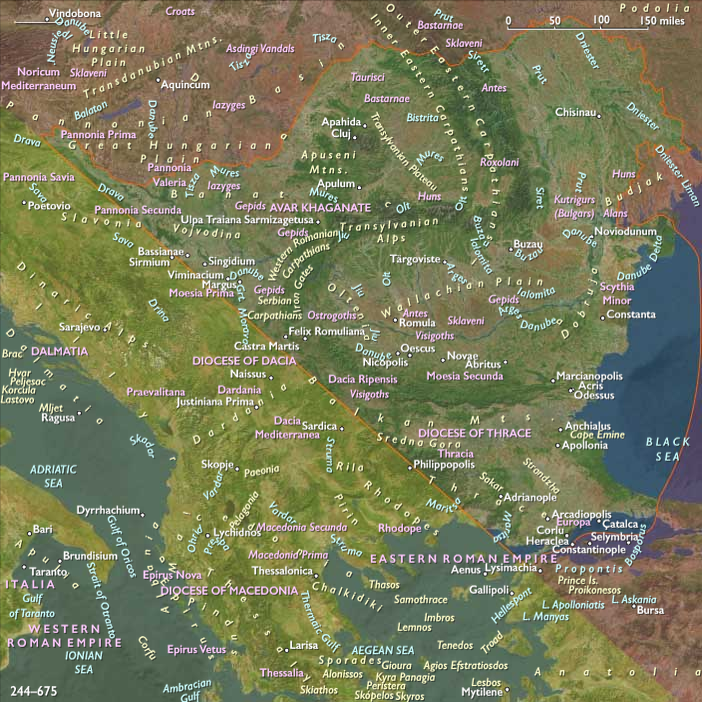
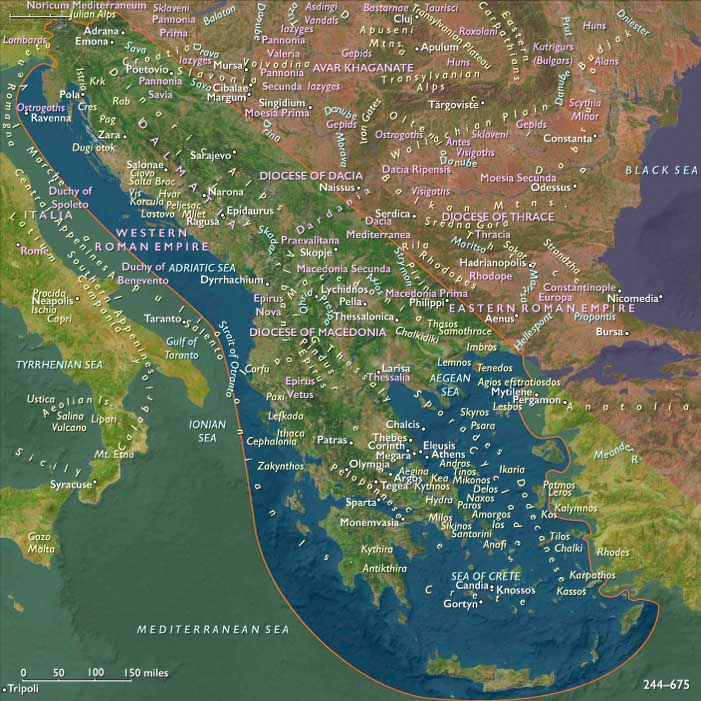
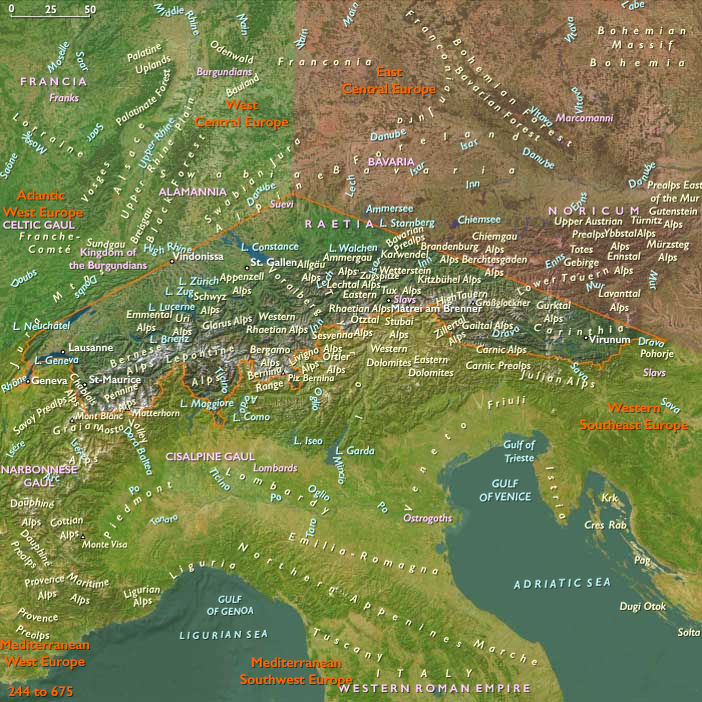
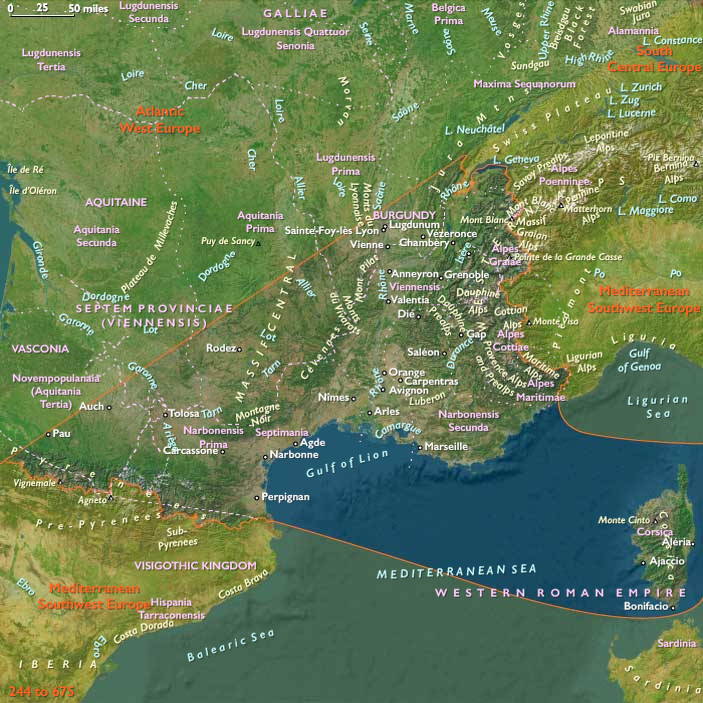
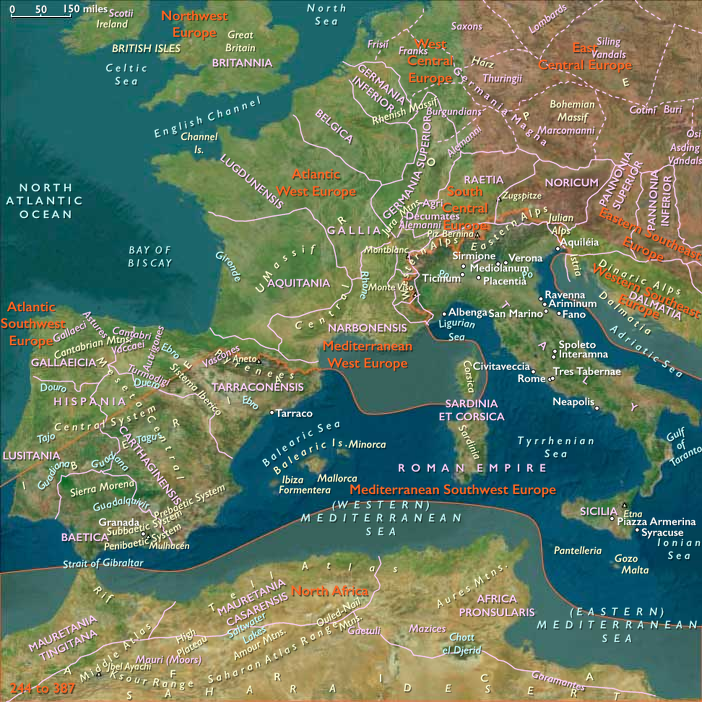
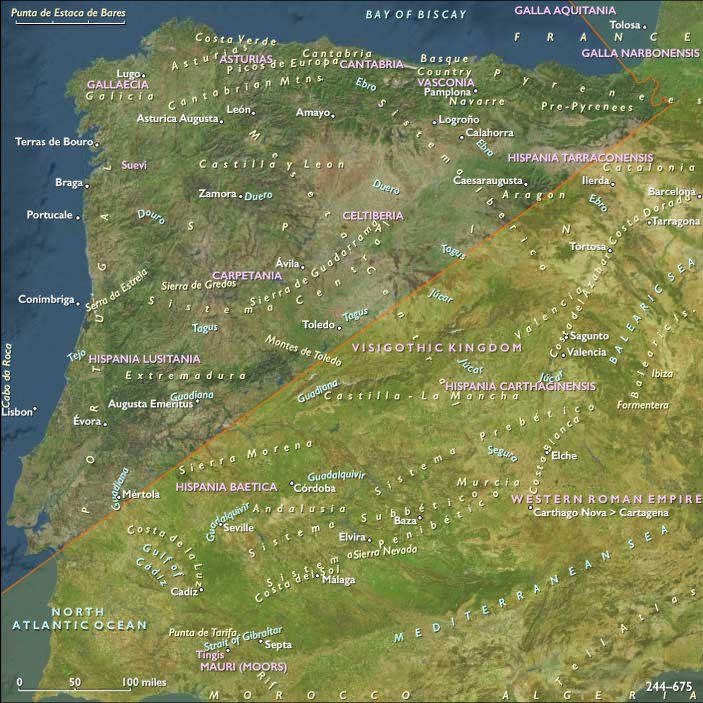
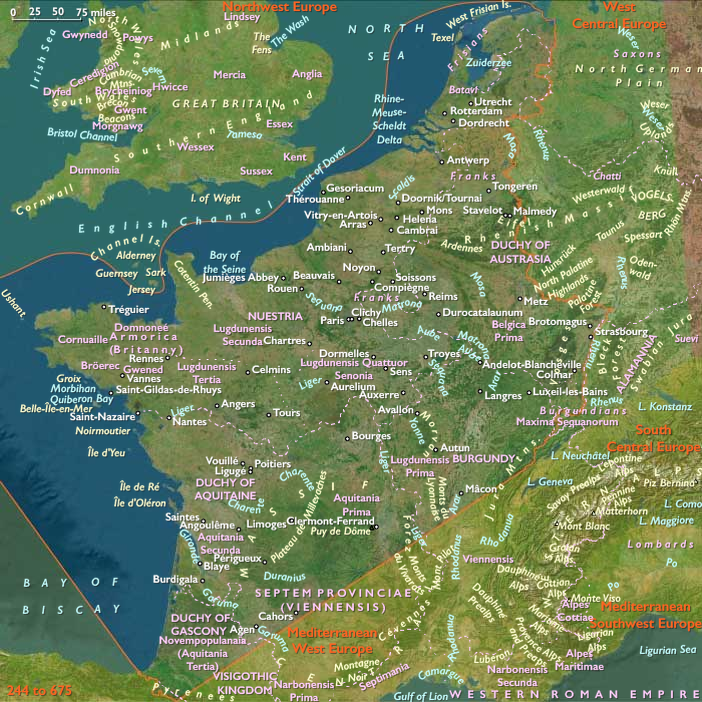
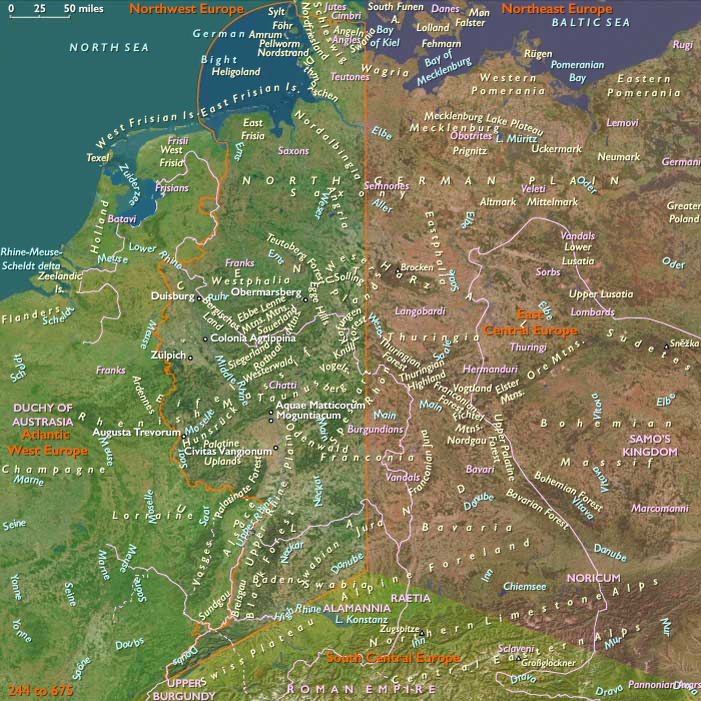
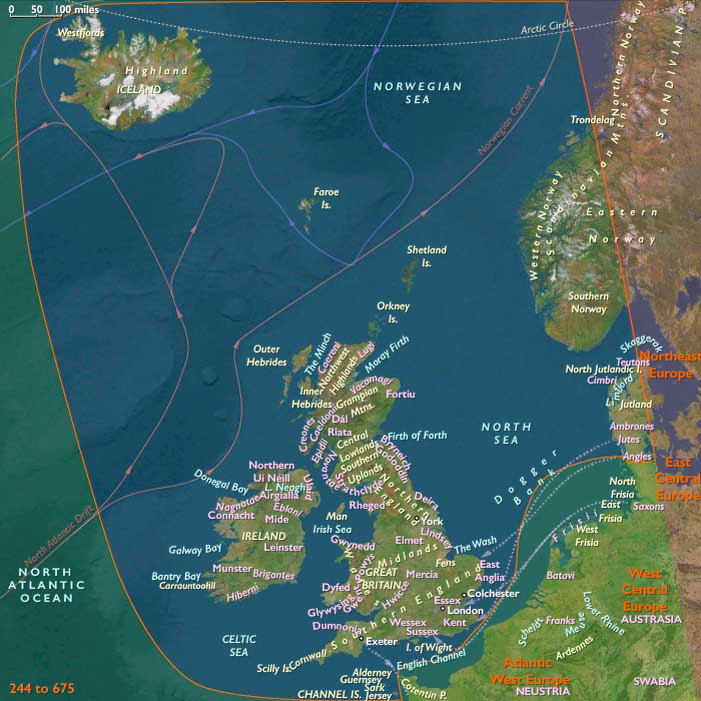
Years: 244 - 387
Groups
- Vandals (East Germanic tribe)
- Goths (East Germanic tribe)
- Germans
- Suebi (Suevi), Realms of the
- Roman Empire (Rome): Non-dynastic
- Roman Empire: Tetrarchy
- Bulgars
- Roman Empire: Constantinian dynasty (Nicomedia)
- Roman Empire: Constantinian dynasty (Constantinople)
- Roman Empire: Valentinian dynasty (Rome)
- Roman Empire: Theodosian dynasty (Constantinople)
Topics
- Crisis of the Third Century (Roman Civil “War” of 235-84)
- Roman Gothic War, First
- Roman Gothic War, Second
- Roman Gothic War, Third
- Roman-Alemannic War of 271
- Aurelian's War against Tetricus
- Migration Period
- Visigothic Raids on the Roman Empire, Early
- Gothic-Sarmatian War
- Roman Gothic War, Fourth
- Roman War with the Quadi and Sarmatians
- Hun Raids on the Roman Empire
- Roman Gothic War, Fifth, or Gothic War (376–382)
- Fall of the Western Roman Empire
Subjects
Regions
Subregions
- East Europe
- East Central Europe
- Eastern Southeast Europe
- Western Southeast Europe
- South Central Europe
- Mediterranean West Europe
- Mediterranean Southwest Europe
- Atlantic Southwest Europe
- Atlantic West Europe
- West Central Europe
- Northwest Europe