
Atlantic West Europe (964 – 1107 CE): …
Years: 964 - 1107
Atlantic West Europe (964 – 1107 CE): Capetian Takeoff, Norman and Breton Power, and the Poitou–Bordeaux Arteries
Geographic and Environmental Context
-
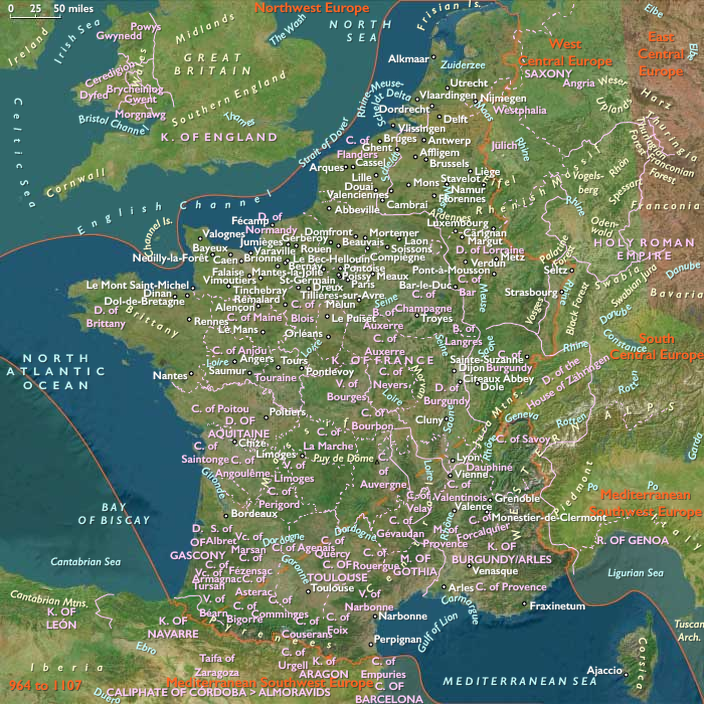
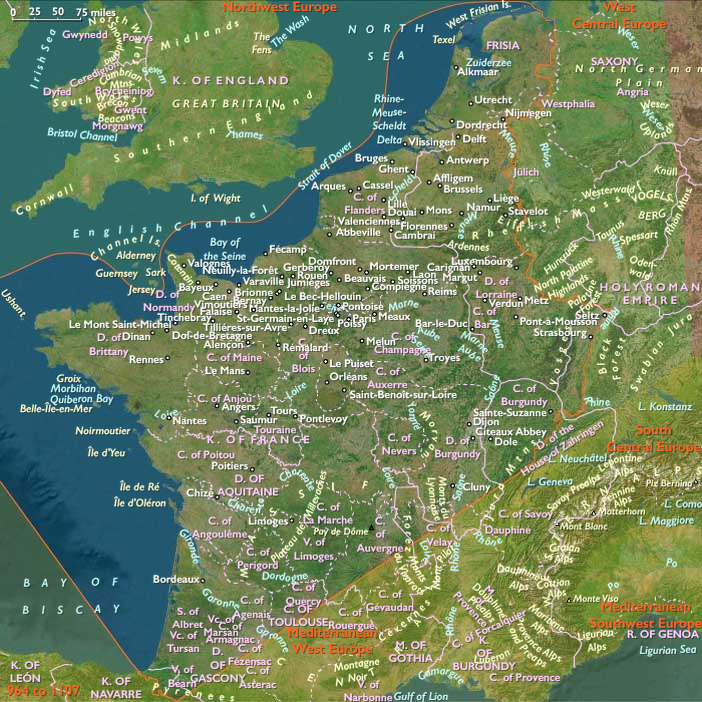
Anchors: Paris–Seine, Upper Loire (Orléans–Blois–Tours), Poitou–La Rochelle, Bordeaux–Gironde–Bayonne, Brittany/Normandy coasts, Flanders/Artois and Low Countries.
Climate and Environmental Shifts
-
Warm, stable conditions favored grain/vine expansion; new embankments and dikes reclaimed Flanders and the Aunis/Saintonge marsh fringe.
Societies and Political Developments
-
Capetian monarchy (from Hugh Capet, 987) consolidated the Île-de-France.
-
Normandy matured into a ducal powerhouse; William the Conqueror’s victory (1066) bound the Channel world.
-
Anjou under Fulk III “Nerra” (d. 1040) and successors castle-built across Anjou–Touraine–Maine, reshaping frontier lordship.
-
Duchy of Aquitaine (Poitiers–Bordeaux) reached cultural and political prominence under William IX and X.
-
Flanders prospered through comital patronage and urban charters.
Economy and Trade
-
La Rochelle and Bordeaux developed as wine–salt ports; Nantes exported salt fish and grain; Rouen handled Seine riverine commerce.
-
Flanders/Low Countries: cloth industry based on English wool; canal networks multiplied.
Belief and Symbolism
-
Romanesque abbeys and pilgrim routes (the Via Turonensis through Tours and Poitiers) to Santiago de Compostela energized the west.
Long-Term Significance
By 1107, Capetians anchored the Seine–Loire heartland; Normans dominated the Channel; Aquitaine flourished; Flanders led Europe’s cloth—setting up the 12th-century surge.
Atlantic West Europe (with civilization) ©2024-25 Electric Prism, Inc. All rights reserved.
People
- Baldwin IV of Flanders
- Baldwin V of Flanders
- Baldwin VI
- Fulk III
- Hugh Capet
- Richard I of Normandy
- Richard II, Duke of Normandy
- William IX, Duke of Aquitaine
- William X, Duke of Aquitaine
- William the Conqueror
Groups
- Frisians
- Aquitaine, (Carolingian) Kingdom of
- Flemish people
- Francia Occidentalis (West Francia, or France), Kingdom of
- Flanders, County of
- Anjou, County of
- Normandy, Duchy of
- England, (Anglo-Saxon) Kingdom of
- Brittanny, Duchy of
- Normans
- Germany, Kingdom of (within the Holy Roman Empire)
- Italy, Kingdom of (Holy Roman Empire)
- Holy Roman Empire
- French people (Latins)
- Aquitaine, (Angevin) Duchy of
- Burgundy, County of
- France, (Capetian) Kingdom of
- England, (Danish) Kingdom of
- Burgundy, Duchy of
- England, (Anglo-Saxon) Kingdom of
- Christians, Roman Catholic
- England, (Norman) Kingdom of
- Holland, County of
- English people
Topics
- Medieval Warm Period (MWP) or Medieval Climate Optimum
- Western Architecture: 964 to 1108
- East–West Schism
- Hastings, Battle of
- Norman Conquest of England
- Cassel, Battle of
- Investiture Controversy
- Crusade, First
Commodoties
Subjects
- Commerce
- Architecture
- Watercraft
- Sculpture
- Conflict
- Faith
- Government
- Scholarship
- Custom and Law
- Theology
Regions
Subregions
Related Events
Showing 10 events out of 11 total
Years: 964 - 1107
Atlantic West Europe (with civilization) ©2024-25 Electric Prism, Inc. All rights reserved.
People
- Baldwin IV of Flanders
- Baldwin V of Flanders
- Baldwin VI
- Fulk III
- Hugh Capet
- Richard I of Normandy
- Richard II, Duke of Normandy
- William IX, Duke of Aquitaine
- William X, Duke of Aquitaine
- William the Conqueror
Groups
- Frisians
- Aquitaine, (Carolingian) Kingdom of
- Flemish people
- Francia Occidentalis (West Francia, or France), Kingdom of
- Flanders, County of
- Anjou, County of
- Normandy, Duchy of
- England, (Anglo-Saxon) Kingdom of
- Brittanny, Duchy of
- Normans
- Germany, Kingdom of (within the Holy Roman Empire)
- Italy, Kingdom of (Holy Roman Empire)
- Holy Roman Empire
- French people (Latins)
- Aquitaine, (Angevin) Duchy of
- Burgundy, County of
- France, (Capetian) Kingdom of
- England, (Danish) Kingdom of
- Burgundy, Duchy of
- England, (Anglo-Saxon) Kingdom of
- Christians, Roman Catholic
- England, (Norman) Kingdom of
- Holland, County of
- English people
Topics
- Medieval Warm Period (MWP) or Medieval Climate Optimum
- Western Architecture: 964 to 1108
- East–West Schism
- Hastings, Battle of
- Norman Conquest of England
- Cassel, Battle of
- Investiture Controversy
- Crusade, First
Commodoties
Subjects
- Commerce
- Architecture
- Watercraft
- Sculpture
- Conflict
- Faith
- Government
- Scholarship
- Custom and Law
- Theology
Regions
Subregions