
Atlantic Southwest Europe: Imperial Ambitions, Maritime Triumphs, …
Years: 1516 - 1527
Atlantic Southwest Europe: Imperial Ambitions, Maritime Triumphs, and Renaissance Splendor (1516–1527)
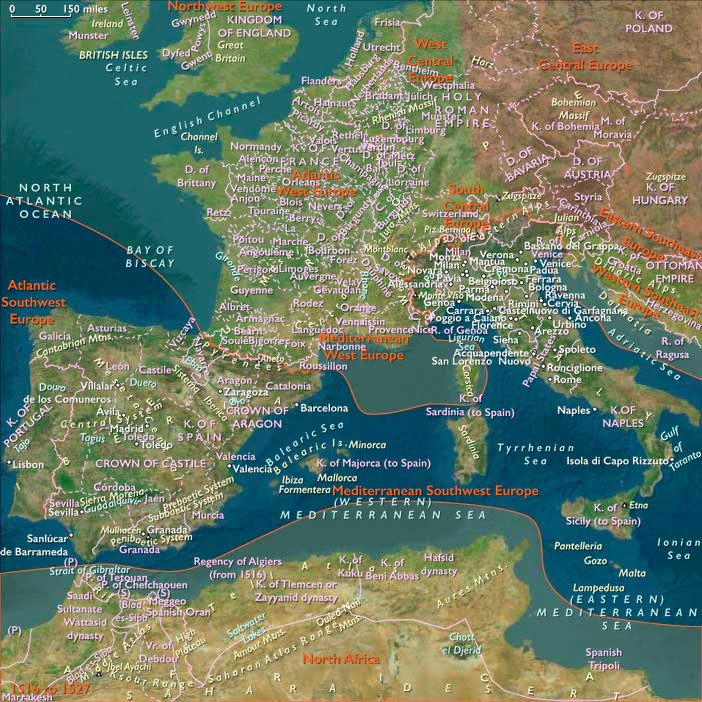
The years 1516–1527 in Atlantic Southwest Europe were marked by sweeping political changes, vibrant maritime empires, and exceptional cultural flourishing. The accession of Charles I (later Holy Roman Emperor Charles V) unified Spanish territories under Habsburg rule, significantly impacting regional dynamics. Portugal, under King Manuel I and subsequently his son João III, further cemented its status as a global trading power. Meanwhile, Navarre’s independence diminished significantly under increasing Spanish control.
Political and Military Developments
-
Spain (Unified Habsburg Domains):
- Charles I (Charles V, 1516–1556) ascended the thrones of Castile, León, and Aragon in 1516, initiating an era of Habsburg dominance. His rule unified Spanish territories, intensifying centralization and consolidating royal authority throughout Castile, León, Galicia, and the Basque provinces.
- Charles’s imperial ambitions led to repeated confrontations with France, significantly influencing territorial control, particularly along the Pyrenean frontier, and shaping diplomatic relations in northern Navarre and Basque Country.
-
Portugal:
- Manuel I (d. 1521) continued the expansionist and prosperous reign begun in 1495, establishing a powerful global empire with possessions stretching from Africa to Asia.
- João III (r. 1521–1557) inherited an economically vibrant yet increasingly challenged empire, initiating greater centralization of royal authority, deepening the role of the Church, and intensifying involvement in global missionary activities.
-
Navarre:
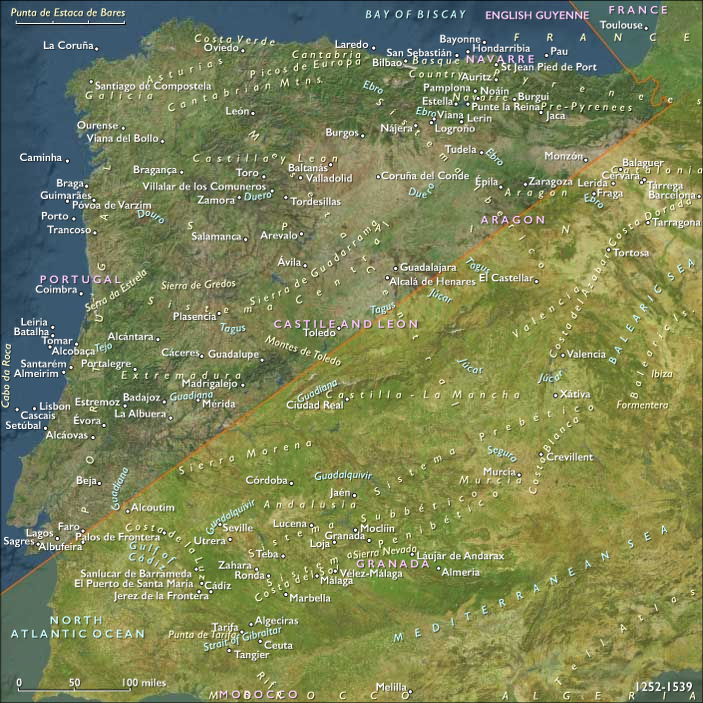
- The Kingdom of Navarre, significantly weakened following Ferdinand’s invasion in 1512, lost nearly all territory south of the Pyrenees to Spain. Its remaining territories north of the mountains, around Pamplona, maintained limited autonomy under French influence, marking a decisive shift away from independence toward division between French and Spanish influence.
Economic and Maritime Expansion
-
Spanish Transatlantic Growth:
- Spain consolidated its American empire, establishing more permanent colonial governance structures and rapidly increasing shipments of gold and silver back to Europe. Atlantic trade through northern Spanish ports (Bilbao, Santander, San Sebastián) flourished, fueling regional economic prosperity.
-
Portugal’s Global Commercial Empire:
- Portugal maintained and expanded its dominance of the maritime spice trade, solidifying commercial outposts in India, East Africa, and Southeast Asia. Lisbon became a thriving international trading hub, receiving spices, precious stones, silk, and exotic goods.
- Increasing wealth from overseas commerce supported ambitious construction and urban development projects, transforming Portuguese cities and enhancing their cultural prominence.
-
Navarre’s Economic Realignment:
- Northern Navarre’s economic life became increasingly tied to France, while southern regions integrated more fully into Castile’s economic and administrative system, affecting trade patterns and local prosperity.
Cultural and Social Developments
-
Spanish Renaissance and Humanism:
- Spain experienced a vibrant cultural flowering, with royal patronage supporting artistic and literary projects. Humanist scholars flourished, producing influential works deeply influenced by the broader European Renaissance.
- Increasing religious uniformity under Charles V began influencing cultural and social norms, setting the stage for intensified religious orthodoxy in later periods.
-
Portuguese Manueline Style and Cultural Splendor:
- The artistic brilliance of the Portuguese Manueline period reached maturity, visible in iconic structures such as the completed Belém Tower (Torre de Belém) and the richly ornamented Jerónimos Monastery.
- João III’s court emphasized both cultural sophistication and religious orthodoxy, inviting numerous intellectuals, artists, and religious figures from across Europe.
-
Cultural Resilience in Navarre:
- Despite political pressures, Navarre preserved its distinctive Basque cultural identity, though increasingly under influence from neighboring Spanish and French traditions, reflected in local art, architecture, and language.
Significance and Legacy
Between 1516–1527, Atlantic Southwest Europe experienced transformative changes in governance, global trade dominance, and cultural expression. Habsburg Spain’s imperial ambition profoundly reshaped the region’s political landscape, consolidating Spain’s global power. Portugal's continued maritime prominence ensured lasting economic prosperity and cultural influence. The decisive weakening of Navarre’s independence marked a permanent geopolitical realignment, setting the stage for future tensions and cultural shifts. This period’s dynamic interplay of politics, economics, and culture established foundational patterns that would endure throughout the early modern era.
People
Groups
Topics
Commodoties
Subjects
Regions
Subregions
Years: 1516 - 1527
People
Groups
Topics
Commodoties
Subjects
Regions
Subregions