
The War of the Succession of Flanders …
Years: 1252 - 1252
The War of the Succession of Flanders and Hainaut: Dynastic Struggles and Royal Arbitration
The War of the Succession of Flanders and Hainaut stemmed from competing claims to the inheritance of Margaret II, Countess of Flanders and Hainaut. The conflict arose between the sons of her first husband, Bouchard of Avesnes—from whom her sister, Countess Joan of Flanders, had forced her to divorce—and those of her second husband, William II of Dampierre. The struggle, which combined dynastic, feudal, and geopolitical tensions, shaped the future of the Low Countries.
The first phase of the conflict erupted upon Margaret’s succession in 1244, pitting her sons John of Avesnes and William of Dampierre—half-brothers—against each other. Their contest for control of Flanders and Hainaut led to open warfare until King Louis IX of France, returning from the Seventh Crusade, intervened in 1246 to mediate a settlement.
Louis, despite lacking formal authority over Hainaut, issued a judgment dividing the inheritance:
- Hainaut was awarded to John of Avesnes, though the county was a fief of the Holy Roman Empire rather than the French Crown.
- Flanders, which was indeed a French fief, was granted to William of Dampierre.
Following the king’s ruling, Margaret transferred the government of Flanders to William in 1247 but retained personal control over Hainaut, refusing to relinquish it to John.
When William of Dampierre died in 1251, Flanders passed to his younger brother Guy, further complicating the dispute. Recognizing that his mother had no intention of handing over Hainaut, John of Avesnes revolted, launching an attack on his half-brother Guy. The war that followed intensified the power struggles within the region, drawing in external powers and shaping the broader political landscape of 13th-century Flanders and Hainaut.
Locations
People
- Charles I of Naples
- Guy of Dampierre
- John of Avesnes
- Louis IX of France
- Margaret II, Countess of Flanders
- William II, Count of Holland
Groups
Topics
Commodoties
Subjects
Regions
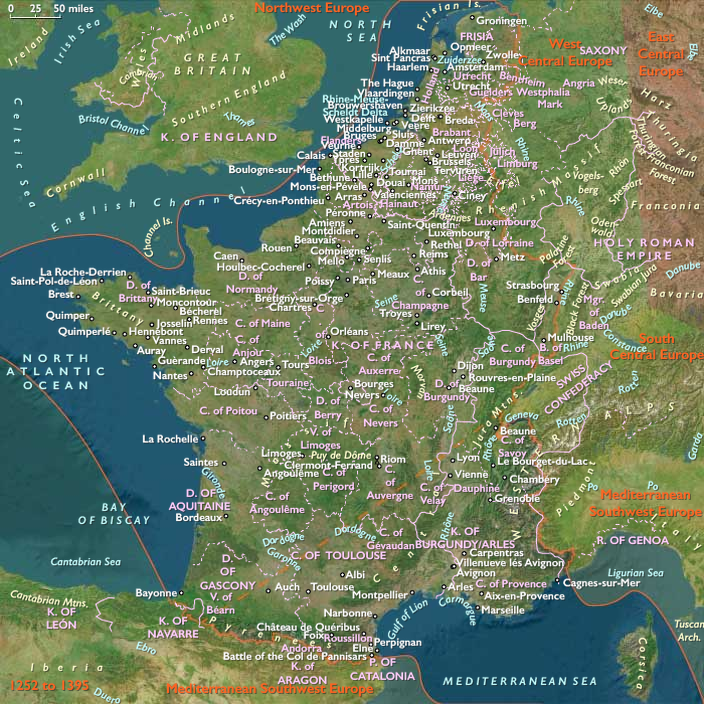
Subregions
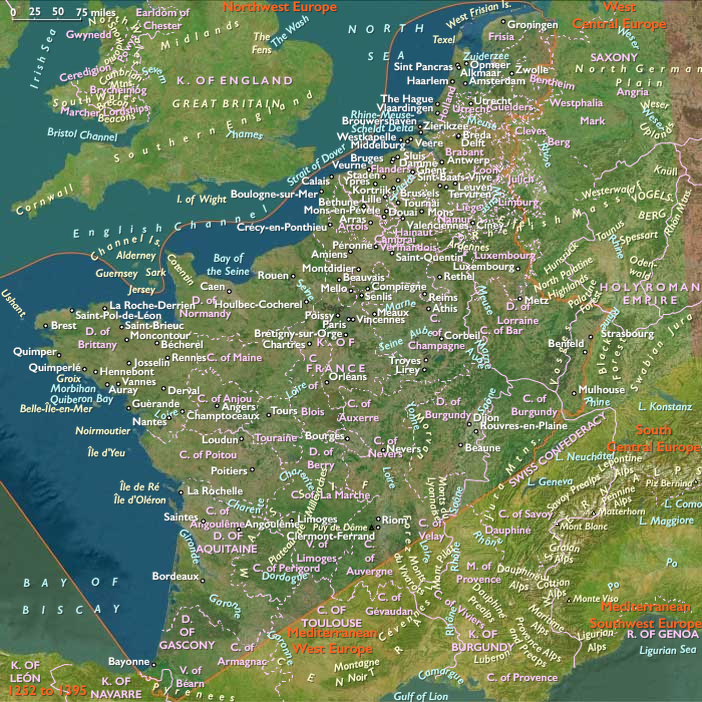
Related Events
Showing 1 events out of 1 total
Years: 1252 - 1252
Locations
People
- Charles I of Naples
- Guy of Dampierre
- John of Avesnes
- Louis IX of France
- Margaret II, Countess of Flanders
- William II, Count of Holland
Groups
Topics
Commodoties
Subjects
Regions
Subregions