
Filters:
he Battle of Cocherel (May 6, 1364): …
Years: 1364 - 1364
he Battle of Cocherel (May 6, 1364): Du Guesclin’s Victory Secures Burgundy for France
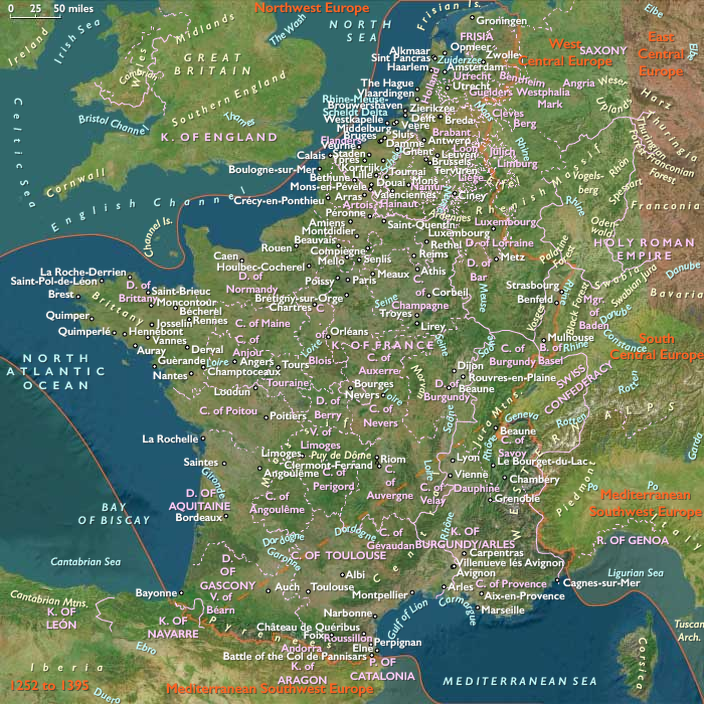
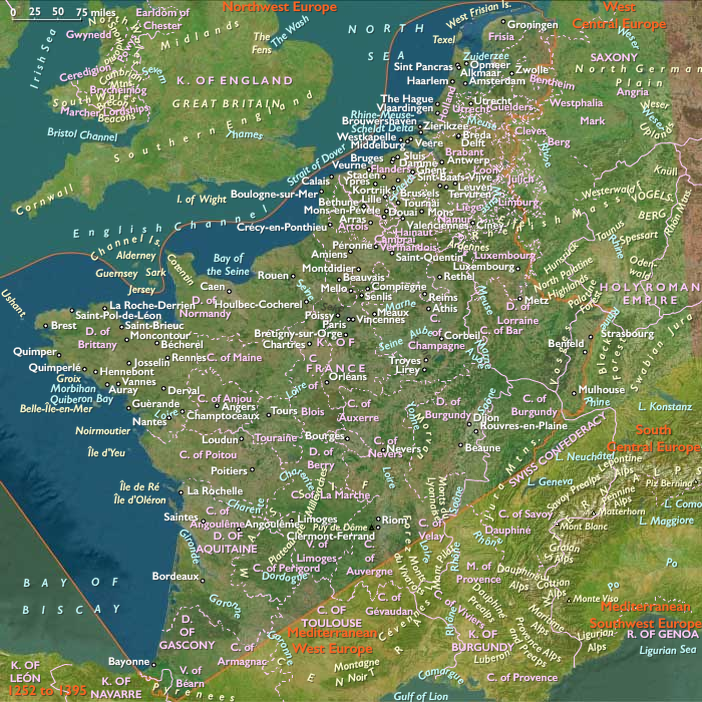
The Battle of Cocherel (May 6, 1364) was a pivotal battle in the Hundred Years' War, where Bertrand du Guesclin, leading the forces of the newly crowned Charles V of France, decisively defeated Charles II of Navarre’s army. This victory secured Burgundy for the French Crown, strengthened King Charles V's authority, and forced Navarre into a new peace agreement.
Background: The Struggle for Burgundy and Navarre’s Ambitions
- After the Battle of Poitiers (1356), France had been destabilized, and Charles II of Navarre sought to expand his influence, hoping to claim the Duchy of Burgundy.
- However, Dauphin Charles (the future Charles V) intended to grant Burgundy to his brother, Philip (later Philip the Bold).
- To neutralize the Navarrese threat, Charles V, shortly before his coronation in 1364, sent Bertrand du Guesclin to confront Navarre’s forces.
The Forces at Cocherel
French Army (Commanded by Bertrand du Guesclin)
- Supported by Jean, Count of Auxerre (the highest-ranking noble present).
- Reinforced by knights from Burgundy (e.g., Jean de Vienne), Picardy, Paris, Gascony, and Brittany.
Navarrese Army (Commanded by Jean de Grailly, Captal de Buch)
- Composed of 800–900 knights and 4,000–5,000 soldiers from:
- Normandy
- Gascony
- England (including 300 English archers)
- Many troops were routiers (mercenary free companies) that had previously operated in Brittany and western France.
Battle Tactics and Du Guesclin’s Strategy
- The Navarrese army took up a defensive position on a hill, using the standard English defensive formation:
- Archers were placed in wedges along the front, designed to decimate an advancing enemy before they reached the main force.
- Rather than engaging directly, du Guesclin used a feigned retreat, luring the Navarrese forces down from their defensive position.
- As the Navarrese pursued, du Guesclin’s reserve forces launched a devastating flank attack, crushing the enemy ranks.
- Jean de Grailly, Captal de Buch, was captured, further demoralizing the Navarrese forces.
Aftermath and Consequences
- Navarre’s forces were decisively defeated, forcing Charles II of Navarre into a new peace treaty with France.
- The victory secured Burgundy for Philip the Bold, ensuring it remained under the control of the French royal family.
- Du Guesclin’s success cemented his reputation as one of France’s greatest military leaders, setting the stage for his future role as Constable of France.
- The Battle of Cocherel marked an early success for Charles V, demonstrating the effectiveness of strategic military leadership over traditional chivalric tactics.
The French victory at Cocherel (1364) was a turning point in securing Valois authority, preventing Navarre from expanding its influence, and reaffirming Burgundy’s loyalty to the French Crown.
Locations
People
- Bertrand du Guesclin
- Charles II, King of Navarre
- Charles V of France
- Edward III of England
- Edward, the Black Prince
- Jean III de Grailly
- Philip the Bold
Groups
- Breton people
- Navarre, Kingdom of
- Gascony, Duchy of
- Burgundy, Duchy of
- England, (Plantagenet, Angevin) Kingdom of
- France, (Valois) Kingdom of
Topics
Commodoties
Subjects
Regions
Subregions
Years: 1364 - 1364
Locations
People
- Bertrand du Guesclin
- Charles II, King of Navarre
- Charles V of France
- Edward III of England
- Edward, the Black Prince
- Jean III de Grailly
- Philip the Bold
Groups
- Breton people
- Navarre, Kingdom of
- Gascony, Duchy of
- Burgundy, Duchy of
- England, (Plantagenet, Angevin) Kingdom of
- France, (Valois) Kingdom of
Topics
Commodoties
Subjects
Regions
Subregions