
Leopold's successor, Charles VI (1711-40), begins building …
Years: 1684 - 1827
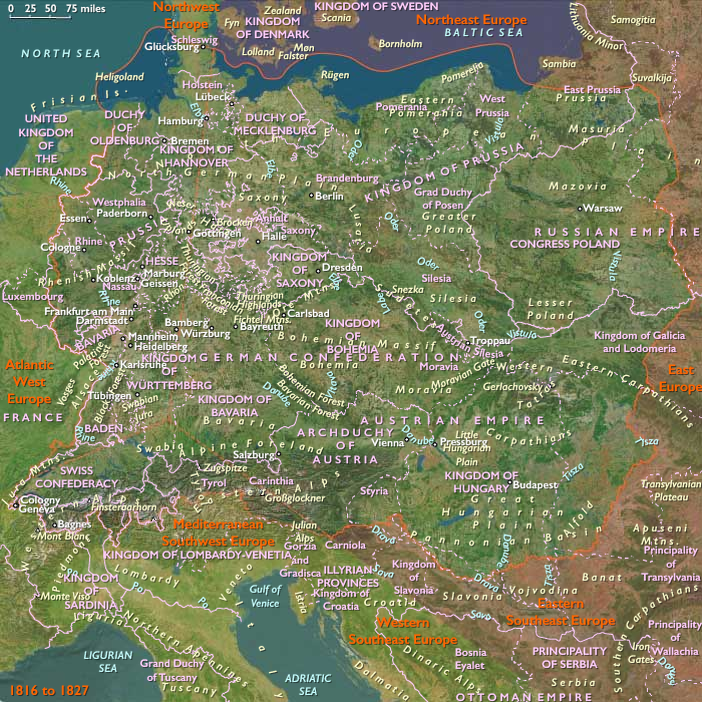
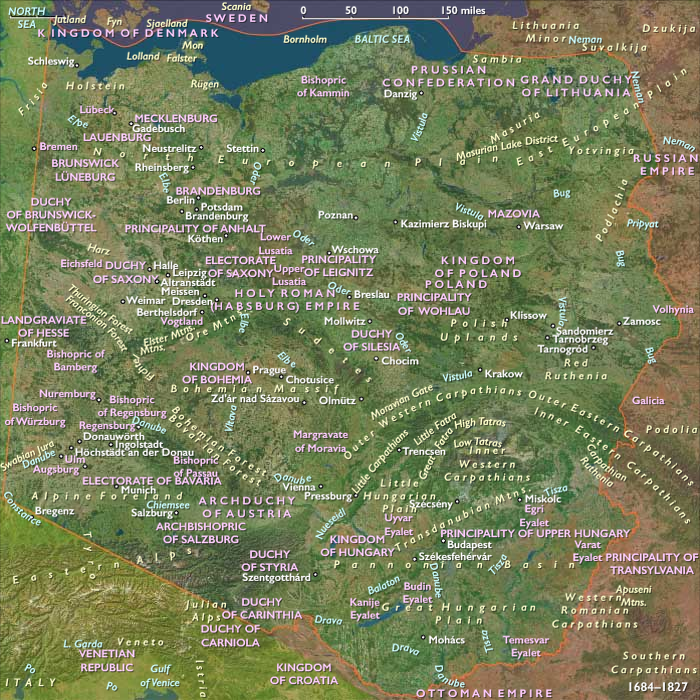
Leopold's successor, Charles VI (1711-40), begins building a workable relationship with Hungary after the Treaty of Szatmar.
Charles needs the Hungarian Diet's approval for the Pragmatic Sanction, under which the Habsburg monarch is to rule Hungary not as emperor but as a king subject to the restraints of Hungary's constitution and laws.
He hopes that the Pragmatic Sanction will keep the Habsburg Empire intact if his daughter, Maria Theresa, succeeds him.
The Diet approves the Pragmatic Sanction in 1723, and Hungary thus agrees to become a hereditary monarchy under the Habsburgs for as long as their dynasty existed.
In practice, however, Charles and his successors govern almost autocratically, controlling Hungary's foreign affairs, defense, and finance but lacking the power to tax the nobles without their approval.
The Habsburgs also maintain Transylvania's separation from Hungary.
Locations
People
Groups
- Transylvania, region of
- Germans
- Hungarian people
- Croats (South Slavs)
- Romanians
- Germany, Kingdom of (within the Holy Roman Empire)
- Christians, Eastern Orthodox
- Christians, Roman Catholic
- Austria, Archduchy of
- Hungary, Kingdom of
- Holy Roman Empire
- Union of Three Nations
- Transylvania (Hungarian governate)
- Turkish people
- Ottoman Empire
- Lutheranism
- Protestantism
- Hungary, Royal
- Croatia, (Habsburg) Kingdom of
- Calvinists
- Hungary, Ottoman
- Hungary (Transylvania), Ottoman vassal Kingdom of
- Unitarians
- Hungary, Kingdom of
- Transylvania (Ottoman vassal), Principality of
Subjects
Regions
Subregions
Years: 1684 - 1827
Locations
People
Groups
- Transylvania, region of
- Germans
- Hungarian people
- Croats (South Slavs)
- Romanians
- Germany, Kingdom of (within the Holy Roman Empire)
- Christians, Eastern Orthodox
- Christians, Roman Catholic
- Austria, Archduchy of
- Hungary, Kingdom of
- Holy Roman Empire
- Union of Three Nations
- Transylvania (Hungarian governate)
- Turkish people
- Ottoman Empire
- Lutheranism
- Protestantism
- Hungary, Royal
- Croatia, (Habsburg) Kingdom of
- Calvinists
- Hungary, Ottoman
- Hungary (Transylvania), Ottoman vassal Kingdom of
- Unitarians
- Hungary, Kingdom of
- Transylvania (Ottoman vassal), Principality of
Subjects
Regions
Subregions