
The decline of the Mughal Empire following …
Years: 1760 - 1760
The decline of the Mughal Empire following the twenty-seven-year Mughal-Maratha war (1680–1707) had led to rapid territorial gains for the Maratha Empire.
Under Peshwa Baji Rao, Gujarat, Malwa and Rajputana had come under Maratha control.
Finally, in 1737, Baji Rao had defeated the Mughals on the outskirts of Delhi and brought much of the former Mughal territories south of Delhi under Maratha control.
Baji Rao's son Balaji Baji Rao (popularly known as Nana Saheb) had further increased the territory under Maratha control by invading Punjab in 1758.
This had brought the Marathas into direct confrontation with the Durrani empire of Ahmad Shah Abdali.
In 1759 he had raised an army from the Pashtun and Baloch tribes and made several gains against the smaller Maratha garrisons in Punjab.
He now joinswith his Indian allies—the Rohilla Afghans of the Gangetic Doab—forming a broad coalition against the Marathas.
The Marathas, under the command of Sadashivrao Bhau, respond by gathering an army of between forty-five thousand to sixty thousand, which is accompanied by roughly two hundred thousand non-combatants, a number of whom are pilgrims desirous of making pilgrimages to Hindu holy sites in northern India.
The Marathas had started their northward journey from Patdur on March 14, 1760.
Both sides had tried to get the Nawab of Awadh, Shuja-ud-Daulah, into their camp.
By late July Shuja-ud-Daulah had made the decision to join the Afghan-Rohilla coalition, preferring to join what is perceived as the "army of Islam".
This is strategically a major loss for the Marathas, since Shuja provides much-needed finances for the long Afghan stay in North India.
The Marathas had gained control of a considerable part of India in the intervening period (1707–1757).
In 1758 they had occupied Delhi, captured Lahore and driven out Timur Shah Durrani, the son and viceroy of the Afghan ruler, Ahmad Shah Abdali.
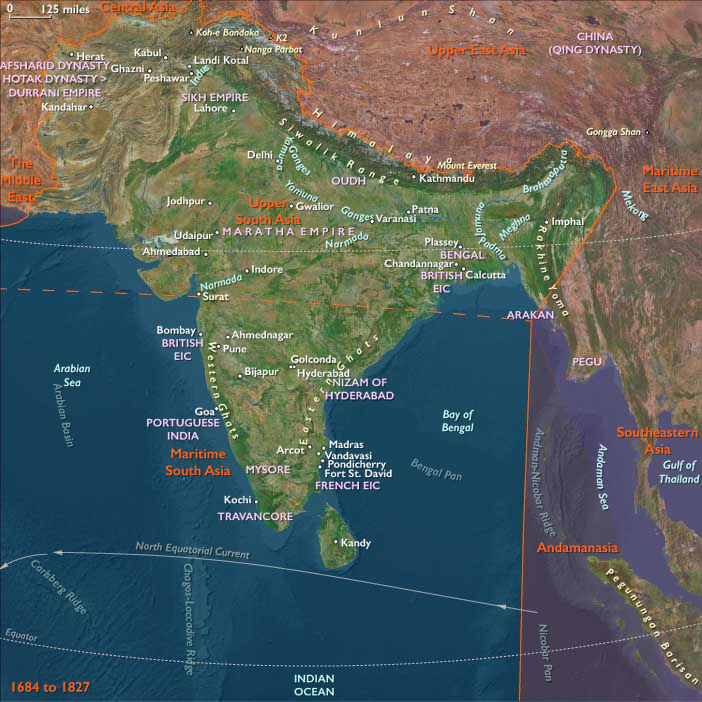
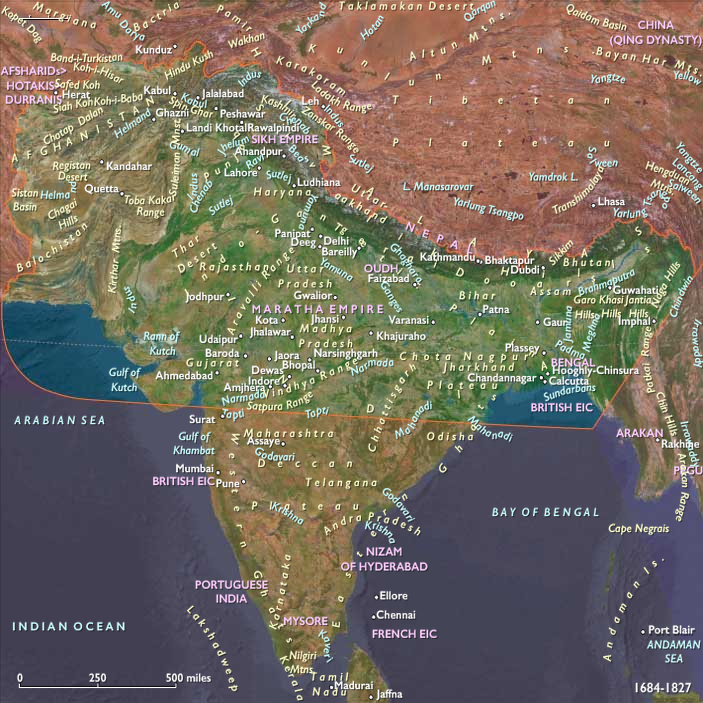
This is the high-water mark of the Maratha expansion, where the boundaries of their empire extend in the north to the Indus and the Himalayas, and in the south nearly to the extremity of the peninsula.
This territory is ruled through the Peshwa, who talks of placing his son Vishwasrao on the Mughal throne.
However, Delhi still remains under the nominal control of Mughals, key Muslim intellectuals including Shah Waliullah and other Muslim clergy in India who are alarmed at these developments.
In desperation they appeal to Ahmad Shah Abdali, the ruler of Afghanistan, to halt the threat
Under Peshwa Baji Rao, Gujarat, Malwa and Rajputana had come under Maratha control.
Finally, in 1737, Baji Rao had defeated the Mughals on the outskirts of Delhi and brought much of the former Mughal territories south of Delhi under Maratha control.
Baji Rao's son Balaji Baji Rao (popularly known as Nana Saheb) had further increased the territory under Maratha control by invading Punjab in 1758.
This had brought the Marathas into direct confrontation with the Durrani empire of Ahmad Shah Abdali.
In 1759 he had raised an army from the Pashtun and Baloch tribes and made several gains against the smaller Maratha garrisons in Punjab.
He now joinswith his Indian allies—the Rohilla Afghans of the Gangetic Doab—forming a broad coalition against the Marathas.
The Marathas, under the command of Sadashivrao Bhau, respond by gathering an army of between forty-five thousand to sixty thousand, which is accompanied by roughly two hundred thousand non-combatants, a number of whom are pilgrims desirous of making pilgrimages to Hindu holy sites in northern India.
The Marathas had started their northward journey from Patdur on March 14, 1760.
Both sides had tried to get the Nawab of Awadh, Shuja-ud-Daulah, into their camp.
By late July Shuja-ud-Daulah had made the decision to join the Afghan-Rohilla coalition, preferring to join what is perceived as the "army of Islam".
This is strategically a major loss for the Marathas, since Shuja provides much-needed finances for the long Afghan stay in North India.
The Marathas had gained control of a considerable part of India in the intervening period (1707–1757).
In 1758 they had occupied Delhi, captured Lahore and driven out Timur Shah Durrani, the son and viceroy of the Afghan ruler, Ahmad Shah Abdali.
This is the high-water mark of the Maratha expansion, where the boundaries of their empire extend in the north to the Indus and the Himalayas, and in the south nearly to the extremity of the peninsula.
This territory is ruled through the Peshwa, who talks of placing his son Vishwasrao on the Mughal throne.
However, Delhi still remains under the nominal control of Mughals, key Muslim intellectuals including Shah Waliullah and other Muslim clergy in India who are alarmed at these developments.
In desperation they appeal to Ahmad Shah Abdali, the ruler of Afghanistan, to halt the threat
Locations
People
Groups
- Hinduism
- Durrani (Pashtun tribal confederacy)
- Islam
- Maratha
- Rohilla (Pashtun tribe)
- Mughal Empire (Delhi)
- Maratha Empire
- Durrani Empire
Topics
Subjects
Regions
Subregions
Related Events
Showing 10 events out of 26415 total
Years: 1760 - 1760
Locations
People
Groups
- Hinduism
- Durrani (Pashtun tribal confederacy)
- Islam
- Maratha
- Rohilla (Pashtun tribe)
- Mughal Empire (Delhi)
- Maratha Empire
- Durrani Empire
Topics
Subjects
Regions
Subregions