
The region of Piacenza is the main …
Years: 218BCE - 218BCE
May
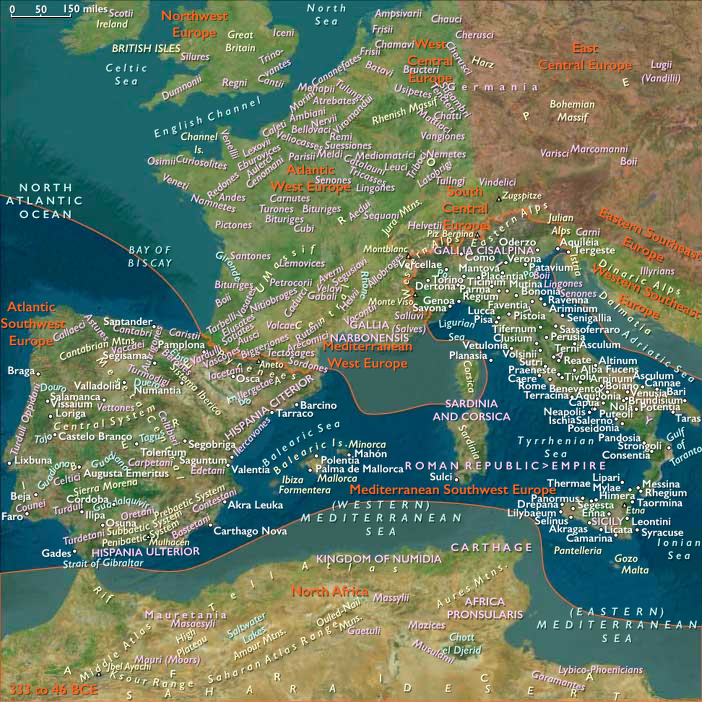
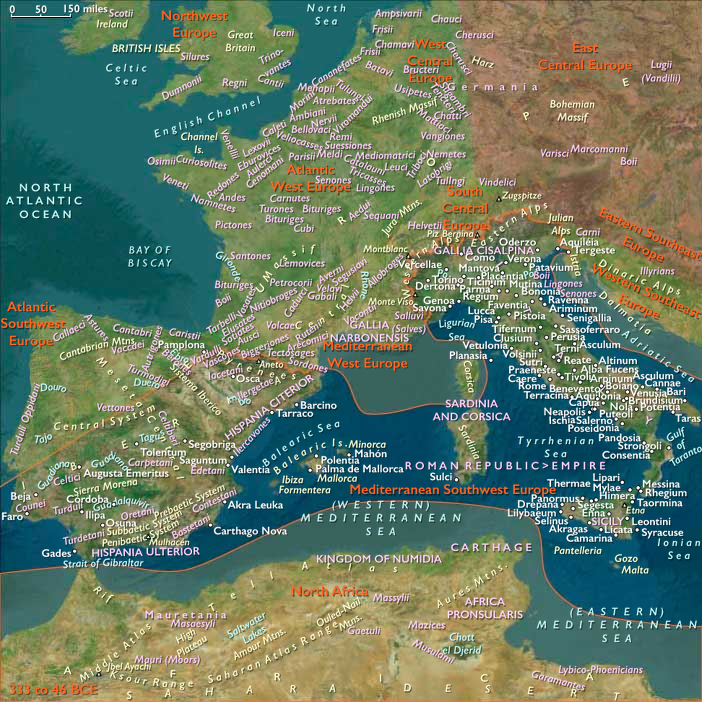
The region of Piacenza is the main Italian gateway to the Alps, being also the confluence of the River Trebbia, draining the northern Apennines, and the Po, the major waterway of northern Italy, draining to the east.
The right bank of the Po River between the Trebbia River and the Taro River is occupied by the Ananes or Anamari, a tribe of Cisalpine Gauls.
Before then, says Polybius, "These plains were anciently inhabited by Etruscans", before the Gauls took the entire Po valley from them.
Although Polybius says the Etruscans were expelled, he meant perhaps selectively, as Etruscan culture had continued in the area until assimilated to the Roman.
The Romans had planned to construct Piacenza and Cremona as Roman military colonies after the successful conclusion of the latest war with the Gauls ending in 219 BCE.
The Senate, declaring war on Carthage in the spring of 218 BCE, decides to accelerate the foundation and gives the colonists thirty days to appear on the sites to receive their lands.
They are each to be settled by six thousand Roman citizens but the cities are to receive Latin Rights; that is, they are to have the same legal status as the many colonies that had been co-founded by Rome and towns of Latium.
The reaction of the Gauls in the region is swift; they drive the colonists off the lands.
Taking refuge in Mutina, the latter send for military assistance.
A small force under Lucius Manlius is prevented from reaching the area.
The Senate now sends two legions under Gaius Atelius.
Collecting Manlius and the colonists, they descend on Cremona and Piacenza and successfully place castra there of 480 m2 (0.12 acre) to support the building of the city.
Locations
Groups
Topics
Commodoties
Subjects
Regions
Subregions
Related Events
Showing 10 events out of 63665 total
Years: 218BCE - 218BCE
May
Locations
Groups
Topics
Commodoties
Subjects
Regions
Subregions