
The rebel slaves spend the winter of …
Years: 72BCE - 72BCE
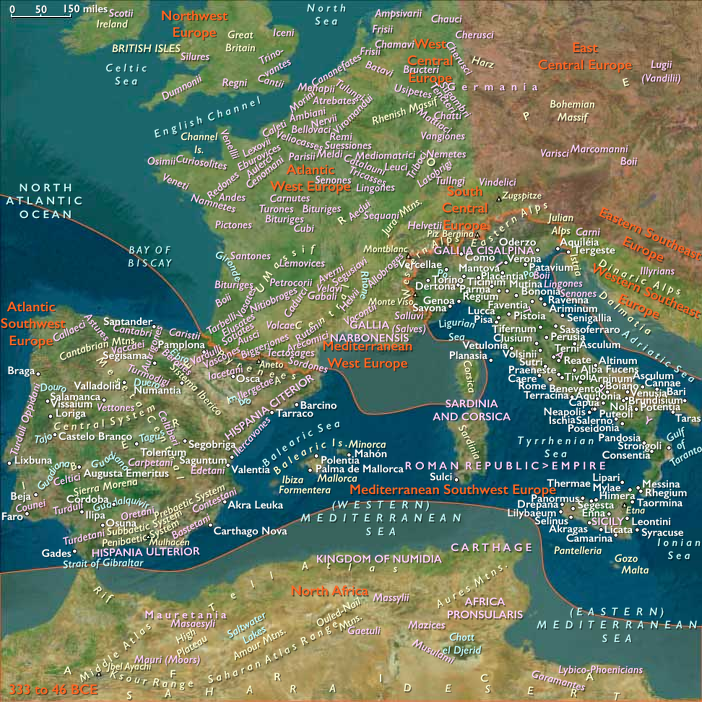
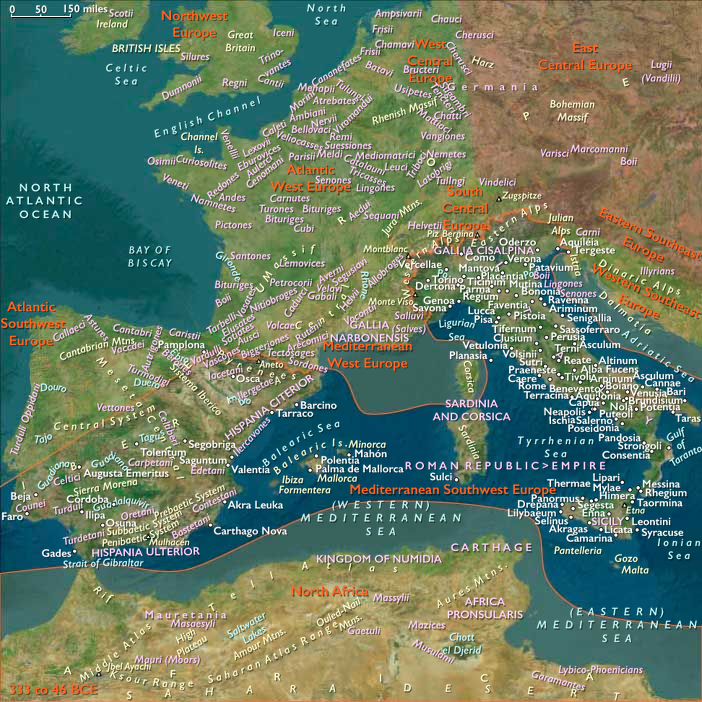
The rebel slaves spend the winter of 73–72 BCE training, arming and equipping their new recruits, and expanding their raiding territory to include the towns of Nola, Nuceria, Thurii and Metapontum.
The victories of the rebel slaves come with a cost: one of their leaders, Oenomaus, is lost—presumably in battle—at some time during these events, and is not mentioned further in the histories.
Many popular modern accounts of the war claim that there was a factional split in the escaped slaves between those under Spartacus, who wished to escape over the Alps to freedom, and those under Crixus, who wished to stay in southern Italy to continue raiding and plundering.
This appears to be an interpretation of events based on the following: the regions that Florus lists as being raided by the rebel slaves include Thurii and Metapontum, which are geographically distant from Nola and Nuceria.
This indicates the existence of two groups: Lucius Gellius Publicola eventually attacked Crixus and a group of some thirty thousand followers who are described as being separate from the main group under Spartacus; Plutarch describes the desire of some of the escaped slaves to plunder Italy, rather than escape over the Alps.
While this factional split is not contradicted by classical sources, there does not seem to be any direct evidence to support it.
In the spring of 72 BCE, the escaped slaves leave their winter encampments and began to move northwards towards Cisalpine Gaul.
The Senate, alarmed by the size of the revolt and the defeat of the praetorian armies of Glaber and Varinius, dispatches a pair of consular legions under the command of Lucius Gellius Publicola and Gnaeus Cornelius Lentulus Clodianus.
Initially, the consular armies are successful.
Gellius engages a group of about thirty thousand slaves, composed of Celts and Germanic tribesmen, under the command of Crixus, near Mount Garganus in Apulia and kills two-thirds of the rebels, including Crixus himself.
At this point in the history, there is a divergence in the classical sources as to the course of events which cannot be reconciled until the entry of Crassus into the war.
The two most comprehensive (extant) histories of the war by Appian and Plutarch detail very different events.
However, neither account directly contradicts the other, but simply reports different events, ignoring some events in the other account, and reporting events that are unique to that account.
Locations
People
Groups
Topics
- Classical antiquity
- Roman Age Optimum
- Roman Republic, Crisis of the
- Servile War, Third (Gladiators' War or Spartacus, Revolt of)
Commodoties
Subjects
Regions
Subregions
Related Events
Showing 10 events out of 62687 total
Years: 72BCE - 72BCE
Locations
People
Groups
Topics
- Classical antiquity
- Roman Age Optimum
- Roman Republic, Crisis of the
- Servile War, Third (Gladiators' War or Spartacus, Revolt of)
Commodoties
Subjects
Regions
Subregions