
The rebel Berber alliance had dissolved in …
Years: 744 - 744
The rebel Berber alliance had dissolved in the aftermath of the defeat near al-Kairouan.
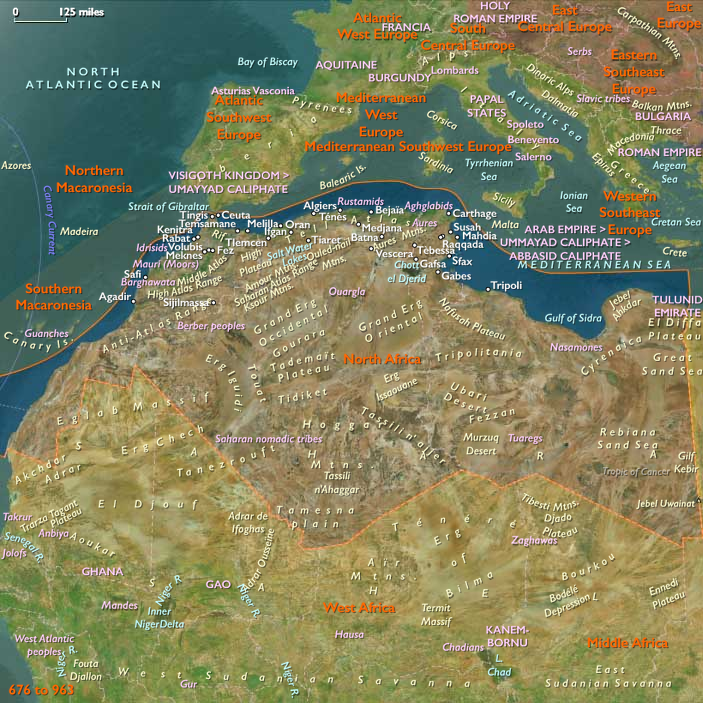
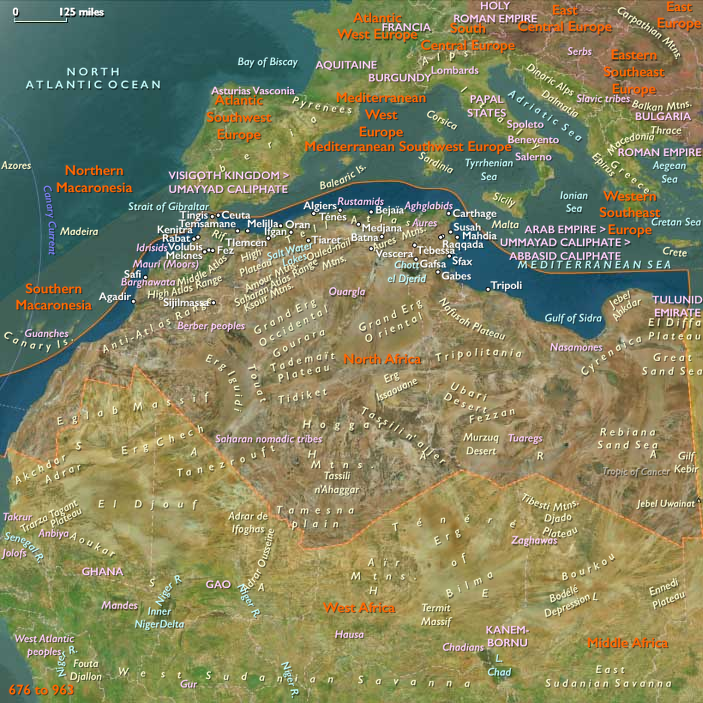
Even before this denouement, the Barghawatas, as founders of the revolt, had grown resentful of the attempt by later adherents, notably the Zenata chieftains, in alliance with the increasingly authoritarian Sufri commissars, to take control of the leadership of the rebellion.
As their primary objective—the liberation of their people from Umayyad rule—had already been achieved, and there is little prospect of it ever being re-imposed, the Barghwata saw little point in continued military campaigns.
In CE 742 or 743, the Barghwata had removed themselves from the rebel alliance, and retreated to the Tamesna region, on the Atlantic coast of Morocco, where they establish their new independent state and abandon their Sufri Kharijitism.
Locations
Groups
- Arab people
- Berber people (also called Amazigh people or Imazighen, "free men", singular Amazigh)
- Moors
- Quraysh (Arabic tribe)
- Miknasa (Zenata Berber tribe)
- Islam
- Muslims, Sunni
- Muslims, Kharijite
- Umayyad Caliphate (Damascus)
- Zenata (Berber tribal confederacy)
- Ifriqiya, Ummayad
- al-Andalus (Andalusia), Muslim-ruled
- Barghawata Confederacy (Masmuda Berber tribal confederacy)
Topics
Subjects
Regions
Subregions
Related Events
Showing 10 events out of 55369 total
Years: 744 - 744
Locations
Groups
- Arab people
- Berber people (also called Amazigh people or Imazighen, "free men", singular Amazigh)
- Moors
- Quraysh (Arabic tribe)
- Miknasa (Zenata Berber tribe)
- Islam
- Muslims, Sunni
- Muslims, Kharijite
- Umayyad Caliphate (Damascus)
- Zenata (Berber tribal confederacy)
- Ifriqiya, Ummayad
- al-Andalus (Andalusia), Muslim-ruled
- Barghawata Confederacy (Masmuda Berber tribal confederacy)
Topics
Subjects
Regions
Subregions