
Atlantic Southwest Europe: Maritime Dominance and Regional …
Years: 1444 - 1455
Atlantic Southwest Europe: Maritime Dominance and Regional Struggles (1444–1455)
Between 1444 and 1455, Atlantic Southwest Europe underwent critical transformations marked by Portuguese maritime breakthroughs, persistent political strife in Castile, and contested successions in Navarre. This era saw heightened economic prosperity linked to overseas expansion, contrasted with enduring internal rivalries that reshaped political dynamics across the region.
Political and Military Developments
-
Portugal:
- Under regent Infante Pedro, Duke of Coimbra (1439–1448), maritime exploration expanded significantly, culminating in expeditions past Cape Verde (1444) and establishing Portugal’s claim over African coastal trade routes.
- After a brief civil conflict, King Afonso V (r. 1438–1481) ended Pedro’s regency violently in 1449, shifting Portugal’s internal politics toward increased royal centralization and expansionist ambitions.
-
Northern Castile and León:
- Ongoing instability under King Juan II of Castile (r. 1406–1454) intensified due to the influential minister Álvaro de Luna’s controversial control, leading to escalating feuds among noble factions and weakening royal authority in northern provinces.
- The execution of Álvaro de Luna (1453) brought temporary calm, yet political fragmentation persisted, allowing greater regional autonomy in territories such as Galicia, Asturias, and the Basque Country.
-
Navarre:
- Succession crises intensified under Charles, Prince of Viana, whose disputed inheritance after Queen Blanche’s death (1441) drew Navarre into deeper conflict, particularly with the ambitions of John II of Aragon, destabilizing governance and increasing external interference in Navarrese politics.
Economic and Maritime Expansion
-
Portuguese Trade Networks:
- Portuguese expeditions along West Africa’s coast led to significant economic gains from gold, ivory, and slave trade, consolidating Lisbon as a thriving Atlantic port and financial hub.
- Madeira’s sugar plantations, established in prior decades, matured into prosperous enterprises, significantly influencing future patterns of plantation agriculture and Atlantic commerce.
-
Urban and Commercial Vitality:
- Atlantic ports in northern Iberia, notably Bilbao and Santander, benefited from trade stability, especially with northern Europe, strengthening their economic standing despite Castilian political fragmentation.
- Basque maritime traditions flourished through shipbuilding and fisheries, reinforcing the region’s economic independence and international trade connections.
Cultural and Social Developments
-
Intellectual Growth and Humanism:
- Portuguese courts embraced Renaissance humanism and maritime innovation, sponsoring mapmakers, astronomers, and navigators such as Diogo Gomes and Alvise Cadamosto, whose work refined Europe’s geographic knowledge.
- Cultural exchanges through pilgrimage routes to Santiago de Compostela continued to foster literary and scholarly interactions across the Pyrenean territories.
-
Regional Identity and Autonomy:
- Basque territories and northern Navarre reinforced traditional legal privileges (fueros), promoting distinctive regional identities and autonomy amid Castile’s internal struggles.
- Galicia and Asturias preserved vibrant local cultures, resisting centralized pressures through the strength of traditional communal institutions and networks centered around religious and cultural hubs.
Significance and Legacy
The years 1444–1455 marked a significant juncture in Atlantic Southwest Europe's trajectory, consolidating Portugal’s ascendancy as a maritime power while deepening internal divisions within Castile. The period shaped critical economic patterns through expanded Atlantic commerce and set the stage for further Portuguese global exploration. Simultaneously, the struggle for regional autonomy in northern Spain—particularly in Navarre and the Basque territories—established enduring political and cultural frameworks that would continue influencing the region’s historical evolution.
People
- Afonso V of Portugal
- Alvise Cadamosto
- Charles, Prince of Viana
- Diogo Gomes
- John II of Aragon
- John II of Castile
- Peter, Duke of Coimbra
- Álvaro de Luna
Groups
- Galicia, Kingdom of
- Navarre, Kingdom of
- Basque people
- Castile, Crown of
- Portugal, Avizan (Joannine) Kingdom of
- Asturias, Principality of
- Portuguese Empire
Topics
Commodoties
Subjects
Regions
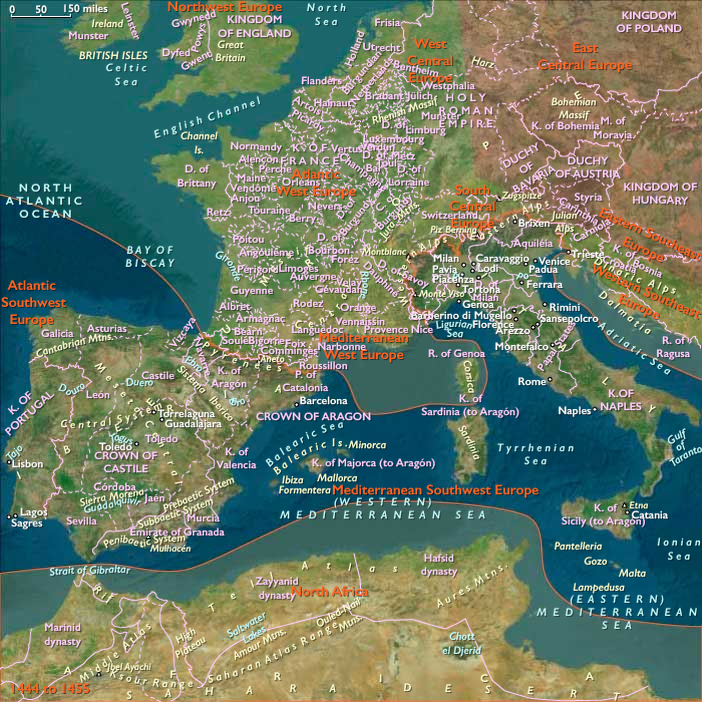
Subregions
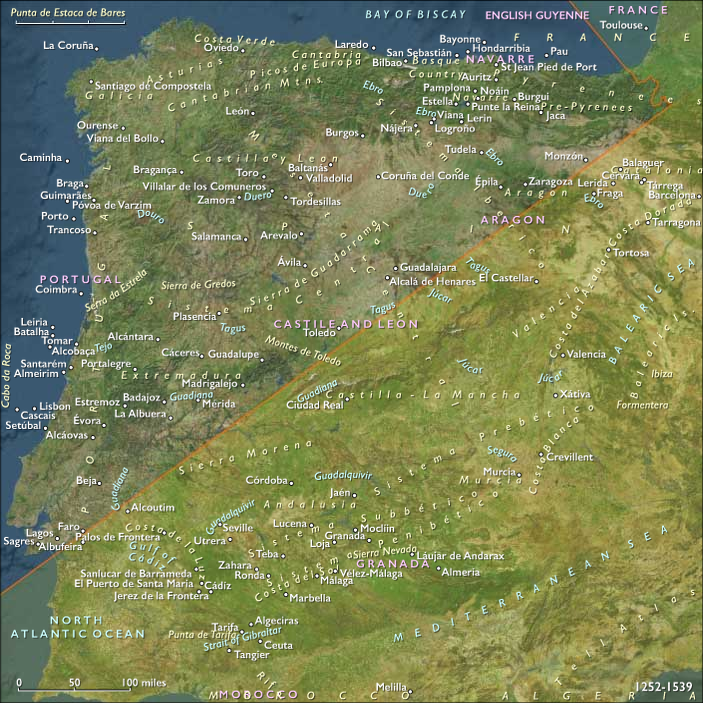
Related Events
Showing 10 events out of 41742 total
Years: 1444 - 1455
People
- Afonso V of Portugal
- Alvise Cadamosto
- Charles, Prince of Viana
- Diogo Gomes
- John II of Aragon
- John II of Castile
- Peter, Duke of Coimbra
- Álvaro de Luna
Groups
- Galicia, Kingdom of
- Navarre, Kingdom of
- Basque people
- Castile, Crown of
- Portugal, Avizan (Joannine) Kingdom of
- Asturias, Principality of
- Portuguese Empire
Topics
Commodoties
Subjects
Regions
Subregions