
Economic competition among the European nations leads …
Years: 1540 - 1683
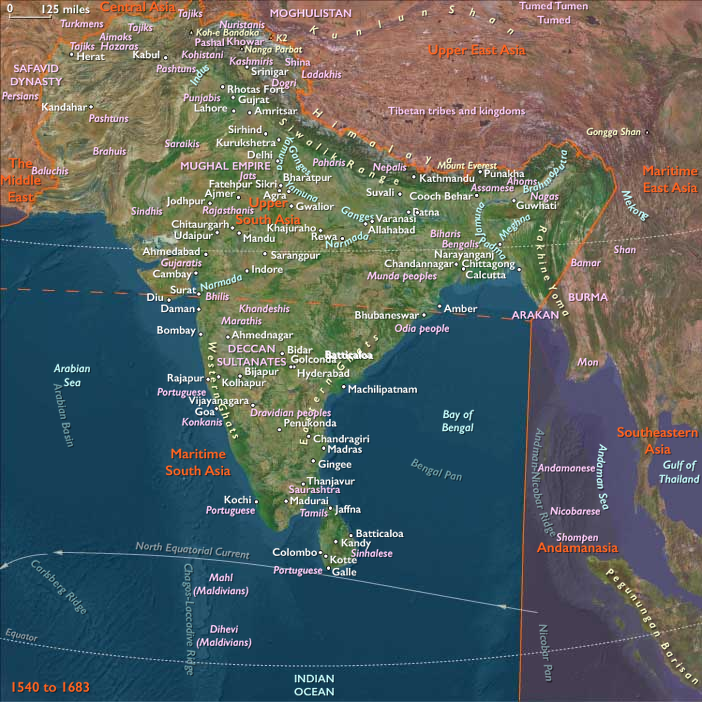
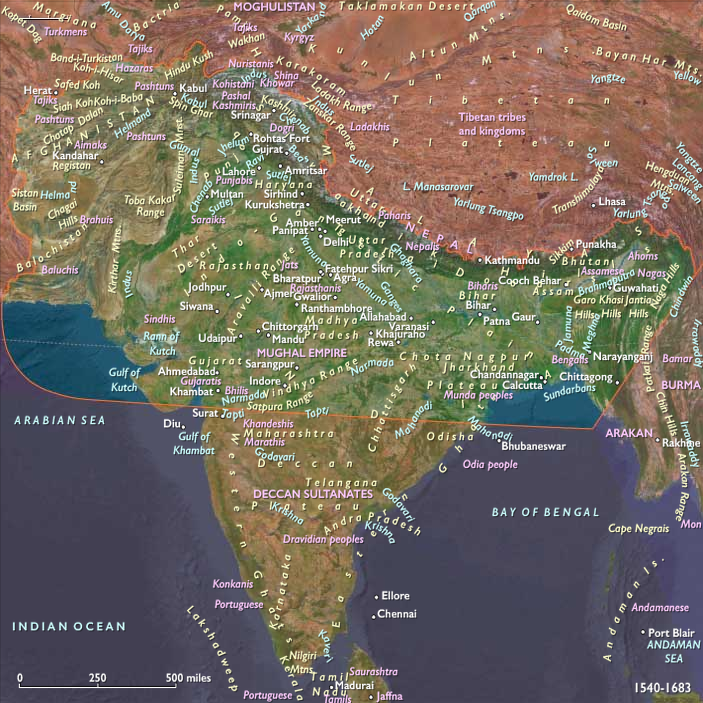
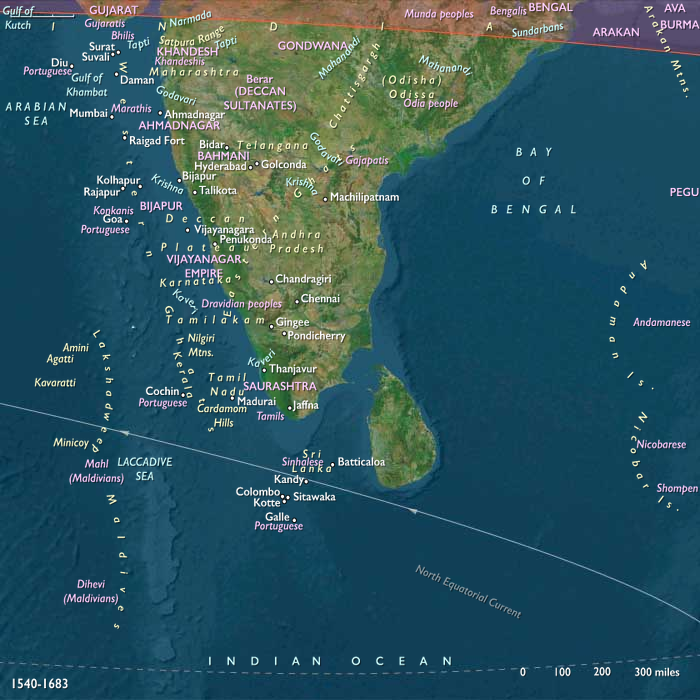
Economic competition among the European nations leads to the founding of commercial companies in England (the East India Company, founded in 1600) and in the Netherlands (Verenigde Oost-Indische Compagnie—the United East India Company, founded in 1602), whose primary aim is to capture the spice trade by breaking the Portuguese monopoly in Asia.
Although the Dutch, with a large supply of capital and support from their government, preempt and ultimately exclude the British from the heartland of spices in the East Indies (modern-day Indonesia), both companies manage to establish trading "factories" (actually warehouses) along the Indian coast.
The Dutch, for example, use various ports on the Coromandel Coast in South India, especially Pulicat (about twenty kilometers north of Madras), as major sources for slaves for their plantations in the East Indies and for cotton cloth as early as 1609. (The English, however, establish their first factory at what today is known as Madras only in 1639.)
Indian rulers enthusiastically accommodate the newcomers in hopes of pitting them against the Portuguese.
In 1619 Jahangir grants them permission to trade in his territories at Surat (in Gujarat) on the west coast and Hughli (in West Bengal) in the east.
These and other locations on the peninsula become centers of international trade in spices, cotton, sugar, raw silk, saltpeter, calico, and indigo.
People
Groups
- Arab people
- Tamil people
- Dutch people
- Portuguese people
- English people
- Portugal, Avizan (Joannine) Kingdom of
- India, Portuguese State of
- Netherlands, United Provinces of the (Dutch Republic)
- Mughal Empire (Agra)
- East India Company, British (The Company of Merchants of London Trading into the East Indies)
- Dutch East India Company (Vereenigde Oostindische Compagnie or VOC in Dutch, literally "United East Indies Company")
- England, (Stuart) Kingdom of
- Dutch East India Company (Vereenigde Oostindische Compagnie or VOC in Dutch, literally "United East Indies Company")
Topics
- Colonization of Asia, Portuguese
- Colonization of Asia, Dutch
- Colonization of Asia, English
- Portuguese Conquests in India and the East Indies
- India, Modern
Commodoties
Subjects
Regions
Subregions
Years: 1540 - 1683
People
Groups
- Arab people
- Tamil people
- Dutch people
- Portuguese people
- English people
- Portugal, Avizan (Joannine) Kingdom of
- India, Portuguese State of
- Netherlands, United Provinces of the (Dutch Republic)
- Mughal Empire (Agra)
- East India Company, British (The Company of Merchants of London Trading into the East Indies)
- Dutch East India Company (Vereenigde Oostindische Compagnie or VOC in Dutch, literally "United East Indies Company")
- England, (Stuart) Kingdom of
- Dutch East India Company (Vereenigde Oostindische Compagnie or VOC in Dutch, literally "United East Indies Company")
Topics
- Colonization of Asia, Portuguese
- Colonization of Asia, Dutch
- Colonization of Asia, English
- Portuguese Conquests in India and the East Indies
- India, Modern
Commodoties
Subjects
Regions
Subregions