
The Qin, under Shi Huangdi, have from …
Years: 206BCE - 206BCE
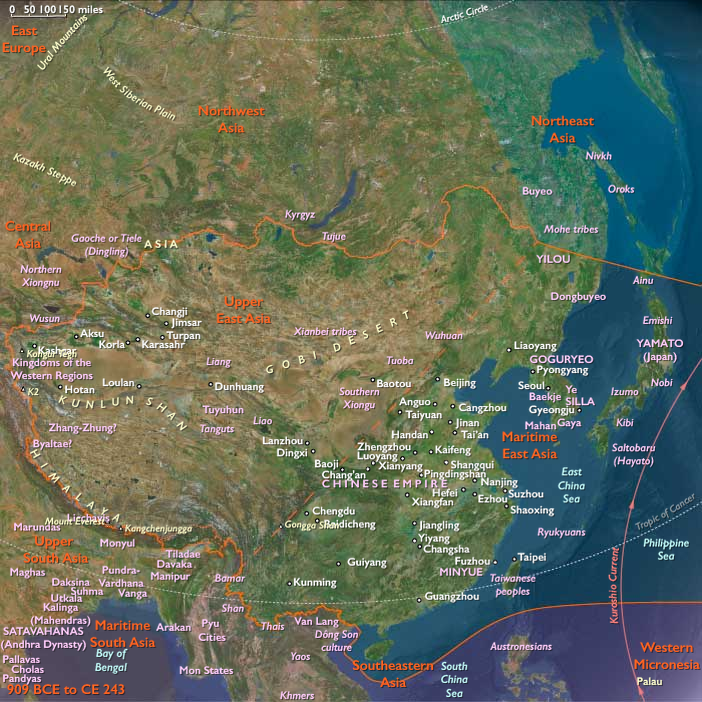
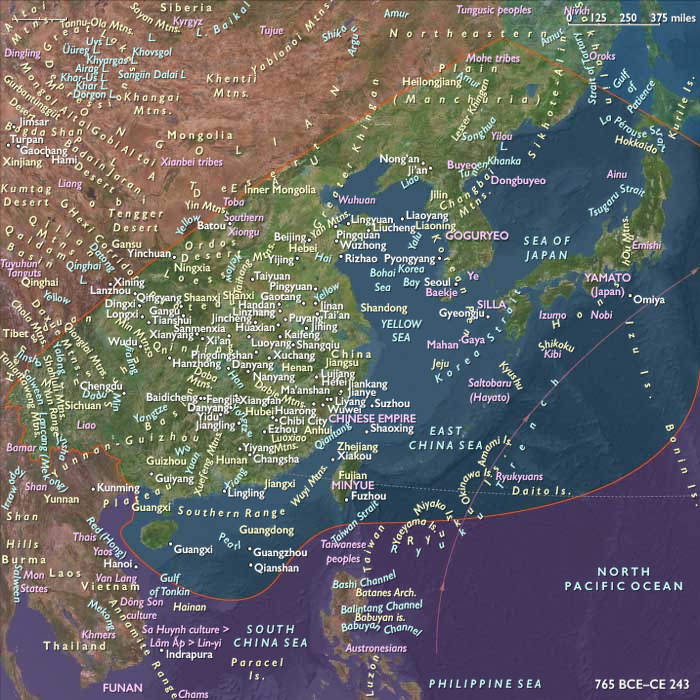
The Qin, under Shi Huangdi, have from about 200 BCE enlisted huge levies of laborers for the construction of extensive canal irrigation facilities in central China, and also to fill the gaps in the northern frontier walls built by earlier states, thus creating the Great Wall of China along the Mongolian border in the far north. (Little of this wall remains. Since then, the Great Wall has on and off been rebuilt, maintained, enhanced; the majority of the existing wall will be reconstructed during the Ming Dynasty.)
Liu Bang (or Liu Qi), a peasant warrior, leads a successful rebellion in opposition to the totalitarian Qin’s heavy requisitions for the military and public works projects.
The authority of Shi Huangdi's successor collapses in 206 BCE, and central power shifts to Liu Bang.
Locations
People
Groups
Topics
Commodoties
Subjects
Regions
Subregions
Related Events
Showing 10 events out of 63591 total
Years: 206BCE - 206BCE
Locations
People
Groups
Topics
Commodoties
Subjects
Regions
Subregions