
Filters:
The Qianlong Emperor moves the remaining Dzungar …
Years: 1758 - 1758
The Qianlong Emperor moves the remaining Dzungar people to other places in China.
He orders the generals to kill all the men in Barkol or Suzhou, and divides their wives and children among the Qing soldiers.
In his account of the war, Qing scholar Wei Yuan, writes that about forty percent of the Dzungar households were killed by smallpox, twenty percent fled to Russia or the Kazakh Khanate, and thirty percent were killed by the army, leaving no yurts in an area for several thousand li, except those of the surrendered.
Qing Bannermen and Mongol cavalry made up the initial expeditionary army.
As the campaigns progressed, tens of thousands of Green Standard infantrymen were also brought in.
The men, women and children of the Dzungars were all slaughtered by Manchu soldiers according to Russian accounts.
The Dzungars had conquered and subjugated the Uyghurs during the Dzungar conquest of Altishahr, after being invited by the Afaqi Khoja to invade.
Heavy taxes had been imposed upon the Uyghurs by the Dzungars, with women and refreshments provided by the Uyghurs to the tax collectors.
Periodically, Uyghur women were gang raped by the tax collectors when the amount of tax was not satisfactory.
Anti-Dzungar Uyghur rebels from the Turfan and Hami oases submitted to Qing rule as vassals and requested Qing help for overthrowing Dzungar rule.
Uyghur leaders like Emin Khoja were granted titles within the Qing nobility, and these Uyghurs helped supply the Qing military forces during the anti-Dzungar campaign.
The Qing employ Khoja Emin in its campaign against the Dzungars and use him as an intermediary with Muslims from the Tarim Basin, to inform them that the Qing only seek to kill Oirats (Dzungars), and that they will leave the Muslims alone.
It will not be until generations later that the population of Dzungaria begins to rebound.
He orders the generals to kill all the men in Barkol or Suzhou, and divides their wives and children among the Qing soldiers.
In his account of the war, Qing scholar Wei Yuan, writes that about forty percent of the Dzungar households were killed by smallpox, twenty percent fled to Russia or the Kazakh Khanate, and thirty percent were killed by the army, leaving no yurts in an area for several thousand li, except those of the surrendered.
Qing Bannermen and Mongol cavalry made up the initial expeditionary army.
As the campaigns progressed, tens of thousands of Green Standard infantrymen were also brought in.
The men, women and children of the Dzungars were all slaughtered by Manchu soldiers according to Russian accounts.
The Dzungars had conquered and subjugated the Uyghurs during the Dzungar conquest of Altishahr, after being invited by the Afaqi Khoja to invade.
Heavy taxes had been imposed upon the Uyghurs by the Dzungars, with women and refreshments provided by the Uyghurs to the tax collectors.
Periodically, Uyghur women were gang raped by the tax collectors when the amount of tax was not satisfactory.
Anti-Dzungar Uyghur rebels from the Turfan and Hami oases submitted to Qing rule as vassals and requested Qing help for overthrowing Dzungar rule.
Uyghur leaders like Emin Khoja were granted titles within the Qing nobility, and these Uyghurs helped supply the Qing military forces during the anti-Dzungar campaign.
The Qing employ Khoja Emin in its campaign against the Dzungars and use him as an intermediary with Muslims from the Tarim Basin, to inform them that the Qing only seek to kill Oirats (Dzungars), and that they will leave the Muslims alone.
It will not be until generations later that the population of Dzungaria begins to rebound.
Locations
People
Groups
- Confucianists
- Buddhism, Tibetan
- Chinese (Han) people
- Muslims, Sunni
- Uyghur people
- Oirats
- Dzungars
- Manchus
- Chinese Empire, Qing (Manchu) Dynasty
Topics
Subjects
Regions
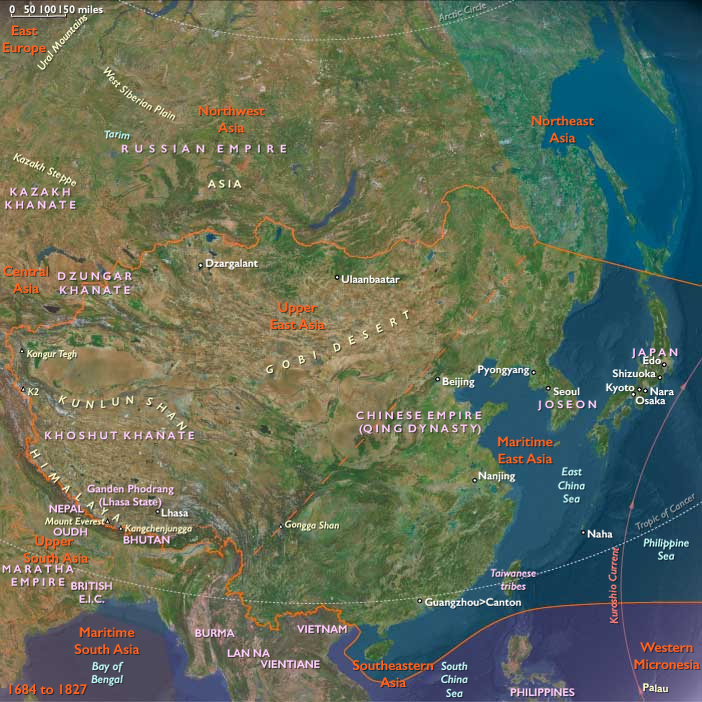
Subregions
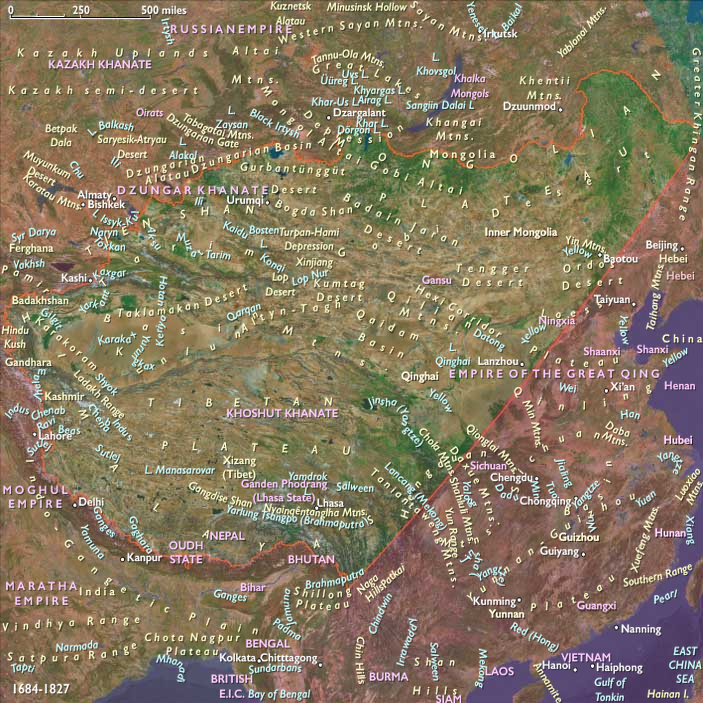
Related Events
Showing 1 events out of 1 total
Years: 1758 - 1758
Locations
People
Groups
- Confucianists
- Buddhism, Tibetan
- Chinese (Han) people
- Muslims, Sunni
- Uyghur people
- Oirats
- Dzungars
- Manchus
- Chinese Empire, Qing (Manchu) Dynasty
Topics
Subjects
Regions
Subregions