
The Qawasim tribes, who live along the …
Years: 633 - 633
The Qawasim tribes, who live along the gulf during the pre-Islamic period, engage in trade, pearling, and piracy.
Diba al-Hisn (also spelled Dibbah or Daba), an important port of pre-Islamic Arabia, was traditionally renowned as a copper-exporting center for the interior of Oman.
A prosperous town at the time of the emergence of Islam, it is one of the last important places of resistance to the new religion in the Arabian Peninsula.
Under the Sasanians, and their Omani clients the Al-Julanda, an important market existed at Dibba; the city was sometimes the capital of Oman.
Soon after the death of the prophet Muhammad, a rebellion breaks out at Dibba and a faction of the Azd, led by Laqit bin Malik Dhu at-Taj, rejects Islam.
According to one tradition, Laqit was killed by an envoy of the caliph Abu Bakr in what may have been a relatively small struggle, while other sources including Al-Tabari say that at least ten thousand rebels were killed in one of the biggest battles of the Ridda wars.
The plain behind Dibba still contains a large cemetery which according to local tradition represents the fallen apostates of Dibba.
Locations
People
Groups
- Polytheism (“paganism”)
- Persian people
- Azd (Arabian tribe)
- Persian Empire, Sassanid, or Sasanid
- Islam
Topics
Commodoties
Subjects
Regions
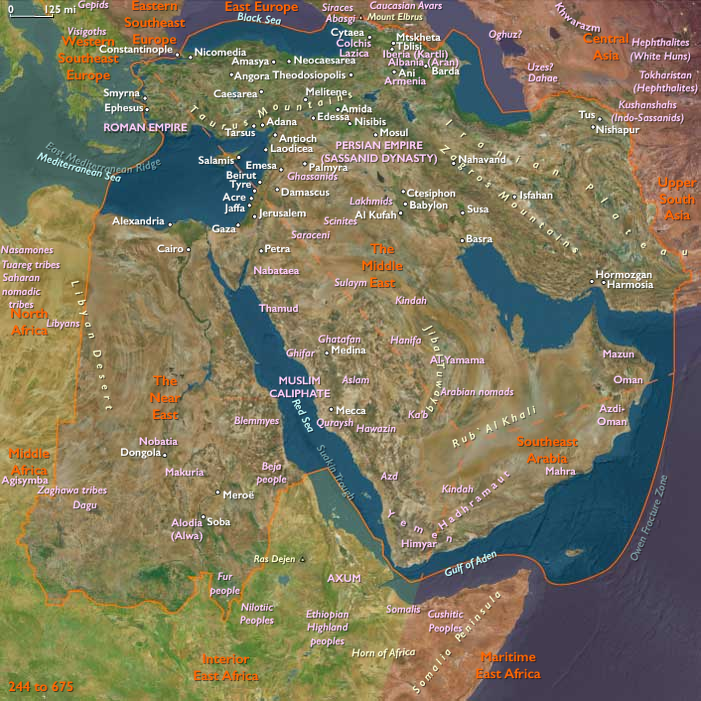
Subregions
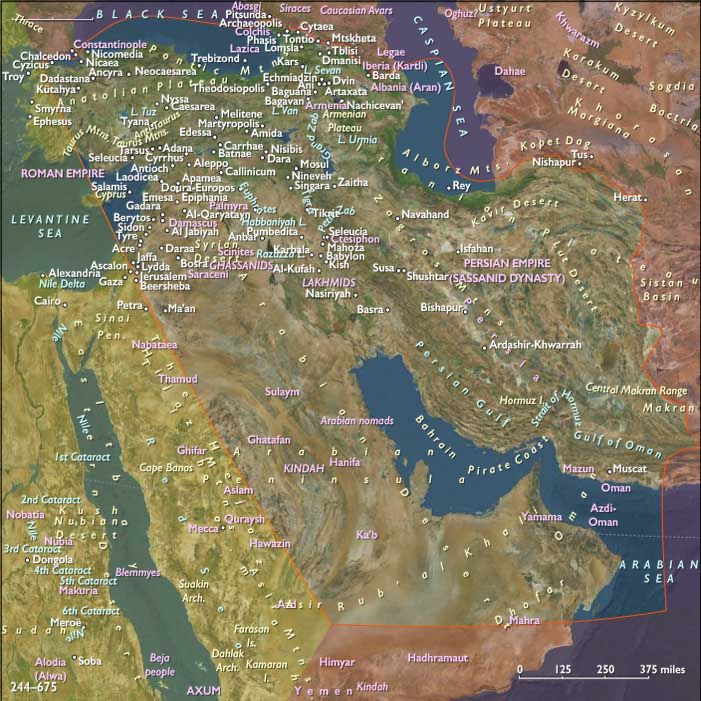
Related Events
Showing 10 events out of 56710 total
Years: 633 - 633
Locations
People
Groups
- Polytheism (“paganism”)
- Persian people
- Azd (Arabian tribe)
- Persian Empire, Sassanid, or Sasanid
- Islam
Topics
Commodoties
Subjects
Regions
Subregions