
The Prussian uprising of 1295 is limited …
Years: 1295 - 1295
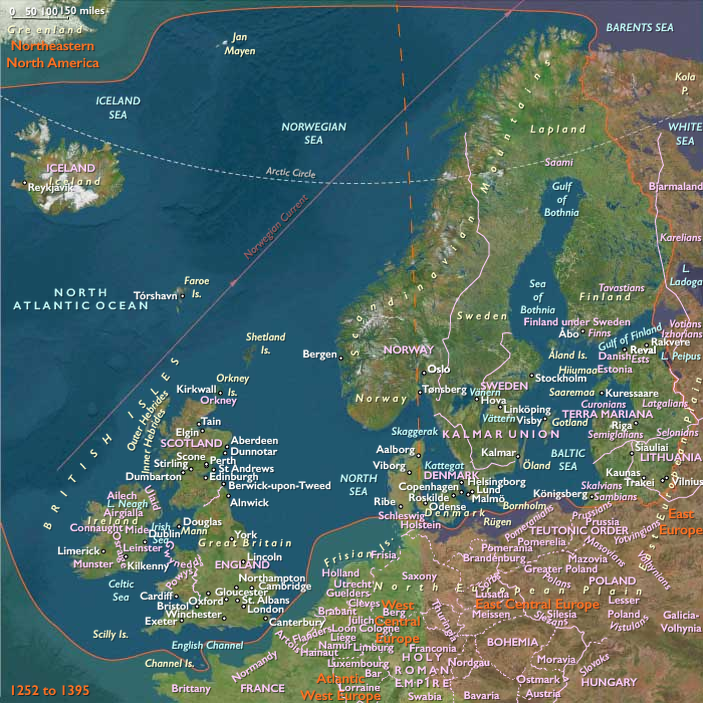
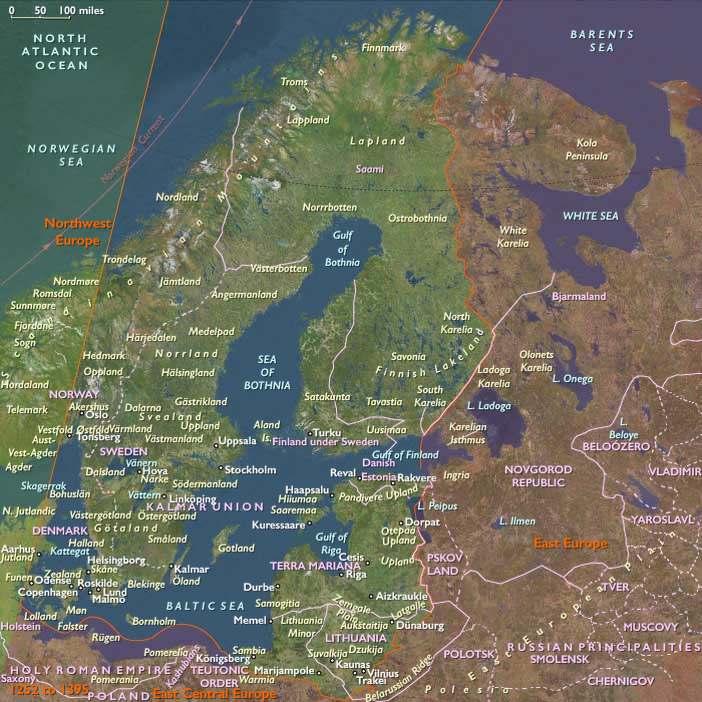
The Prussian uprising of 1295 is limited to Natangia and Sambia and depends upon help from Vytenis, Grand Duke of Lithuania.
The rebels capture Bartenstein (Bartoszyce) by surprise and plunder as far as Königsberg, but are never a serious threat.
By this time the Prussian nobility is already baptized and pro-Teutonic to the extent that peasants kill them first before attacking the Knights.
This last attempt effectively ends the Prussian Crusade and the Knights concentrate on conquering Samogitia and Lithuania.
Lithuanian historians note that fierce resistance by the Prussians won time for the young Lithuanian state to mature and strengthen so it could withstand the hundred-year crusade, culminating in the 1410 Battle of Grunwald, with minimal territorial losses.
The Prussian lands will be repopulated by colonists from Germany, who after the sixteenth century will eventually outnumber the natives.
It is estimated that Prussians numbered one hundred thousand around 1400, and comprised about half of the total population in Prussia.
Subject to Germanization and assimilation, the Prussians will eventually become extinct sometime after the sixteenth century.
It is believed that the Prussian language became extinct sometime at the beginning of the eighteenth century.
Locations
People
Groups
- Polytheism (“paganism”)
- Prussians, Old, or Baltic (Western Balts)
- Sambians (Western Balts)
- Lithuanians (Eastern Balts)
- Germans
- Christians, Roman Catholic
- Natangians (Prussian clan)
- Ordensstaat (Monastic state of the Teutonic Knights)
- Livonian Order
- Lithuania, Grand Duchy of
- Holy Roman Empire
- Teutonic Knights of Venice (House of the Hospitalers of Saint Mary of the Teutons in Jerusalem)
Topics
- Crusades, The
- Ostsiedlung (German: Settlement in the East), a.k.a. German eastward expansion
- Northern Crusades, or Baltic Crusades
- Prussian Uprising of 1295
Commodoties
Subjects
- Commerce
- Language
- Watercraft
- Labor and Service
- Conflict
- Faith
- Government
- Technology
- Movements
- Economics
Regions
Subregions
Related Events
Showing 1 events out of 1 total
Years: 1295 - 1295
Locations
People
Groups
- Polytheism (“paganism”)
- Prussians, Old, or Baltic (Western Balts)
- Sambians (Western Balts)
- Lithuanians (Eastern Balts)
- Germans
- Christians, Roman Catholic
- Natangians (Prussian clan)
- Ordensstaat (Monastic state of the Teutonic Knights)
- Livonian Order
- Lithuania, Grand Duchy of
- Holy Roman Empire
- Teutonic Knights of Venice (House of the Hospitalers of Saint Mary of the Teutons in Jerusalem)
Topics
- Crusades, The
- Ostsiedlung (German: Settlement in the East), a.k.a. German eastward expansion
- Northern Crusades, or Baltic Crusades
- Prussian Uprising of 1295
Commodoties
Subjects
- Commerce
- Language
- Watercraft
- Labor and Service
- Conflict
- Faith
- Government
- Technology
- Movements
- Economics
Regions
Subregions