
The prosperous era that had arisen about …
Years: 2205BCE - 2062BCE
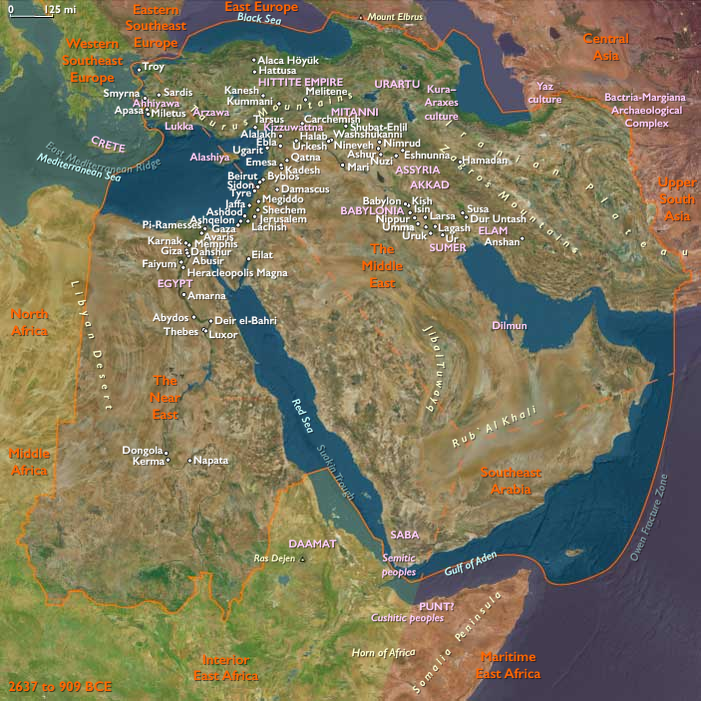
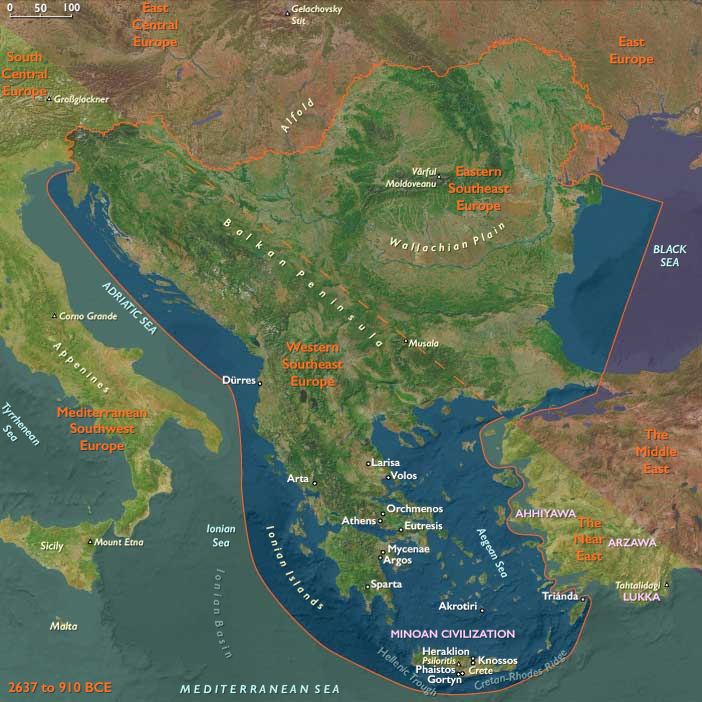
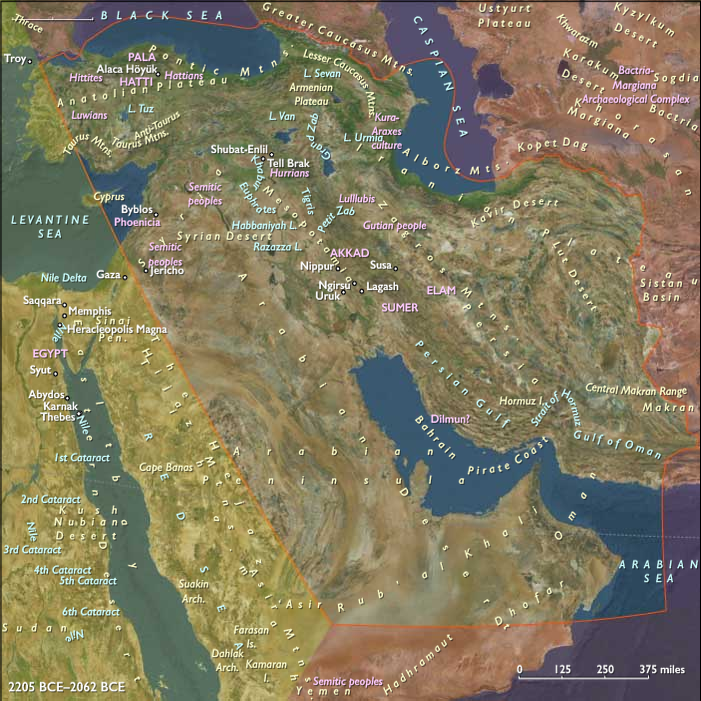
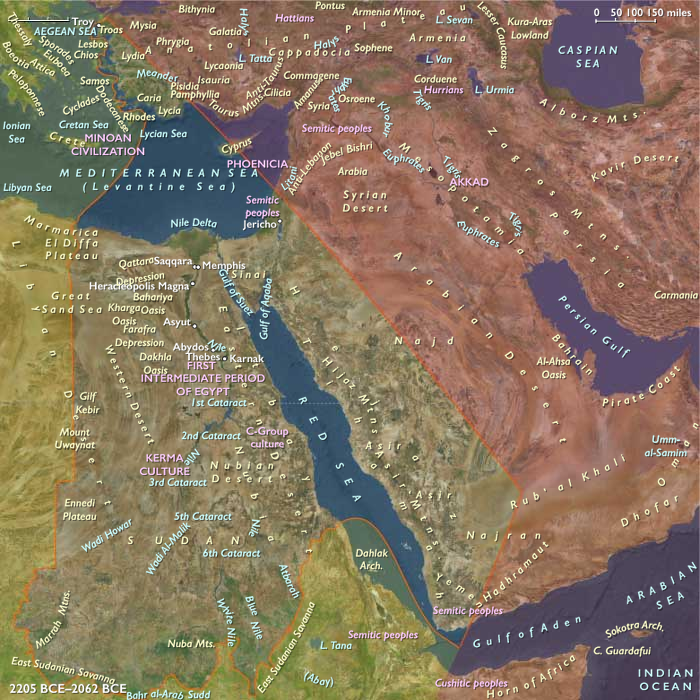
The prosperous era that had arisen about 2500 BCE in the Aegean, Egypt, Canaan, and Mesopotamia lasts until about 2200, coincident with the onset of the 4.2 kiloyear BP aridification event, caused by an unknown agency and resulting in both earthquakes and volcanic eruptions.
These events are associated with a three-century-long dry spell in the Near East, the worst in the past ten thousand years.
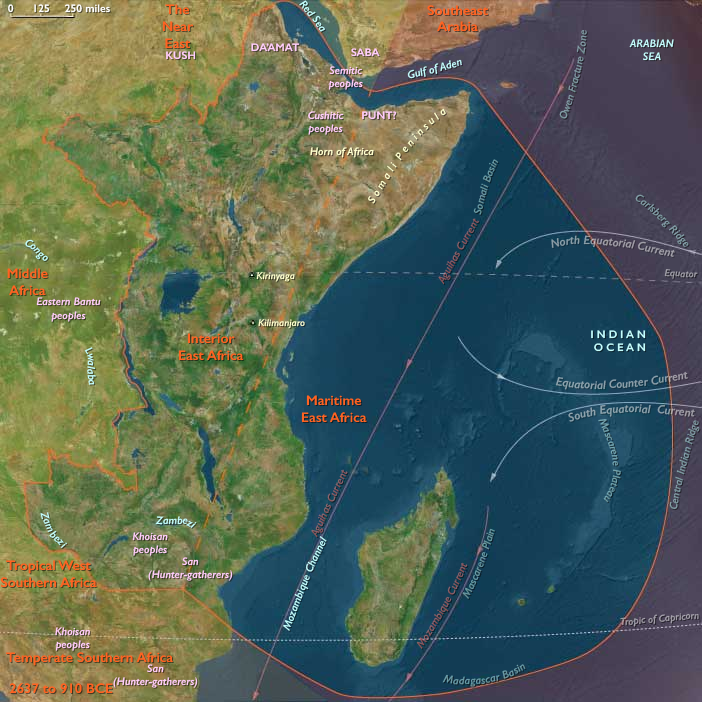
What appears to be a sudden, unanticipated, catastrophic reduction in the Nile floods over two or three decades, caused by a global climatic cooling, reduces the amount of rainfall in Egypt, Ethiopia, and East Africa, contributing to the great famine and subsequent downfall of the Old Kingdom.
The desiccation of northeastern Africa reaches a peak in this age, producing conditions similar to those of modern times.
Water levels in the Nile drop precipitously.
It is very likely that it is the cause of the collapse of the Old Kingdom in Egypt as well as the Akkadian Empire in Mesopotamia.
The drought may have also initiated southeastward habitat tracking within the Harappan cultural domain.
A phase of intense aridity in ≈4.2 ka BP is well recorded across North Africa, the Near East, the Red Sea, the Arabian Peninsula, the Indian subcontinent, and even mid-continental North America.
Glaciers throughout the mountain ranges of western Canada advance at about this time.
Evidence has also been found in an Italian cave flowstone, and in Andean glacier ice.
The onset of the aridification in Mesopotamia near 4100 BP also coincided with a cooling event in the North Atlantic, known as Bond event 3.
The Subatlantic climatic period, which largely pertains to Western Europe, follows, characterized in general by rather mild winters and fairly warm summers.
Groups
- Mesopotamia
- Sumer
- Egypt (Ancient), Old Kingdom of
- Canaanite culture, ancient
- Akkadian Empire
- Egypt (Ancient), First Intermediate Period of
Topics
Commodoties
Subjects
Regions
Subregions
Years: 2205BCE - 2062BCE
Groups
- Mesopotamia
- Sumer
- Egypt (Ancient), Old Kingdom of
- Canaanite culture, ancient
- Akkadian Empire
- Egypt (Ancient), First Intermediate Period of
Topics
Commodoties
Subjects
Regions
Subregions