The Haskala Movement – Jewish Enlightenment and …
Years: 1792 - 1803
The Haskala Movement – Jewish Enlightenment and Cultural Integration
The Haskala, or Jewish Enlightenment, emerged in the 18th century as a movement aimed at integrating Jews into mainstream European society through educational, cultural, and social reforms.
Goals of Haskala – Reforming Jewish Life
The proponents of Haskala believed that Jewish modernization required:
- Educational Reform – Adding secular subjects such as science, philosophy, and European literature to traditional Jewish schooling.
- Linguistic Assimilation – Encouraging Jews to replace Yiddish with the dominant language of their country(e.g., German, Russian, or French).
- Cultural Adaptation – Abandoning traditional Jewish garb and reforming synagogue services to resemble contemporary European worship practices.
- Economic Transformation – Encouraging Jews to pursue new trades and professions beyond traditional occupations such as moneylending and commerce.
Despite its rationalist foundation, Haskala also embraced romantic ideals, including:
- A longing for a return to nature and manual labor, challenging the stereotype of Jews as exclusively urban merchants.
- A fascination with Jewish history and antiquity, viewing it as a source of inspiration for cultural renewal.
- A vision of Jewish national consciousness, which would later align with Zionist aspirations.
The Opposition of Orthodox Judaism
From its inception, Haskala faced strong opposition from Orthodox Jewish leaders, who viewed it as a threat to Jewish religious continuity. The movement’s emphasis on:
- Rationalism
- The weakening of rabbinic authority
- The marginalization of Talmudic studies
was seen as an existential danger to the Jewish way of life, which had been preserved through the tight-knit structure of Jewish law and tradition.
Haskala and the Foundations of Zionism
Though Haskala sought Jewish integration into European culture, it also promoted the study of Jewish history and the revival of Hebrew, elements that later became central to the Jewish nationalist movement known as Zionism. Over time, many Maskilim (followers of Haskala) would shift their focus from assimilation to national revival, contributing to the early ideological foundations of modern Zionism.
Conclusion – A Transformative but Controversial Movement
The Haskala movement was both a catalyst for modernization and a source of deep division within the Jewish world. While it paved the way for Jewish emancipation and secular education, it also provoked backlash from religious communities, many of whom saw it as a path to assimilation and cultural loss.
In time, the conflicting ideals of Haskala—assimilation vs. national revival—would evolve into two distinct Jewish movements: liberal assimilationism and Zionism, shaping the future of Jewish identity in the modern world.
Related Events
Showing 10 events out of 23942 total
Years: 1792 - 1803
Groups
Topics
Subjects
Regions
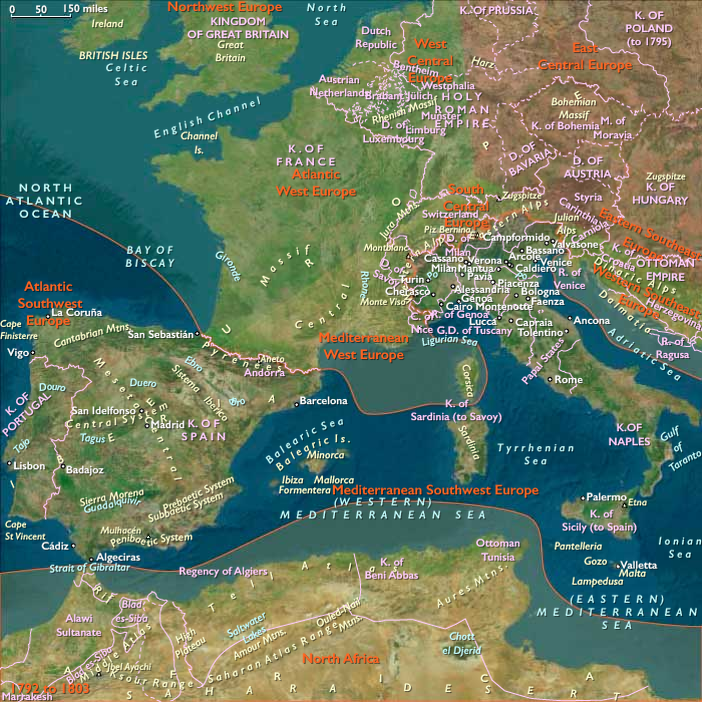
Subregions
- East Europe
- East Central Europe
- Eastern Southeast Europe
- Western Southeast Europe
- South Central Europe
- Mediterranean West Europe
- Mediterranean Southwest Europe
- Atlantic Southwest Europe
- Atlantic West Europe
- West Central Europe
- Northwest Europe