
Filters:
Economic life in Transylvania had rebounded quickly …
Years: 1396 - 1539
Economic life in Transylvania had rebounded quickly after the Mongol invasion.
New farming methods boost crop yields.
Craftsmen form guilds as artisanry flourishes; gold, silver, and salt mining expands; and money-based transactions replace barter.
Though townspeople are exempt from feudal obligations, feudalism expands and the nobles stiffen the serfs' obligations.
The serfs resent the higher payments; some flee the country, while others become outlaws.
In 1437 Romanian and Hungarian peasants rebel against their feudal masters.
The uprising gathers momentum before the Magyar, German, and Szekler nobles in Transylvania united forces and, with great effort, successfully quell the revolt.
Afterwards, the nobles form the Union of Three Nations, jointly pledging to defend their privileges against any power except that of Hungary's king.
The document declares the Magyars, Germans, and Szeklers the only recognized nationalities in Transylvania; henceforth, all other nationalities here, including the Romanians, are merely ''tolerated."
The nobles gradually impose even tougher terms on their serfs.
In 1437, for example, each serf has to work for his lord one day per year at harvest time without compensation; by 1514 serfs have to work for their lord one day per week using their own animals and tools.
New farming methods boost crop yields.
Craftsmen form guilds as artisanry flourishes; gold, silver, and salt mining expands; and money-based transactions replace barter.
Though townspeople are exempt from feudal obligations, feudalism expands and the nobles stiffen the serfs' obligations.
The serfs resent the higher payments; some flee the country, while others become outlaws.
In 1437 Romanian and Hungarian peasants rebel against their feudal masters.
The uprising gathers momentum before the Magyar, German, and Szekler nobles in Transylvania united forces and, with great effort, successfully quell the revolt.
Afterwards, the nobles form the Union of Three Nations, jointly pledging to defend their privileges against any power except that of Hungary's king.
The document declares the Magyars, Germans, and Szeklers the only recognized nationalities in Transylvania; henceforth, all other nationalities here, including the Romanians, are merely ''tolerated."
The nobles gradually impose even tougher terms on their serfs.
In 1437, for example, each serf has to work for his lord one day per year at harvest time without compensation; by 1514 serfs have to work for their lord one day per week using their own animals and tools.
Locations
Groups
- Hungarian people
- Vlachs
- Romanians
- Saxons, Transylvanian
- Székelys
- Hungary, Kingdom of
- Union of Three Nations
- Transylvania (Hungarian governate)
Commodoties
Subjects
Regions
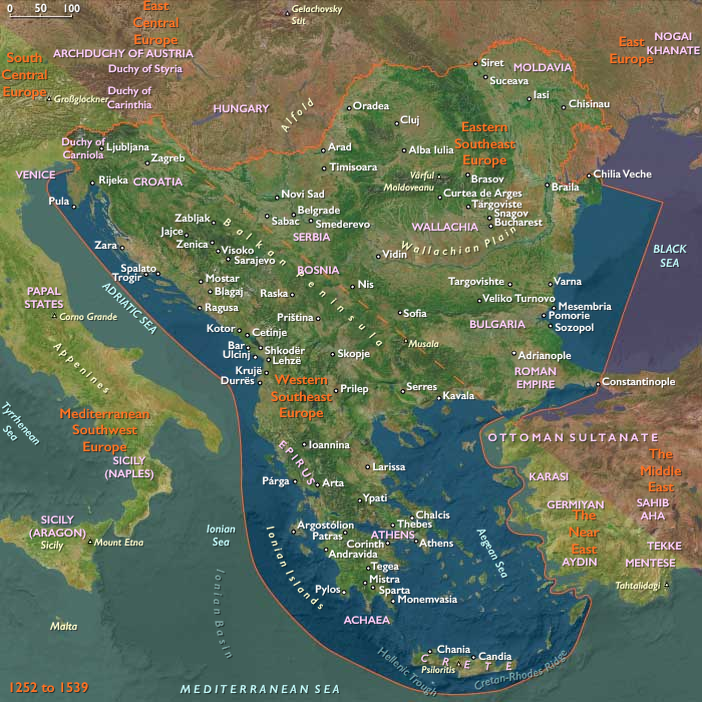
Subregions
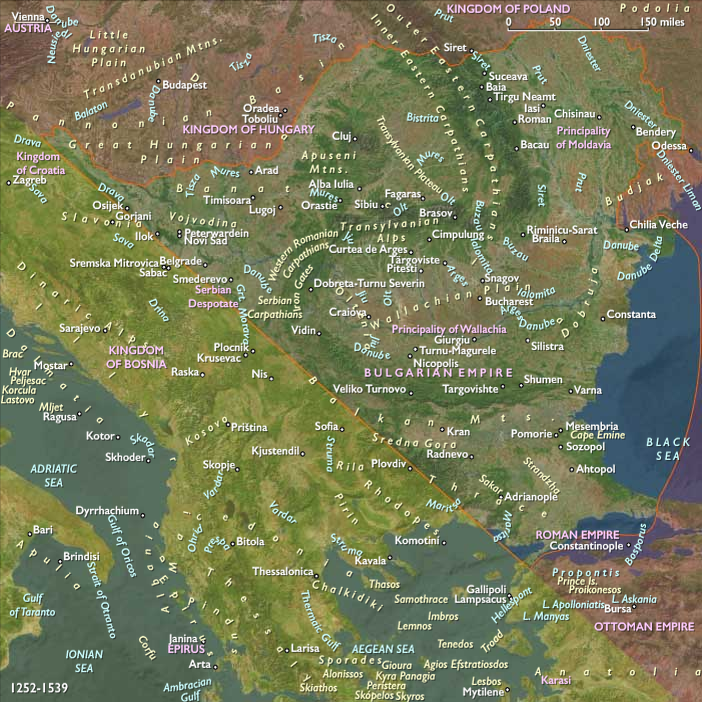
Related Events
Showing 2 events out of 2 total
Years: 1396 - 1539
Locations
Groups
- Hungarian people
- Vlachs
- Romanians
- Saxons, Transylvanian
- Székelys
- Hungary, Kingdom of
- Union of Three Nations
- Transylvania (Hungarian governate)
Commodoties
Subjects
Regions
Subregions