
The Primary Chronicle, a comprehensive history …
Years: 1113 - 1113
The Primary Chronicle, a comprehensive history of the Kievan Rus' from around 850 to 1110 is originally compiled in Kiev about 1113.
Written in the Russian vernacular and compiled by monks, it is the most significant literary product of the so-called Kievan period.
Unmatched in other sources, although important correctives are provided by the Novgorod First Chronicle, it is also valuable as a prime example of the Old East Slavonic literature.
Sviatopolk II, prince of Kiev and Chernigov, has been supreme ruler of the Kievan Rus for twenty years, from 1093.
A popular prince, his reign has been marked by incessant rivalry with his cousin, Prince Vladimir Monomakh, the son of Vsevolod I by Anastasia, the probable daughter of Emperor Constantine IX Monomachos, from whom he takes his nickname of Monomakh ("One who fights alone").
Sviatopolk had married twice; to a Bohemian princess and then in 1094 to a daughter of Tugor Khan of the Kipchaks.
By his first wife he had two daughters, Zbyslava, whom he married to king Boleslaw III of Poland, and Predslava to Prince Álmos of Croatia.
His son Yaroslav reigned in Volhynia and was married three times—to Hungarian, Polish, and Kievan princesses.
In consequence of Yaroslav's early death, his descendants have forfeited any right to the Kievan throne and must content themselves with Turov and Pinsk.
Following the death of the Grand Prince in 1113, the Kievan citizens raise a rebellion against the Jewish merchants and Varangian officials who speculate in grain and salts, attacking and robbing the city’s Jewish inhabitants.
The populace summons to the capital Vladimir, who enters Kiev to the great delight of the crowd; he will reign here until his death in 1125, promulgating a number of reforms in order to allay the social tensions in the capital.
According to later claims by Russian historians, the new monarch expelled all the Jews from Russia but there is no evidence that this actually occurred.
Succeeding generations will often refer to his reign as the golden age of Kiev.
Locations
People
Groups
- Jews
- Slavs, East
- Rus' people
- Kievan Rus', or Kiev, Great Principality of
- Chernigov (Chernihiv), Principality of
Commodoties
Subjects
Regions
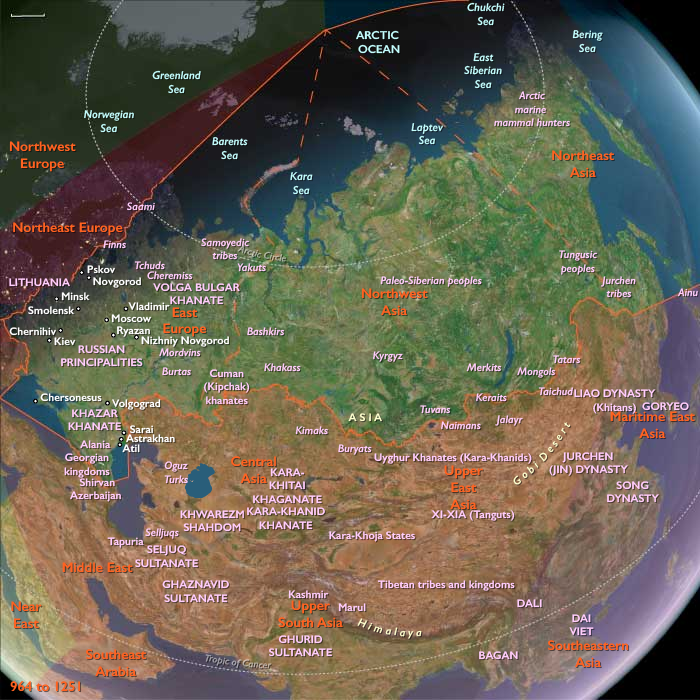
Subregions
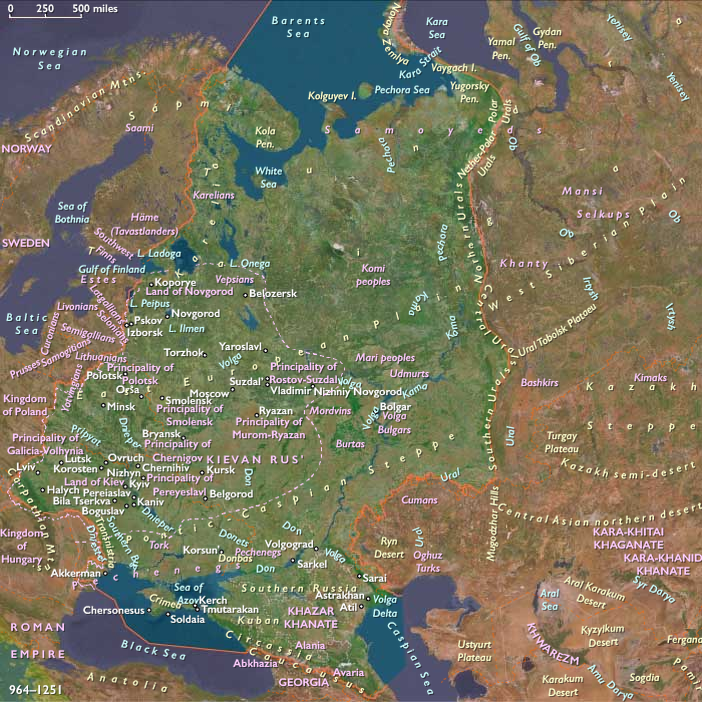
Years: 1113 - 1113
Locations
People
Groups
- Jews
- Slavs, East
- Rus' people
- Kievan Rus', or Kiev, Great Principality of
- Chernigov (Chernihiv), Principality of
Commodoties
Subjects
Regions
Subregions