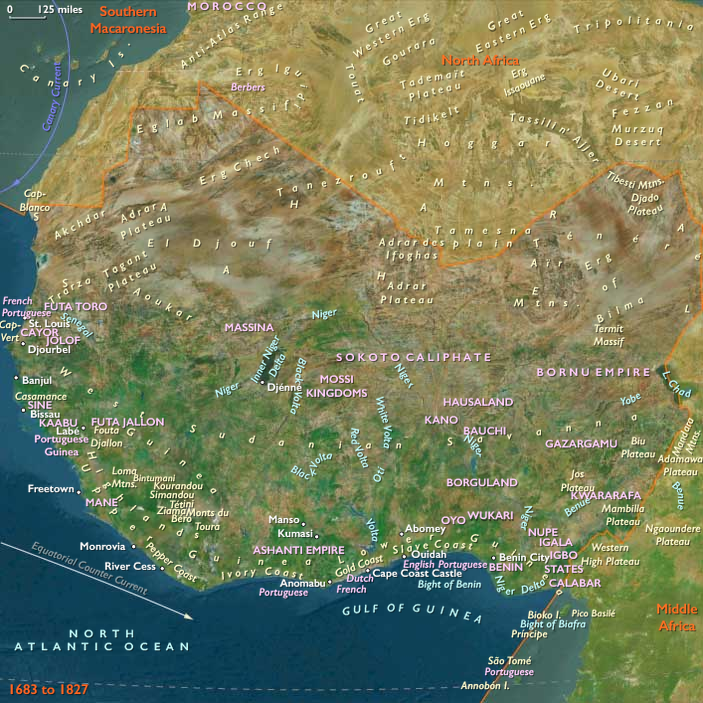
The first Anglo-Ashanti War begins in 1823. …
Years: 1823 - 1823
The first Anglo-Ashanti War begins in 1823.
The British had been drawn into three earlier wars in the Gold Coast:
In the Ashanti-Fante War of 1806–07, the British had refused to hand over two rebels pursued by the Ashanti, but eventually handed one over (the other escaped).
In the Ga-Fante War of 1811, the Akwapim had captured a British fort at Tantamkweri and a Dutch fort at Apam.
In the Ashanti-Akim-Akwapim War of 1814–16, the Ashanti had defeated the Akim-Akwapim alliance.
Local British, Dutch, and Danish authorities all had to come to terms with the Ashanti.
By 1817, the Ashanti, who had an army of twenty thousand, had become the strongest power in West Africa, so the (British) African Company of Merchants had signed a treaty of friendship that recognized Ashanti claims to sovereignty over much of the coast.
The African Company of Merchants was dissolved in 1821 and the British assumed control of the Gold Coast.
By the 1820s the British had decided to support one of the other tribes, the Fante, enemies of the Ashanti.
Inland, the Ashanti kings who ruled from the Golden Stool—said to have come from their great god guardian of the Ashanti soul, "Nyame"—will not allow themselves to be governed by the British.
Economic and social friction play their part in the causes for the outbreak of violence.
The immediate cause of the war happens when a group of Ashanti kidnaps and murders an African sergeant of the Royal African Corps.
A small British group is led into a trap that result in ten killed, thirty-nine wounded and a British retreat.
The Ashanti try to negotiate but the British governor, Sir Charles MacCarthy, rejects Ashanti claims to Fanti areas of the coast and resists overtures by the Ashanti to negotiate.
This starts the First Anglo-Ashanti War, which will run until 1831.
The British had been drawn into three earlier wars in the Gold Coast:
In the Ashanti-Fante War of 1806–07, the British had refused to hand over two rebels pursued by the Ashanti, but eventually handed one over (the other escaped).
In the Ga-Fante War of 1811, the Akwapim had captured a British fort at Tantamkweri and a Dutch fort at Apam.
In the Ashanti-Akim-Akwapim War of 1814–16, the Ashanti had defeated the Akim-Akwapim alliance.
Local British, Dutch, and Danish authorities all had to come to terms with the Ashanti.
By 1817, the Ashanti, who had an army of twenty thousand, had become the strongest power in West Africa, so the (British) African Company of Merchants had signed a treaty of friendship that recognized Ashanti claims to sovereignty over much of the coast.
The African Company of Merchants was dissolved in 1821 and the British assumed control of the Gold Coast.
By the 1820s the British had decided to support one of the other tribes, the Fante, enemies of the Ashanti.
Inland, the Ashanti kings who ruled from the Golden Stool—said to have come from their great god guardian of the Ashanti soul, "Nyame"—will not allow themselves to be governed by the British.
Economic and social friction play their part in the causes for the outbreak of violence.
The immediate cause of the war happens when a group of Ashanti kidnaps and murders an African sergeant of the Royal African Corps.
A small British group is led into a trap that result in ten killed, thirty-nine wounded and a British retreat.
The Ashanti try to negotiate but the British governor, Sir Charles MacCarthy, rejects Ashanti claims to Fanti areas of the coast and resists overtures by the Ashanti to negotiate.
This starts the First Anglo-Ashanti War, which will run until 1831.
Related Events
Showing 10 events out of 20218 total
Years: 1823 - 1823
Groups
- Ashanti of Kumasi, Kingdom of the
- Fante (Fanti), southern Akan state of
- Britain (United Kingdom of Great Britain and Ireland)
Topics
Subjects
Regions
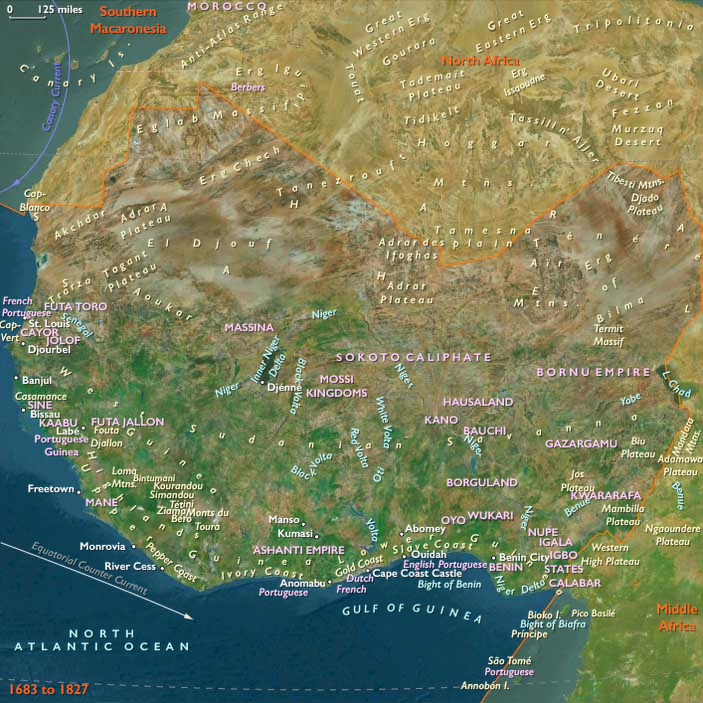
Subregions