
The presence of the string of Greek …
Years: 231BCE - 231BCE
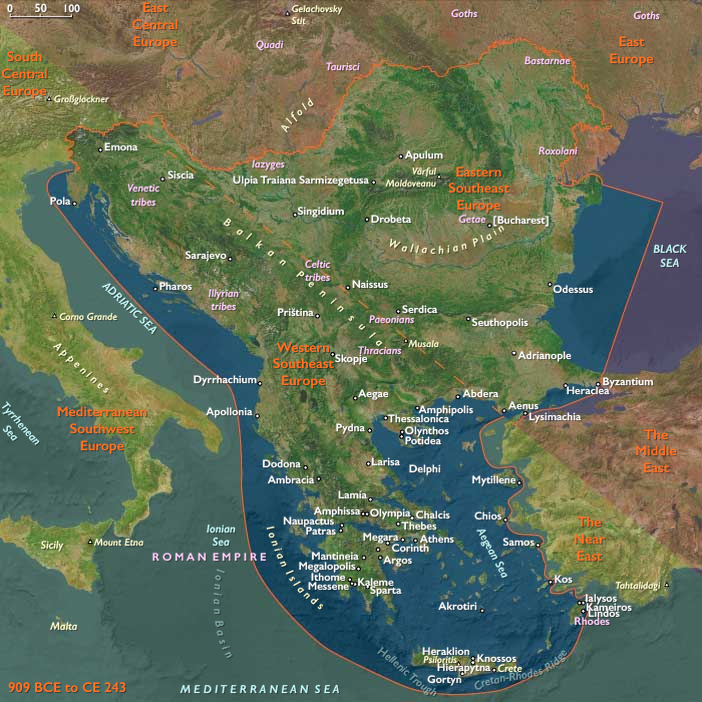
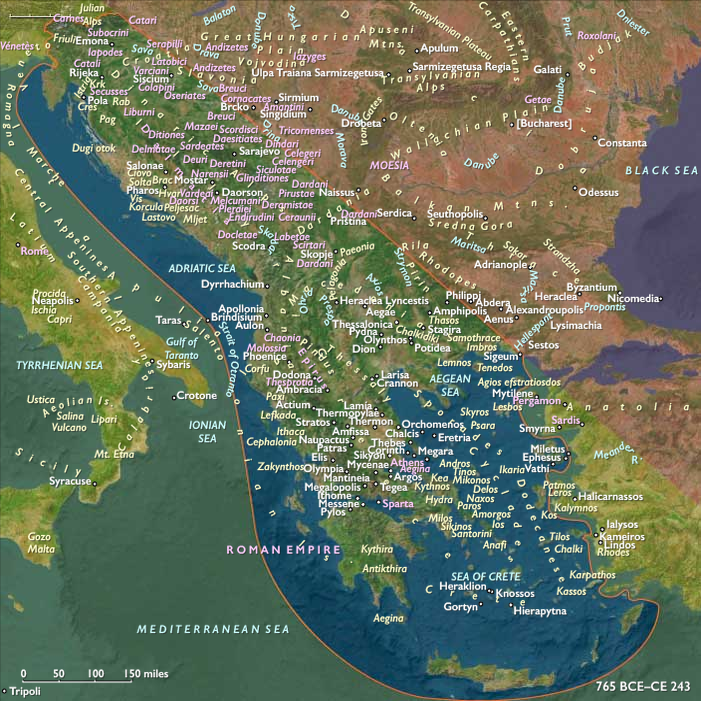
The presence of the string of Greek colonies on Illyrian soil, dating from the eighth to the sixth centuries BCE, had brought the Illyrians, bearers of the Hallstatt culture, into contact with a more advanced civilization, which helped them to develop their own culture, while they in turn influenced the economic and political life of the colonies.
The colonies began to decline in the third century BCE and eventually perished.
The Illyrians are divided into tribes, each a self-governing community with a council of elders and a chosen leader.
Roughly parallel with the rise of Greek colonies, Illyrian tribes began to evolve politically from relatively small and simple entities into larger and more complex ones.
At first they formed temporary alliances with one another for defensive or offensive purposes, then federations and, still later, under strong tribal chieftains, kingdoms.
The most important of these kingdoms, which flourish from the fifth to the second century BCE, are those of the Enkalayes, the Taulantes, the Epirotes, and the Ardianes.
By the latter part of the third century BCE, the Ardian branch of the Illyrian people has developed a strong state with efficient armed forces and a fleet of warships, and Rome determines to curb the power of this vigorous neighbor.
One of the most important rulers of this last and best-known Illyrian kingdom, centered upon Scodra (modern Shkodër, Albania), is Agron, who, in alliance with Demetrius II of Macedonia in 231, defeats the Aetolians.
He dies suddenly, however, and during the minority of his son, his widow, Teuta, acts as regent.
Under Queen Teuta, Illyrians attack Sicily and the Greek colonies of the coast with part of the Illyrian navy.
Locations
People
Groups
- Sicily, classical
- Roman Republic
- Aetolian League
- Greece, Hellenistic
- Illyria, Kingdoms of
- Greeks, Hellenistic
- Macedon, Antigonid Kingdom of
- Epirote League
Topics
Commodoties
Subjects
Regions
Subregions
Years: 231BCE - 231BCE
Locations
People
Groups
- Sicily, classical
- Roman Republic
- Aetolian League
- Greece, Hellenistic
- Illyria, Kingdoms of
- Greeks, Hellenistic
- Macedon, Antigonid Kingdom of
- Epirote League
Topics
Commodoties
Subjects
Regions
Subregions