
Lucas van Leyden’s Early Mastery of Engraving …
Years: 1508 - 1508
Lucas van Leyden’s Early Mastery of Engraving (1508)
In 1508, the young Dutch artist Lucas van Leyden—also known as Lucas Hugensz—produced his earliest known engraving, Mohammed and the Murdered Monk, a remarkable work that demonstrated exceptional maturity in both inspiration and technical execution. Only about fourteen at the time, Lucas’s precocious talent firmly established him as one of the most promising and technically accomplished engravers in Atlantic West Europe.
Early Life and Training
Lucas van Leyden was initially trained by his father, Huygh, and the established painter Cornelis Engelbrechtsz, both primarily painters rather than printmakers. Remarkably, despite this painterly training, Lucas's primary artistic expression was through the medium of engraving—a skill whose precise origin and early instruction remain unknown. Historian and artist Carel van Mander later depicted Lucas as a tireless young prodigy who would annoy his mother by persistently working late into the night, despite the cost of candles and her worries about the effect of excessive study on his temperament.
Lucas’s singular dedication to artistic perfection led him to prefer the company of other aspiring young artists, including painters, glass-etchers, and goldsmiths. His artistic talent was early recognized: at just twelve years old, he earned from Johan van Lockhorst, a nobleman from Leiden, one golden florin for each year of his age for producing a watercolor depicting St. Hubert—an extraordinary recognition of youthful genius.
Artistic Significance
The 1508 engraving, Mohammed and the Murdered Monk, exemplifies Lucas’s precocious ability, combining technical mastery, meticulous detail, and sophisticated composition well beyond his years. This work demonstrated his command of pictorial space, dynamic storytelling, and precise linework, instantly setting him apart as a leading engraver of his generation.
Consequences and Legacy
Lucas van Leyden’s early mastery and innovations in engraving significantly influenced printmaking across northern Europe, firmly establishing engraving as a prestigious art form. His pioneering technique and virtuosity would influence generations of artists who followed, solidifying his enduring reputation as a foundational figure in the development of Northern Renaissance graphic arts.
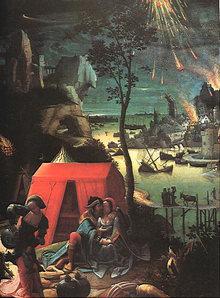
Lucas van Leyden: Lot and his Daughters (ca. 1509)
Locations
People
Groups
Topics
Subjects
Regions
Subregions
Related Events
Showing 10 events out of 39445 total
Years: 1508 - 1508
Lucas van Leyden: Lot and his Daughters (ca. 1509)
Locations
People
Groups
Topics
Subjects
Regions
Subregions