The Portuguese Restoration …
Years: 1663 - 1663
June
The Portuguese Restoration War (1640–1668) and the Battle of Ameixial (1663)
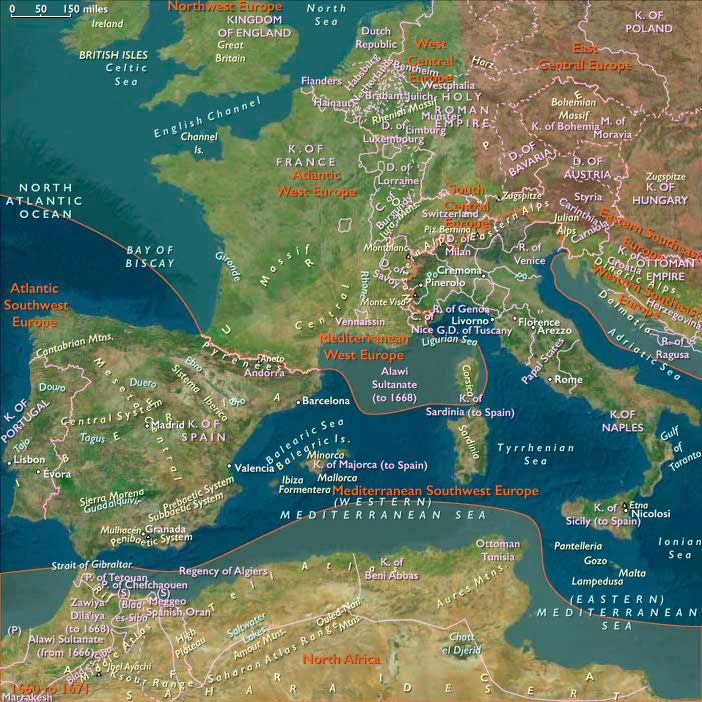
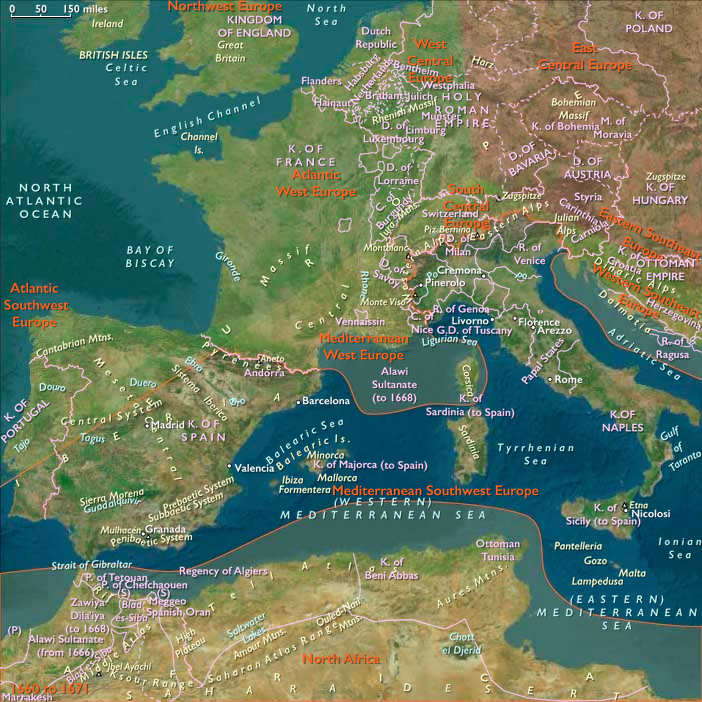
The Portuguese Restoration War (1640–1668), originally called the Acclamation War, was a prolonged conflict between Portugal and Spain following the Portuguese revolution of 1640, which ended the dual monarchy of the Iberian Union (1580–1640). Although it included sporadic skirmishes and larger battles, Spain made a major effort to crush Portuguese independence in the early 1660s, culminating in the Spanish defeat at the Battle of Ameixial in 1663.
Spain’s Renewed Offensive: The Capture of Évora (1662–1663)
- By 1662, Spain was determined to end the Portuguese rebellion and restore Habsburg control.
- John of Austria the Younger, Philip IV’s illegitimate son, led 14,000 Spanish troops into Alentejo, Portugal’s vulnerable southeastern frontier region.
- In May 1663, the Spanish captured Évora, one of the most important cities in Alentejo, opening the possibility of a march on Lisbon, only 135 kilometers away.
- However, logistical failures—lack of ammunition, food, and money—crippled the Spanish advance, preventing them from consolidating their position.
The Battle of Ameixial (June 8, 1663): The Turning Point
Portugal, recognizing the seriousness of the Spanish invasion, mobilized a large relief army:
- António Luís de Meneses, 1st Marquess of Marialva, took command of 20,000 Portuguese troops.
- The army included foreign officers, notably the Huguenot general Friedrich Hermann von Schönberg (Duke of Schomberg), who brought military expertise from European conflicts.
- Portugal was reinforced by English troops, part of the Anglo-Portuguese alliance.
The Battle Near Santa Vitória do Ameixial (June 8, 1663)
- The Portuguese and English forces attacked Spanish positions near the village of Santa Vitória do Ameixial.
- After intense fighting, the Spanish were decisively defeated, suffering heavy casualties.
- The defeat forced John of Austria to abandon Évora, retreating to Badajoz in Extremadura.
Spanish Collapse and the Recapture of Évora (June 24, 1663)
- The Spanish garrison of Évora, consisting of 3,700 men, surrendered on June 24, 1663.
- This completed the failure of the Spanish expedition, which had begun with high hopes but ended in retreat and humiliation.
Conclusion: The Beginning of Spain’s Decline in the War
The Battle of Ameixial (1663) was a decisive victory for Portugal, demonstrating its resilience and military capability against Spain.
- The Spanish defeat crippled their ability to retake Portugal, shifting the momentum of the war.
- Portugal’s alliance with England and use of foreign commanders (like Schomberg) strengthened its military leadership.
- By 1668, after further defeats, Spain formally recognized Portugal’s independence with the Treaty of Lisbon.
The Portuguese Restoration War, though long and costly, ultimately secured Portugal’s independence from Spain, ensuring the continuation of the Braganza dynasty and reinforcing Portugal’s separate national identity.
Locations
People
Groups
Topics
Commodoties
Subjects
Regions
Subregions
Related Events
Filter results
Showing 10 events out of 31101 total
The Prix de Rome, a scholarship for arts students, principally of painting, sculpture and architecture, is created, initially for painters and sculptors, in 1663 in France during the reign of Louis XIV as an annual bursary for promising artists who prove their talents by completing a very difficult elimination contest.
The prize, organized by the Académie Royale de Peinture et de Sculpture or the Royal Academy of Painting and Sculpture, is open to their students.
Vermeer paints mostly domestic interior scenes.
His works are largely genre pieces and portraits, with the exception of two cityscapes and two allegories.
His subjects offer a cross-section of seventeenth century Dutch society, ranging from the portrayal of a simple milkmaid at work, to the luxury and splendor of rich notables and merchantmen in their roomy houses.
Besides these subjects, religious, poetical, musical, and scientific comments can also be found in his work.
Young Woman with a Water Jug is one of a closely related group painted in the early to mid 1660s where the artist appears to be moving away from an emphasis on linear perspective and geometric order.
He seems to be moving to a simpler form using only one figure and emphasizing the use of light.
The Iroquois send an army of eight hundred warriors into the Susqehannock territory in 1663.
The Susquehannocks and their English allies repulse the attack, but the invasion prompts the colony of Maryland to declare war on the Iroquois.
The Iroquois are at war also in 1663 with the Sokoki tribe of the upper Connecticut River, a branch of the Abenaki.
Smallpox strikes again; through the effects of disease, famine, and war, the Iroquois are threatened by extermination.
An Oneida party strikes at allies of the Susquehannock on Chesapeake Bay in 1664.
Most of the work on the approximately fifty plantations around Paramaribo in 1663 is done by native Indians and three thousand enslaved Africans.
The approximately one thousand whites here, including the Brazilian Jews, have been attracted by the religious freedoms granted by the English to all the settlers.
Buccaneers from all over the Caribbean join the pirate Myngs in 1663 for the announced next expedition.
Myngs directs the largest buccaneer fleet as yet assembled, fourteen ships strong and with fourteen hundred pirates aboard, among them such notorious privateers as Henry Morgan and Abraham Blauvelt, and sacks San Francisco de Campeche in February.
King Charles charters a new colony to the south of Virginia (and north of Spanish Florida) named Carolina after his father and centered on the recently established settlements of Albemarle sound.
The Charter of Carolina establishes the Province of Carolina on March 24, 1663, and divides it between eight of his loyal friends, known as the Lords Proprietors, as a reward for their faithful political and financial support of his efforts to regain the throne of England.
Myngs’s atrocities lead to an outrage and Charles II of England is forced to forbid further attacks in April, a policy to be carried out by Jamaica’s new acting governor, Thomas Lynch.
Nevertheless, a pattern has been set and large buccaneer attacks on Spanish settlements, secretly condoned by the English authorities, will continue till the end of the century, gradually laying waste to the entire region.
Dutch emissaries, hopeful of making a treaty with the Esopus, contact the tribe on June 5, 1663, and request a meeting.
The natives reply that it is their custom to conduct peace talks unarmed and in the open, so the gates of Wiltwijck are kept open.
The natives arrive on June 7 in great numbers, many claiming to be selling produce, thereby infiltrating deep into the town as scouts.
By the time word arrived that Esopus warriors had completely destroyed the neighboring village of Nieu Dorp (modern day Hurley), the scouts are in place around the town and begin their own attack.
Well-armed and spread out, they take the Dutch by surprise and soon control much of the town, setting fire to houses and kidnapping women before they are finally driven out by a mob of settlers.
The attackers escape, and the Dutch repair their fortifications.
Dutch soldiers transporting ammunition to the town on June 16 are attacked on their way from Rondout Creek.
The Esopus are again repelled.