
The population of the Halaf culture in …
Years: 5517BCE - 5374BCE
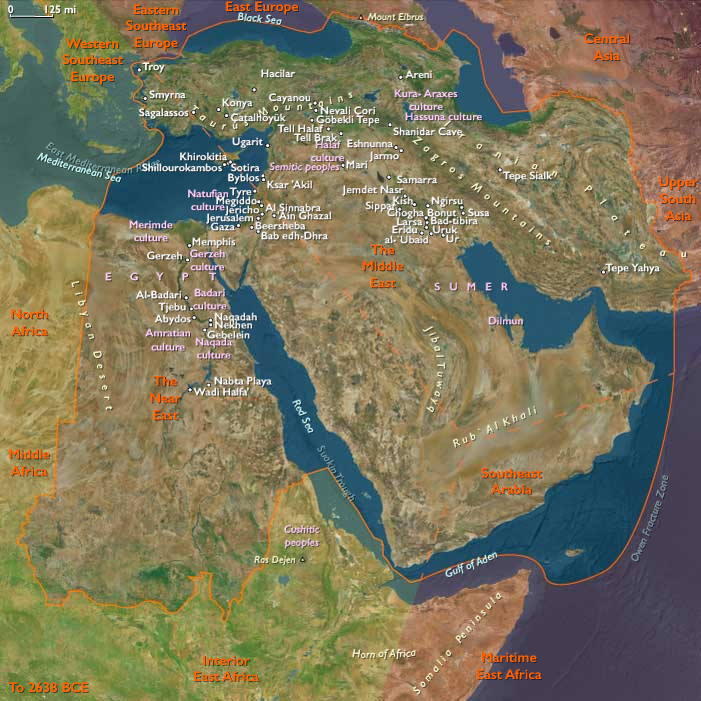
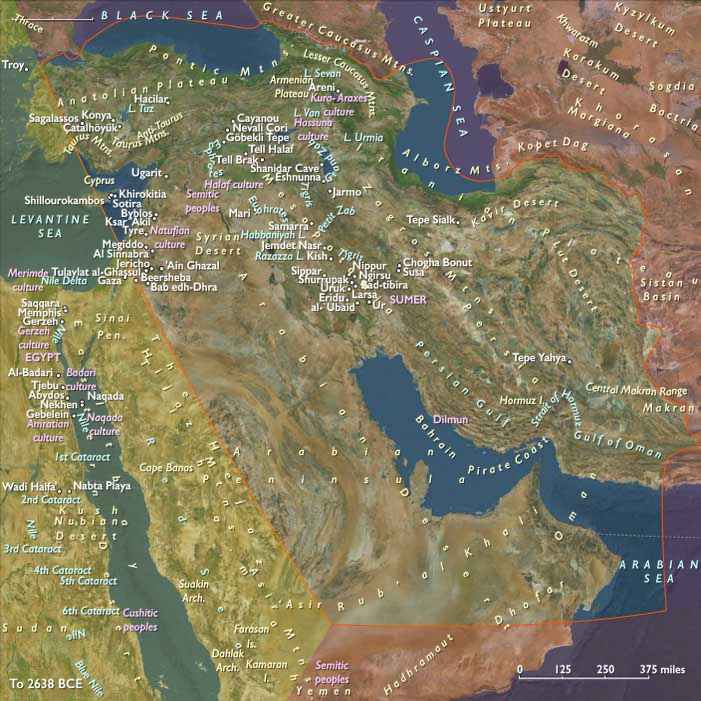
The population of the Halaf culture in southern Mesopotamia practices dryland farming, based on exploiting natural rainfall without the help of irrigation, in a similar practice to that still practiced today by the Hopi people of Arizona.
Emmer wheat, two-rowed barley, and flax are grown.
They keep cattle, sheep, and goats.
Although no Halaf settlement has been extensively excavated, some buildings have been excavated: the tholoi of Tell Arpachiyah, circular domed structures approached through long rectangular anterooms.
Only a few of these structures have ever been excavated.
They were constructed of mud-brick sometimes on stone foundations and may have been for ritual use (one contained a large number of female figurines).
Other circular buildings were probably just houses.
The best-known, most characteristic pottery of Tell Halaf, called Halaf ware, produced by specialist potters, can be painted, sometimes using more than two colors (called polychrome) with geometric and animal motifs.
Other types of Halaf pottery are known, including unpainted, cooking ware and ware with burnished surfaces.
There are many theories about why the distinctive pottery style developed.
The theory is that the pottery came about due to regional copying and that it was exchanged as a prestige item between local elites is now disputed.
The polychrome painted Halaf pottery has been proposed to be a "trade pottery"—pottery produced for export—however, the predominance of locally produced painted pottery in all areas of Halaf sites including potters settlement questions that theory.
The finding of Halaf pottery in other parts of northern Mesopotamia, such as at Nineveh and Tepe Gawra, Chagar Bazar and at many sites in Anatolia (Turkey), suggests that it was widely used in the region.
In addition, the Halaf communities made female figurines of partially baked clay and stone and stamp seals of stone.
The seals are thought to mark the development of concepts of personal property, as similar seals were used for this purpose in later times.
The Halaf people used tools made of stone and clay.
Copper was also known, but was not used for tools.
Locations
Groups
Topics
Commodoties
- Weapons
- Water
- Domestic animals
- Grains and produce
- Textiles
- Ceramics
- Strategic metals
- Manufactured goods
Subjects
- Commerce
- Symbols
- Architecture
- Engineering
- Sculpture
- Environment
- Labor and Service
- Fashion
- Conflict
- Faith
- Government
- Technology
- Anthropology
- Archaeology
Regions
Subregions
Related Events
Showing 10 events out of 69026 total
Years: 5517BCE - 5374BCE
Locations
Groups
Topics
Commodoties
- Weapons
- Water
- Domestic animals
- Grains and produce
- Textiles
- Ceramics
- Strategic metals
- Manufactured goods
Subjects
- Commerce
- Symbols
- Architecture
- Engineering
- Sculpture
- Environment
- Labor and Service
- Fashion
- Conflict
- Faith
- Government
- Technology
- Anthropology
- Archaeology
Regions
Subregions