Luís Vaz …
Years: 1580 - 1580
Luís Vaz de Camões and the Fall of Portugal (1578–1580)
By 1578, Luís Vaz de Camões, Portugal’s greatest poet, was an old and impoverished man, living in Lisbon when he received devastating news:
- King Sebastian I had been killed at the Battle of Alcácer Quibir (1578), along with most of the Portuguese nobility.
- Portugal was now in crisis, facing a succession dispute that would soon lead to Spanish intervention and occupation (1580).
- Camões’ royal pension, granted by Sebastian, ended with the king’s death, leaving him destitute.
Living in Poverty, Cared for by His Loyal Servant
- Jao, a faithful servant from Macao, had accompanied Camões back to Lisbon and remained by his side, caring for him in his final years of poverty.
- The once-revered poet, who had glorified Portugal’s conquests and empire in Os Lusíadas (1572), now witnessed the collapse of his homeland.
Camões' Final Words on Portugal’s Fate
-
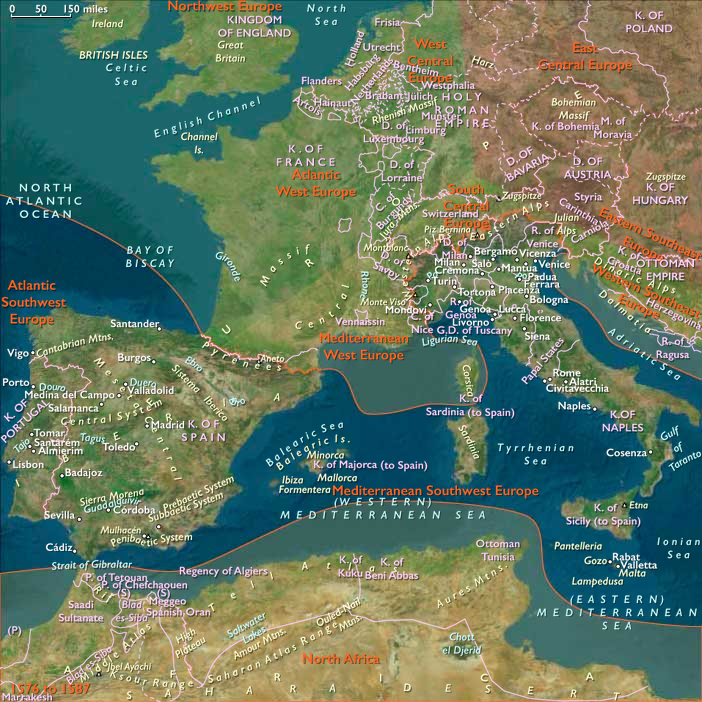
As Spanish troops approached Lisbon in 1580, Camões wrote a letter to the Captain General of Lamego, expressing his sorrow for Portugal’s decline:
"All will see that so dear to me was my country that I was content to die not only in it but with it."
-
These words reflect his deep patriotism and despair, as he felt Portugal was dying with him.
Conclusion: The Poet and His Nation’s Fall
- Luís de Camões died in 1580, just months before Philip II of Spain claimed the Portuguese throne, ending Portugal’s independence for 60 years.
- His life mirrored the rise and fall of Portugal, from its Age of Discovery to its political decline.
- To this day, Camões remains Portugal’s national poet, a symbol of both its glorious past and lost dreams.
His last years of hardship and his final words encapsulate the tragedy of a poet whose nation fell with him.
Locations
People
Groups
Topics
Commodoties
Subjects
Regions
Subregions
Related Events
Filter results
Showing 10 events out of 34969 total
Spain has by 1580 consolidated military and political control in the Philippines, except for ...
...Mindanao, ...
...Palawan, and ...
...the Sulu Archipelago.
The Mori family had first achieved prominence in the early sixteenth century when some vassals of the Ouchi family, then the dominant power in west Honshu and probably the most powerful warriors in all Japan, had revolted against the Ouchi's autocratic rule.
Under the leadership of Mori Motonari (1497–1571), his family, though not directly involved in the uprising, had been able to profit by the revolt, and in 1557 he had become the new overlord of west Honshu.
Motonari's grandson, Mori Terumoto, had become the major opponent of Nobunaga when the great warrior made his bid to reunify Japan.
After a two-year siege against Bessho Nagaharu, a retainer of the Mori clan, the Hideyoshi clan in 1580 captures Miki, a city in western Honshu, Japan, that had developed around a castle built by Bessho Naganori in 1468.

Nobunaga finally achieves the surrender of the fortress-monastery of Hongan-ji at Osaka, the most important political and military center of the Ikko, only through the mediation of the Imperial court in 1580; the ten-year-siege has been the longest in Japanese history.
Following the destruction of Nagashima, Nobunaga orders his men to search all of Echizen Province and kill every last man and woman of the so-called Ikko sect.
After capturing a great number of manors and temple estates, Nobunaga has established his hold on the samurai and the wealthier farmers by investing them with the newly won estates.
He thus has gained a firm political and economic basis, which he has strengthened by reducing even further the traditional influence of the Buddhist temples.
Once established in Kyoto, he had extended his protection to the Jesuit missionaries and assisted them in building a church in the capital and a seminary in Azuchi.
He does so not only because of his interest in European culture but because he regards the encouragement of Christianity as a further means of restraining the influence of the Buddhist temples.
As a nonbeliever, Nobunaga’s attitude toward Christianity is frankly political.
The Historical Record of Influenza: From Hippocrates to Modern Understanding
The symptoms of human influenza were clearly described by Hippocrates approximately 2,400 years ago, making it one of the oldest documented infectious diseases in history. However, while influenza-like illnesses have likely caused epidemics throughout human history, interpreting historical data on influenza remains difficult, as its symptoms resemble those of other respiratory diseases.
Hippocrates' Early Description of Influenza
- The Greek physician Hippocrates (c. 460–370 BCE) provided one of the earliest known clinical descriptions of an illness resembling influenza.
- His writings detail fever, coughing, body aches, and respiratory distress, symptoms characteristic of modern flu cases.
- While this suggests that influenza existed in ancient times, distinguishing it from other respiratory diseases such as pneumonia, bronchitis, or plague is challenging.
Difficulties in Interpreting Historical Influenza Epidemics
-
Symptom Overlap with Other Diseases
- Many historical records describe outbreaks with symptoms similar to influenza, but the same descriptions could apply to:
- Bubonic plague (Yersinia pestis) – which sometimes presents with fever and respiratory symptoms.
- Typhus – which includes fever, muscle pain, and coughing.
- Other coronaviruses or respiratory infections.
- Many historical records describe outbreaks with symptoms similar to influenza, but the same descriptions could apply to:
-
Lack of Precise Medical Terminology
- Early medical records lacked modern diagnostic tools, making it difficult to differentiate influenza from other respiratory diseases.
- Physicians often used broad terms like "pestilence" or "fever" to describe epidemics.
-
Epidemic Cycles and Global Spread
- Influenza may have circulated in localized outbreaks for centuries before becoming a recognizable global pandemic disease in modern history.
- Trade routes, migration, and military campaigns likely facilitated its spread, but historical documentation remains inconsistent.
Conclusion: Influenza as a Persistent but Elusive Disease
While influenza has likely affected human populations for millennia, its historical footprint is difficult to track with certainty due to its symptomatic similarity to other diseases. The first well-documented influenza pandemic (1580) provides a clearer historical marker, but earlier outbreaks—such as those noted by Hippocrates—suggest that influenza has been a recurring part of human history for thousands of years.
Early Influenza Transmission to the Americas (1493)
Influenza may have spread from Europe to the Americas as early as the European colonization of the New World. One of the first recorded epidemics in the Americas occurred in 1493, following Christopher Columbus’ second voyage, when a devastating disease resembling influenza swept through the indigenous population of the Antilles, causing widespread mortality.
The 1493 Epidemic in the Antilles
- Shortly after Columbus’ arrival, reports suggest that a rapidly spreading disease struck the indigenous Taíno population.
- The symptoms described by contemporary chroniclers resemble influenza, though some scholars believe it could have been a combination of respiratory infections or another European-introduced disease.
- With little or no immunity to Old World pathogens, the indigenous population suffered extreme mortality rates.
- This epidemic marked one of the first documented instances of European diseases devastating the native peoples of the Americas, preceding the later smallpox and measles outbreaks.
Significance of Early Influenza in the Americas
- One of the earliest recorded transatlantic disease transmissions, possibly introducing influenza-like illnesses to the New World.
- Set a precedent for future epidemics that would devastate indigenous populations due to their lack of resistance to European diseases.
- Showed how early European exploration and colonization facilitated global disease spread, a key component of the Columbian Exchange.
Conclusion: The First Recorded Influenza-Like Epidemic in the New World
The 1493 epidemic in the Antilles demonstrates how influenza or other respiratory diseases may have been among the earliest European illnesses introduced to the Americas. This outbreak, occurring just a year after Columbus’ first voyage, played a tragic role in the larger pattern of Old World diseases decimating indigenous populations in the wake of European expansion.
The 1580 Influenza Pandemic: The First Recorded Global Flu Outbreak
The 1580 influenza pandemic is considered the first well-documented worldwide outbreak of influenza, spreading across Russia, Africa, and Europe. This pandemic, though poorly understood at the time, provided the earliest evidence of how influenza could spread rapidly across continents, foreshadowing future pandemics.
Origins and Spread of the 1580 Influenza Pandemic
- The epidemic is believed to have originated in Russia before spreading southward into Africa and then into Europe.
- Maritime trade and military movements played a significant role in accelerating its transmission.
Geographic Spread
-
Russia (Spring 1580)
- The disease first emerged in Russia, possibly in early spring, and spread westward into Eastern Europe.
-
Africa and the Mediterranean
- By mid-1580, influenza had spread to North Africa, particularly Morocco and Algeria, then moved into Spain and Italy via trade routes.
-
Western and Northern Europe
- The disease quickly reached France, the Low Countries, and England, where it caused severe outbreaks in urban centers.
- Germany and Scandinavia also suffered widespread infections by late 1580.
Impact of the 1580 Influenza Pandemic
- High Infection Rates: The flu spread rapidly, infecting large segments of the population in a short period.
- High Mortality in Vulnerable Groups:
- The elderly and those with weakened immune systems were disproportionately affected.
- Though mortality was lower than with bubonic plague, the sheer number of cases caused significant disruption.
- Economic and Social Disruption:
- Trade, commerce, and government functions slowed due to widespread illness.
- Hospitals and medical facilities were overwhelmed, with little effective treatment available.
Historical Significance
- The 1580 pandemic was the first well-documented influenza outbreak, confirming that influenza could spread globally.
- It demonstrated patterns of influenza transmission, particularly the importance of trade and travel in disease spread.
- The outbreak influenced future medical approaches to epidemic disease, although influenza would not be fully understood until centuries later.
Conclusion: The First Global Influenza Pandemic
The 1580 influenza pandemic was a landmark event in medical history, marking the earliest convincing record of a global flu outbreak. It spread from Russia to Africa and Europe, illustrating the patterns of global disease transmission that would be seen in later pandemics, including those of the 19th and 20th centuries.