
The Plataeans, adhering to the alliance of …
Years: 490BCE - 490BCE
September
The Plataeans, adhering to the alliance of 519 BCE, add their troop strength of one thousand to that of the Athenians (the Tomb of the Plataeans, excavated in 1966, probably commemorates the place where they fell).
The Athenian Callias, a three-time winner of the Olympic chariot race, is a member of the Greek force, as is budding Athenian dramatist Aeschylus, who has begun to submit plays in the past decade.
Miltiades, occupying the foothills surrounding the bay, waits for a favorable moment to attack.
He chooses a time when the Persian cavalry is nonoperational, either because it has reembarked for a possible direct attack on Athens or because of some other circumstance; the reason for its absence is uncertain.
The Greeks in any case attack the Persians “at a run,” probably advancing under a under a hail of arrows.
The combination of Greek tactics, the superiority of their armor, and the new phalanx formation proves decisive.
Charging a mile across the Marathon plain, Miltiades' ten thousand Greek troops envelop—by design or topographic necessity—the Persian phalanx infantry, killing some sixty-four hundred men (and capturing seven ships) at a cost of one hundred and ninety-two Athenian dead (according to Herodotus).
The rest of the Persian force quickly embarks and put out to sea.
The Spartans arrive a couple of days later to view the corpses and depart with patronizing congratulations to the Athenians.
Locations
People
Groups
- Athens, City-State of
- Ionians
- Greece, classical
- Persian people
- Sparta, Kingdom of
- Achaemenid, or First Persian, Empire
Topics
- Younger Subboreal Period
- Iron Age Europe
- Iron Age Cold Epoch
- Classical antiquity
- Greco-Persian Wars, Early
- Persian Invasion of Greece, First
- Marathon, Battle of
Commodoties
Subjects
- Commerce
- Watercraft
- Environment
- Labor and Service
- Conflict
- Mayhem
- Games and Sports
- Faith
- Government
- Technology
Regions
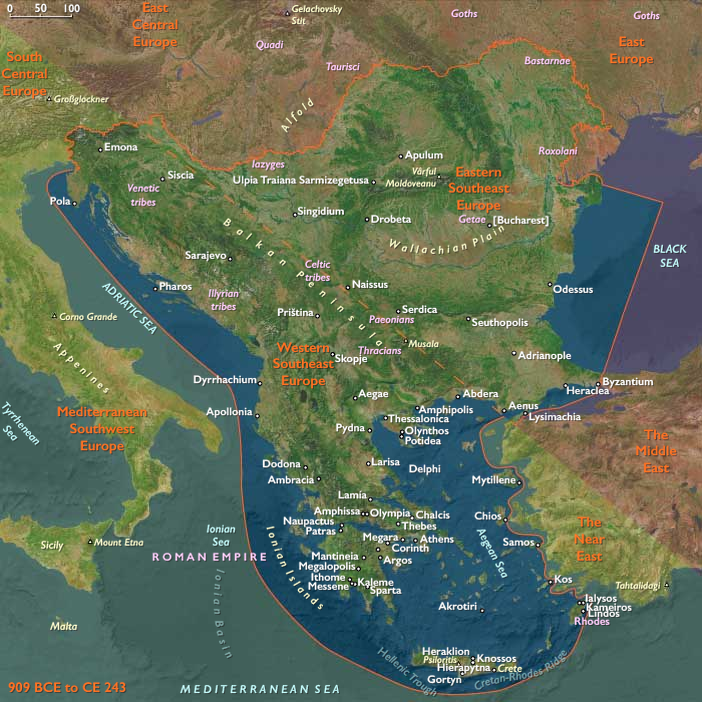
Subregions
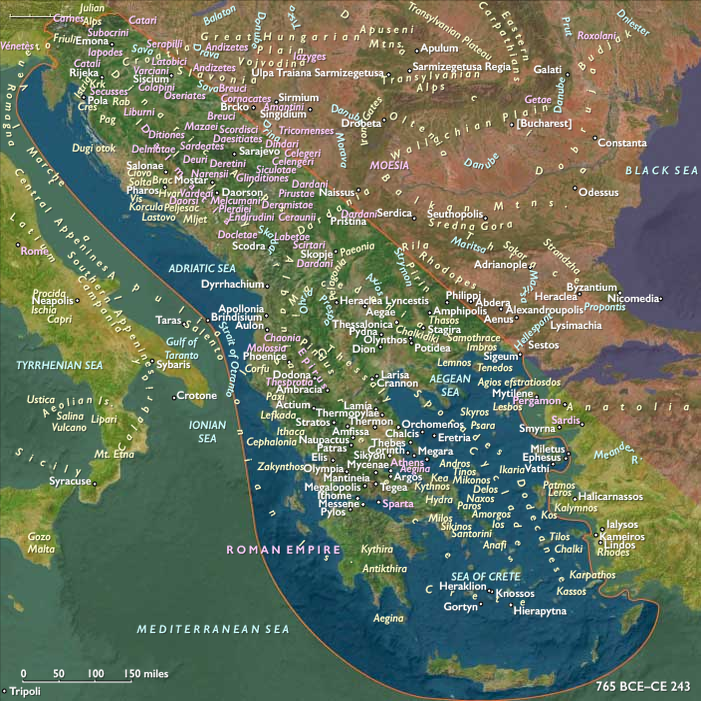
Related Events
Showing 10 events out of 65634 total
Years: 490BCE - 490BCE
September
Locations
People
Groups
- Athens, City-State of
- Ionians
- Greece, classical
- Persian people
- Sparta, Kingdom of
- Achaemenid, or First Persian, Empire
Topics
- Younger Subboreal Period
- Iron Age Europe
- Iron Age Cold Epoch
- Classical antiquity
- Greco-Persian Wars, Early
- Persian Invasion of Greece, First
- Marathon, Battle of
Commodoties
Subjects
- Commerce
- Watercraft
- Environment
- Labor and Service
- Conflict
- Mayhem
- Games and Sports
- Faith
- Government
- Technology
Regions
Subregions