
The Pizarro expedition finally reaches the northwestern …
Years: 1528 - 1528
July
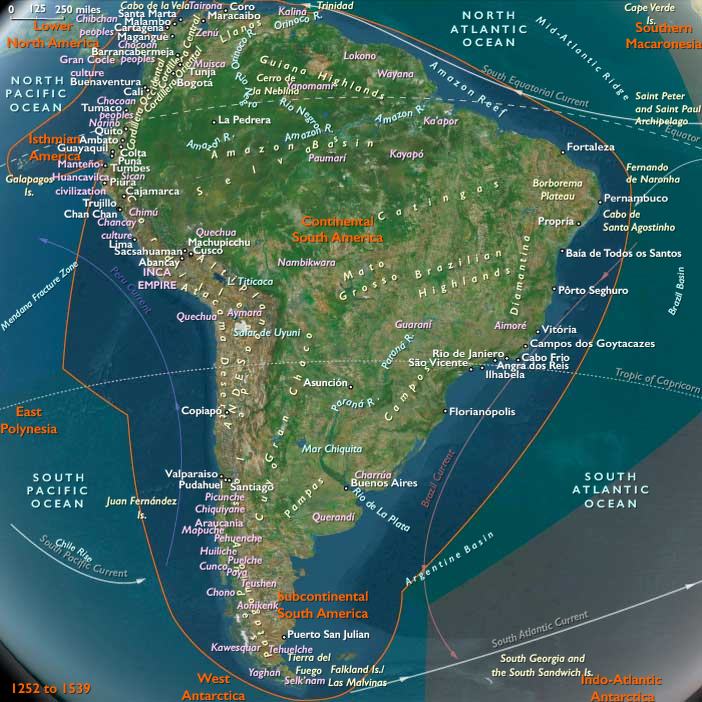
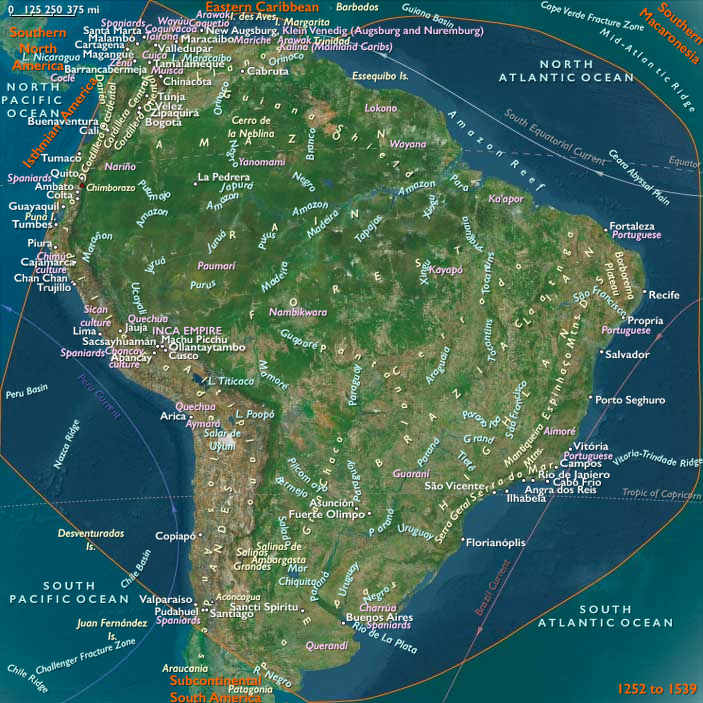
The Pizarro expedition finally reaches the northwestern Peruvian Tumbes Region by April 1528.
Tumbes becomes the territory of the first fruits of success the Spanish had so long desired, as they are received with a warm welcome of hospitality and provisions from the Tumpis, the local inhabitants.
On subsequent days, two of Pizarro's men, Alonso de Molina and Pedro de Candia, reconnoiter the territory and both, on separate accounts, report back the incredible riches of the land, including the decorations of silver and gold around the chief's residence and the hospitable attentions with which everyone had received them.
The Spanish also see, for the first time, the Peruvian llama, which Pizarro calls the "little camels".
The natives also begin calling the Spanish the "Children of the Sun" due to their fair complexions and brilliant armor.
Pizarro, meanwhile, continues receiving the same accounts of a powerful monarch who rules over the land they are exploring.
These events only serve as evidence to persuade the expedition of the wealth and power displayed at Tumbes as an example of the riches the Peruvian territory has awaiting to conquer.
The conquistadors decide to return to Panama to prepare the final expedition of conquest with more recruits and provisions.
Before leaving, however, Pizarro and his followers sail south not so far along the coast to see if anything of interest can be found.
Historian William H. Prescott recounts that after passing through territories they named such as Cabo Blanco, port of Payta, Sechura, Punta de Aguja, Santa Cruz, and Trujillo (founded by Almagro years later), they finally reached for the first time the ninth degree of the southern latitude in South America.
On their return towards Panama, Pizarro briefly stops at Tumbes, where two of his men have decided to stay to learn the customs and language of the natives.
Pizarro is also given two boys to learn his language, one of whom will later be baptized as Felipillo and serve as an important interpreter, the equivalent of Cortés' La Malinche of Mexico, and another called Martinillo.
Locations
People
- Diego de Almagro
- Felipillo
- Francisco Pizarro
- Hernando de Luque
- Hernán Cortés
- La Malinche (Malinali)
- Pedro de los Ríos y Gutiérrez de Aguayo
Groups
Topics
Commodoties
Subjects
Regions
Subregions
Years: 1528 - 1528
July
Locations
People
- Diego de Almagro
- Felipillo
- Francisco Pizarro
- Hernando de Luque
- Hernán Cortés
- La Malinche (Malinali)
- Pedro de los Ríos y Gutiérrez de Aguayo
Groups
Topics
Commodoties
Subjects
Regions
Subregions