
Mediterranean Southwest Europe (909 BCE – CE …
Years: 909BCE - 819
Mediterranean Southwest Europe (909 BCE – CE 819): Maritime Cities, Mountain Frontiers, and Cultural Crossroads
Geographic and Environmental Context
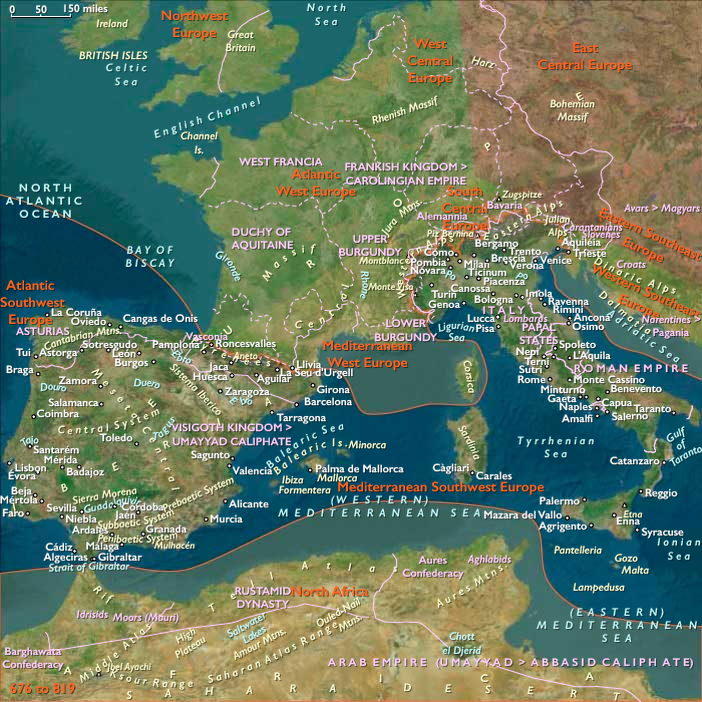
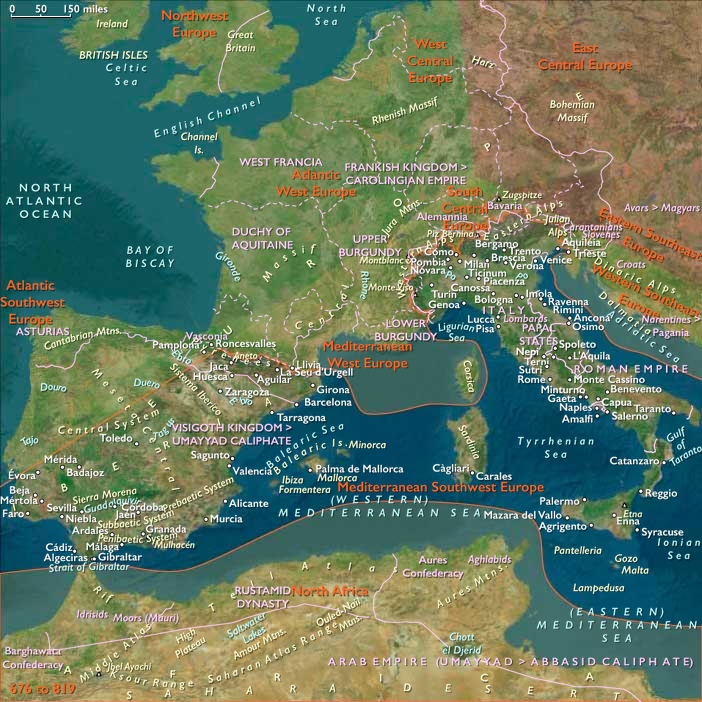
Mediterranean Southwest Europe includes Italy (together with Sardinia and Sicily), Malta, Southeastern Spain, and the Balearic Islands.
-
The subregion features the Italian Peninsula, volcanic uplands such as Mount Etna and Vesuvius, the Apennines, fertile river plains like the Po Valley, and extensive Mediterranean coastlines.
-
Its strategic islands and ports made it a focal point for maritime trade and naval power in the central and western Mediterranean.
Climate and Environmental Shifts
-
A Mediterranean climate with wet winters and dry summers favored vineyards, olive groves, and grain cultivation.
-
Seasonal rainfall variability could impact agricultural yields, prompting the use of irrigation in some areas.
-
Volcanic activity occasionally disrupted local economies but also enriched soils.
Societies and Political Developments
-
The early medieval centuries saw the transition from Late Roman provincial governance to the Byzantine administration in parts of southern Italy and the islands, and the rise of Lombard rule in much of the peninsula.
-
Coastal Spain experienced both Visigothic and, after 711 CE, Umayyad control.
-
Maritime cities such as Naples, Venice, and Palermo became vital trade hubs, with varying degrees of autonomy under larger political powers.
-
Malta and the Balearics were contested by Byzantine, North African, and Iberian interests.
Economy and Trade
-
Agriculture produced grain, wine, olive oil, fruits, and vegetables for local use and export.
-
Craft industries produced pottery, glassware, and metalwork.
-
Maritime trade linked the subregion to North Africa, the Levant, and Atlantic Europe, carrying goods such as spices, textiles, and precious metals.
-
The Po Valley and other fertile plains supplied surplus grain to urban markets.
Subsistence and Technology
-
Terrace farming on steep slopes maximized cultivation of vines and olives.
-
Roman-era aqueducts and irrigation systems remained in use in many areas.
-
Shipbuilding flourished in coastal cities, with vessels adapted for both trade and warfare.
Movement and Interaction Corridors
-
The Mediterranean Sea served as the principal conduit for commerce and cultural exchange.
-
Alpine passes connected northern Italy to transalpine trade routes into West Central Europe.
-
Coastal shipping routes linked Italian and Spanish ports to island markets and North African harbors.
Belief and Symbolism
-
Christianity was the dominant faith, with the Papacy in Rome exerting significant spiritual and political influence.
-
Monasteries, cathedrals, and churches served as cultural centers, preserving classical learning and fostering the arts.
-
Religious architecture and mosaics reflected a blend of Roman, Byzantine, and local traditions.
Adaptation and Resilience
-
Economic diversity across agriculture, trade, and crafts provided resilience against localized crises.
-
Coastal defenses and fortified hill towns protected against raids, especially from seaborne attackers.
-
Control of strategic straits and ports ensured influence over maritime traffic.
Long-Term Significance
By CE 819, Mediterranean Southwest Europe was a maritime and cultural hub bridging western Europe, the Byzantine world, and North Africa, maintaining continuity with its Roman past while adapting to shifting political realities.
Groups
- Roman Kingdom
- Roman Republic
- Roman Principate (Rome)
- Lombards (West Germanic tribe)
- Roman Empire (Rome): Julio-Claudian dynasty
- Roman Empire (Rome): Flavian dynasty
- Roman Empire (Rome): Nerva-Antonine dynasty
- Roman Empire (Rome): Severan dynasty
- Roman Empire (Rome): Non-dynastic
- Roman Empire: Tetrarchy
- Roman Empire: Constantinian dynasty (Nicomedia)
- Christianity, Nicene
- Roman Empire: Constantinian dynasty (Constantinople)
- Roman Empire: Valentinian dynasty (Rome)
- Roman Empire: Theodosian dynasty (Constantinople)
- Roman Empire, Western (Milan)
- Roman Empire, Western (Ravenna)
- Christianity, Chalcedonian
- Roman Empire, Eastern: Leonid dynasty
- Visigothic Kingdom of Spain
- Roman Empire, Eastern: Justinian dynasty
- Sicily, Roman (Byzantine)
- Lombards (Italy), Kingdom of the
- Roman Empire, Eastern: Non-dynastic
- Roman Empire, Eastern: Heraclian dynasty
- Naples, Duchy of
- Umayyad Caliphate (Damascus)
- Roman Empire, Eastern: Non-dynastic
- Roman Empire, Eastern: Heraclian dynasty
- Roman Empire, Eastern: Non-dynastic
- Roman Empire, Eastern: Isaurian dynasty
- Venice, Duchy of
- Papal States (Republic of St. Peter)
- Córdoba, Umayyad Emirate of
- Roman Empire, Eastern: Nikephorian dynasty
- Roman Empire, Eastern: Non-dynastic
Commodoties
- Glass
- Grains and produce
- Textiles
- Ceramics
- Strategic metals
- Slaves
- Beer, wine, and spirits
- Manufactured goods
- Spices
Subjects
Regions
Subregions
Years: 909BCE - 819
Groups
- Roman Kingdom
- Roman Republic
- Roman Principate (Rome)
- Lombards (West Germanic tribe)
- Roman Empire (Rome): Julio-Claudian dynasty
- Roman Empire (Rome): Flavian dynasty
- Roman Empire (Rome): Nerva-Antonine dynasty
- Roman Empire (Rome): Severan dynasty
- Roman Empire (Rome): Non-dynastic
- Roman Empire: Tetrarchy
- Roman Empire: Constantinian dynasty (Nicomedia)
- Christianity, Nicene
- Roman Empire: Constantinian dynasty (Constantinople)
- Roman Empire: Valentinian dynasty (Rome)
- Roman Empire: Theodosian dynasty (Constantinople)
- Roman Empire, Western (Milan)
- Roman Empire, Western (Ravenna)
- Christianity, Chalcedonian
- Roman Empire, Eastern: Leonid dynasty
- Visigothic Kingdom of Spain
- Roman Empire, Eastern: Justinian dynasty
- Sicily, Roman (Byzantine)
- Lombards (Italy), Kingdom of the
- Roman Empire, Eastern: Non-dynastic
- Roman Empire, Eastern: Heraclian dynasty
- Naples, Duchy of
- Umayyad Caliphate (Damascus)
- Roman Empire, Eastern: Non-dynastic
- Roman Empire, Eastern: Heraclian dynasty
- Roman Empire, Eastern: Non-dynastic
- Roman Empire, Eastern: Isaurian dynasty
- Venice, Duchy of
- Papal States (Republic of St. Peter)
- Córdoba, Umayyad Emirate of
- Roman Empire, Eastern: Nikephorian dynasty
- Roman Empire, Eastern: Non-dynastic
Commodoties
- Glass
- Grains and produce
- Textiles
- Ceramics
- Strategic metals
- Slaves
- Beer, wine, and spirits
- Manufactured goods
- Spices
Subjects
Regions
Subregions