
The Pharisaic leaders, given the title of …
Years: 76 - 76
The Pharisaic leaders, given the title of "rabbi" (Hebrew, "my teacher") shortly after the destruction of the Second Temple and the fall of Jerusalem, rally the Jews for the reconstruction of religious and social life.
Jewish leader Johanan ben Zakkai, head of the Sanhedrin, has reconvened the Pharisaic assembly at Jabneh, where it becomes both an executive organ and an academy for the study of the Torah.
The Romans recognize the head of the Sanhedrin and give him the title of patriarch; Diaspora Jews recognize his authority and interpretation of Jewish law.
The Pharisees use the institution of the synagogues a center of worship and education, and to adapt religious practice to new conditions, maintaining a unified and informed Jewish community. (The synagogues of Palestine and the Diaspora were, for three centuries before the destruction of the Temple, the functioning centers of Judaism, though when and how the synagogue emerged is not known.)
The elaborate sacerdotal vestments, prescribed for the priests of the Temple in Exodus 28, disappear, along with the priestly function, after the Temple’s destruction.
The Jewish scholars and teachers called tannaim continue to elaborate and systematize the Oral Torah.
The Hebrew alphabet, under the influence of the related Aramaic alphabet, has evolved during the period of the Second Temple into the familiar Square Script still used today.
Locations
People
Groups
Topics
Commodoties
Subjects
- Commerce
- Symbols
- Labor and Service
- Fashion
- Decorative arts
- Conflict
- Faith
- Government
- Scholarship
- Custom and Law
- Technology
Regions
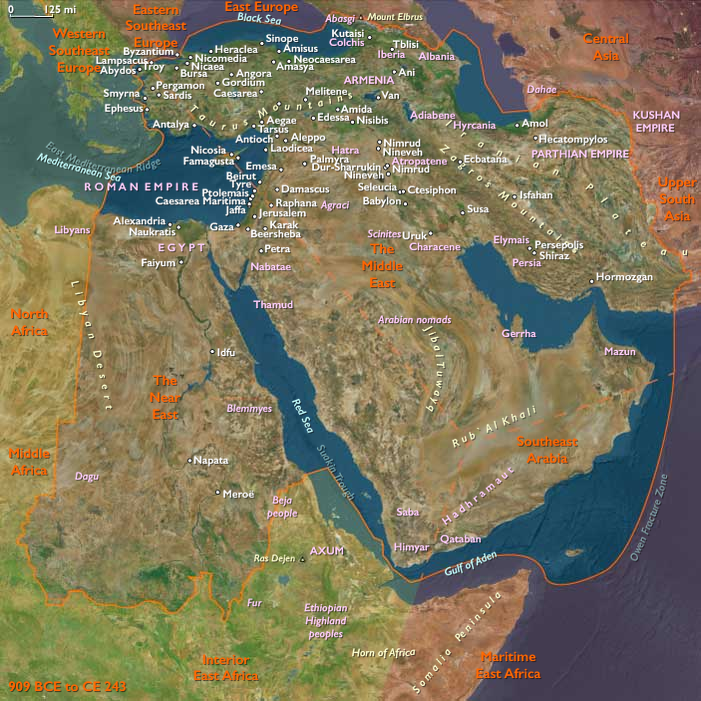
Subregions
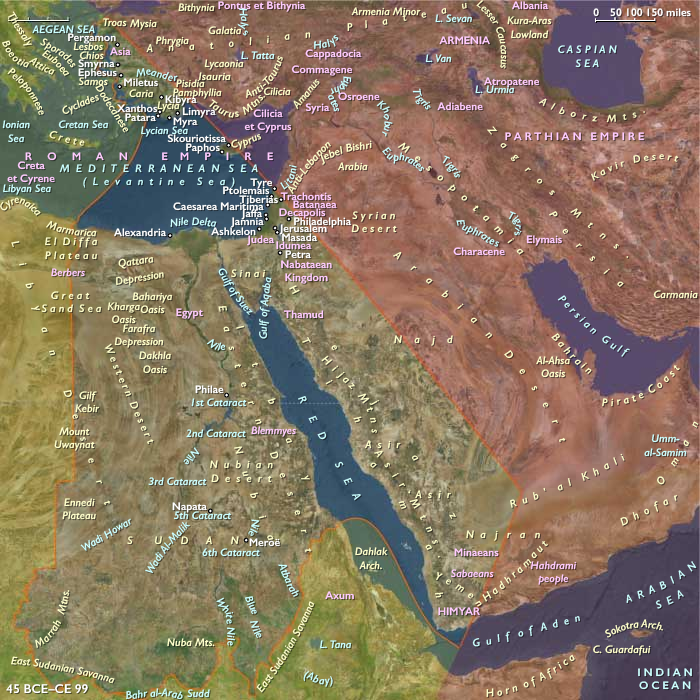
Related Events
Showing 10 events out of 61554 total
Years: 76 - 76
Locations
People
Groups
Topics
Commodoties
Subjects
- Commerce
- Symbols
- Labor and Service
- Fashion
- Decorative arts
- Conflict
- Faith
- Government
- Scholarship
- Custom and Law
- Technology
Regions
Subregions