
The Persians have managed in the waning …
Years: 358BCE - 358BCE
The Persians have managed in the waning years of Artaxerxes II to defeat a joint Egyptian–Spartan effort to conquer Phoenicia.
Artaxerxes spends much of his wealth on building projects.
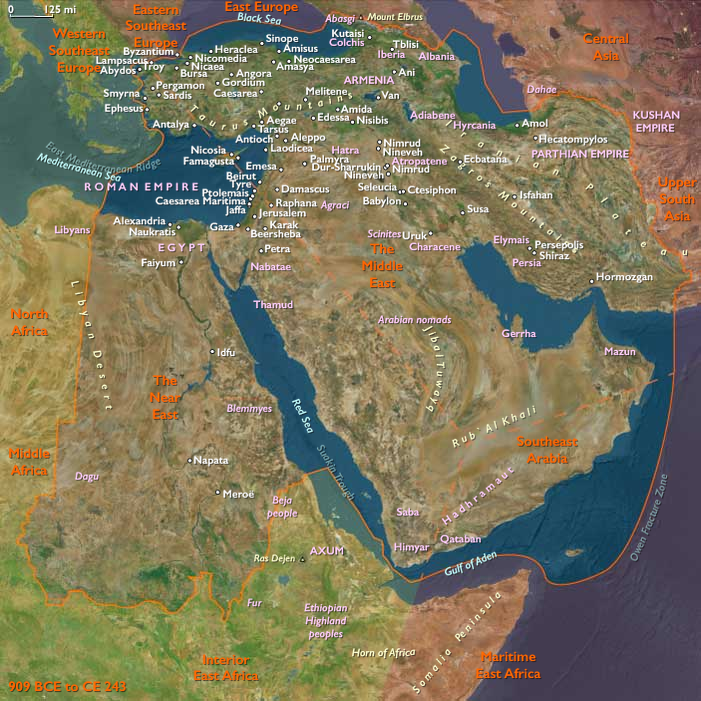
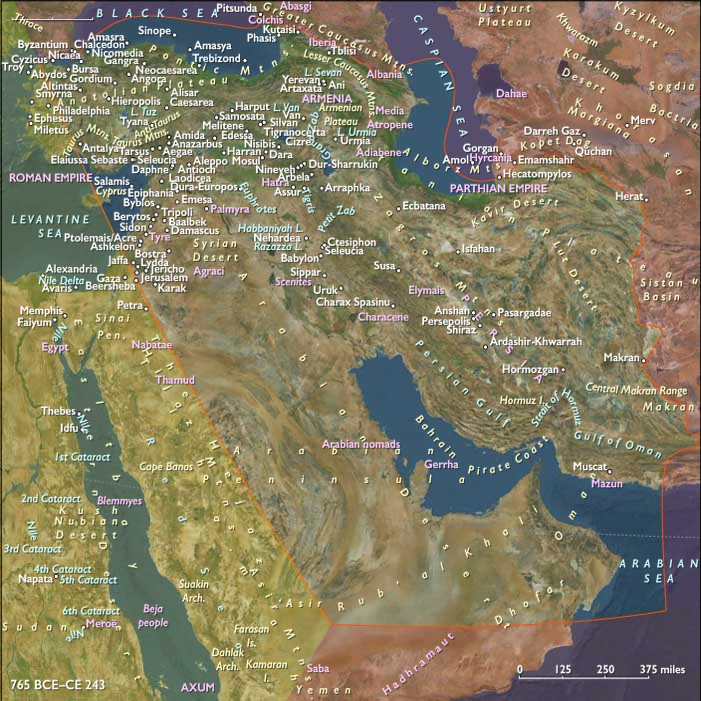
He has restored the palace of Darius I at Susa, and also the fortifications; including a strong redoubt at the southeast corner of the enclosure and given Ecbatana a new apadana and sculptures.
In inscriptions at Susa and Persepolis, Artaxerxes invokes the aid of the gods Mithra and Anahite, as well as of Ahura Mazda: an indication of a new development in the Persian religion of Zoroastrianism.
He is reported to have had a number of wives.
His main wife was Stateira, until she was poisoned by Artaxerxes' mother Parysatis in about 400 BCE.
He has also married several of his own daughters.
Another chief wife is a Greek woman of Phocaea named Aspasia (not the same as the concubine of Pericles).
Artaxerxes II is said to have more than one hundred and fifteen sons from three hundred and fifty wives.
Ochus, a son of Artaxerxes, satrap and commander of his father's army, attacks Egypt in 359 BCE as a reaction to Egypt's failed attacks on coastal regions of Phoenicia.
Artaxerxes dies in the following year at the age of 86, apparently because of a broken heart caused by his children's behavior.
Since his other sons, Darius, Ariaspes and Tiribazus had already been eliminated by plots, Ochus succeeds him as emperor.
As Artaxerxes III, his first order is the execution of over eighty of his nearest relations to secure his place as emperor.
He quickly restores royal authority over the satrapies of the west.
The insurrection (362–359), which had severely shaken Persian rule in Anatolia), results in a considerable measure of subsequent local autonomy for the Greek cities of Ionia.
Locations
People
Groups
- Carians
- Ionians
- Lycia
- Greece, classical
- Persian people
- Sparta, Kingdom of
- Egypt (Ancient), Late Period of
- Cappadocia, Satrapy of
- Phoenicia, Achaemenid
- Achaemenid, or First Persian, Empire
Topics
Commodoties
Subjects
- Commerce
- Architecture
- Engineering
- Sculpture
- Environment
- Labor and Service
- Conflict
- Mayhem
- Faith
- Government
- Technology
Regions
Subregions
Related Events
Showing 10 events out of 64721 total
Years: 358BCE - 358BCE
Locations
People
Groups
- Carians
- Ionians
- Lycia
- Greece, classical
- Persian people
- Sparta, Kingdom of
- Egypt (Ancient), Late Period of
- Cappadocia, Satrapy of
- Phoenicia, Achaemenid
- Achaemenid, or First Persian, Empire
Topics
Commodoties
Subjects
- Commerce
- Architecture
- Engineering
- Sculpture
- Environment
- Labor and Service
- Conflict
- Mayhem
- Faith
- Government
- Technology
Regions
Subregions