
The peninsular land mass that makes up …
Years: 688 - 699
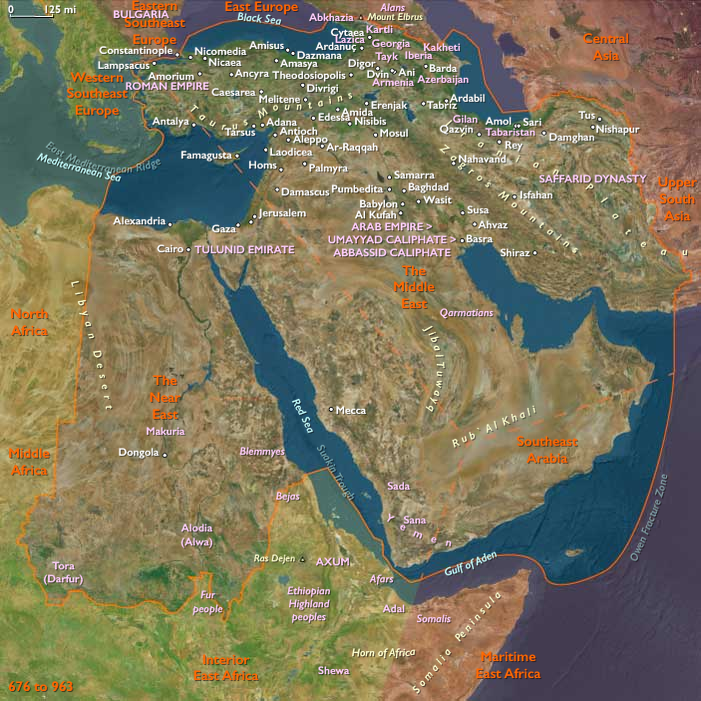
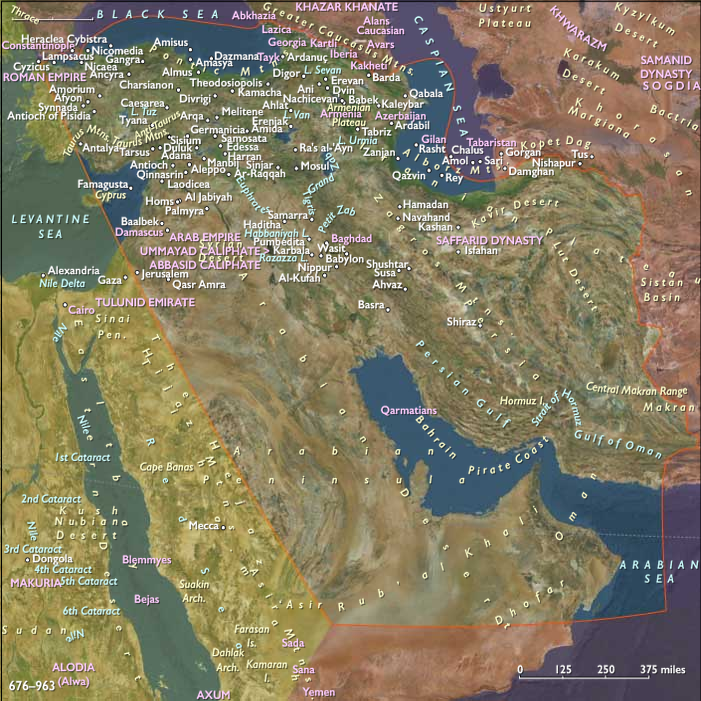
The peninsular land mass that makes up Qatar has sustained humans for thousands of years, but for the bulk of its history, the arid climate had fostered only short-term settlements by nomadic tribes.
Islam has spread in the entire Arabian region by the end of the seventh century, resulting in the Islamization of the native Arabian pagans.
With the spread of Islam in Qatar, the Islamic prophet Muhammad had sent his first envoy, Al Ala Al-Hadrami, to Al-Mundhir Ibn Sawa Al-Tamimi, the ruler of Bahrain (which extended from the coast of Kuwait to the south of Qatar, including Al-Hasa and Bahrain Islands), in the year 628, inviting him to accept Islam as he had invited other kingdoms and empires of his time such as Byzantium and Persia.
Mundhir, in response to Muhammad, had announced his acceptance of Islam, and the inhabitants of Qatar became Muslim, heralding the beginning of the Islamic era in Qatar.
However, it is likely that some settled populations in Qatar did not instantaneously convert.
Qatar begins to appear regularly in the accounts of contemporary Arab historians and writers following the peninsula’s embrace of Islam in the mid-seventh century CE; there has been further growth of trade and commerce in Qatar.
Yaqut Al Hamawi, an Arab historian and biographer, who died in 1229, considered Qatar as a village famed as a camel and horse breeding center during the Umayyad period.
The country gains fame for its fine striped woven cloaks, known as Qatari cloaks, and for the excellence of the spears manufactured here.
Locations
Groups
Topics
Commodoties
Subjects
Regions
Subregions
Related Events
Showing 10 events out of 55975 total
Years: 688 - 699
Locations
Groups
Topics
Commodoties
Subjects
Regions
Subregions