
The Pecheneg horde, taking advantage of the …
Years: 1091 - 1091
April
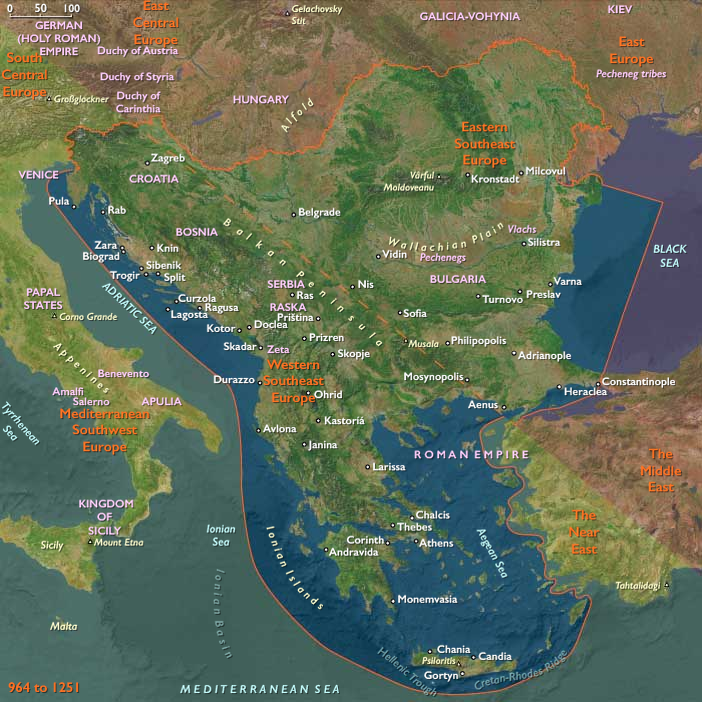
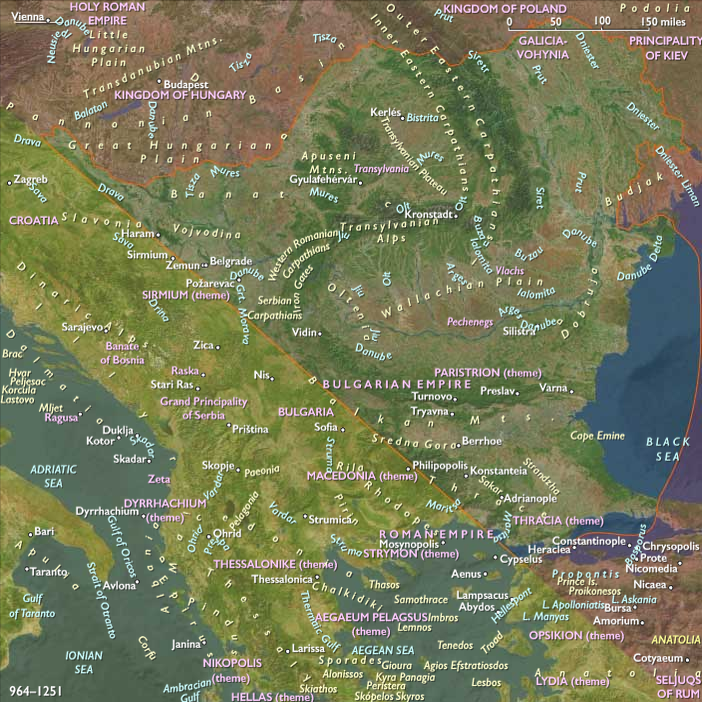
The Pecheneg horde, taking advantage of the precarious situation of the Empire, is heading towards the capital at Constantinople, plundering the northern Balkans as they go.
Tzachas, the brother-in-law of the Sultan of Rum, has launched a fleet and attempts to arrange a joint siege of Constantinople with the Pechenegs.
The invasion poses a serious threat to Alexios' Empire, yet due to years of civil war and neglect the imperial military is unable to provide the emperor with enough troops to repel the Pecheneg invaders.
Alexios is forced to rely on his own ingenuity and diplomatic skill to save his empire from annihilation.
He appeals to another nomadic tribe, the Cumans, to join him in battle against the Pechenegs.
Won over by Alexios' offer of gold in return for aid against the Pechenegs, the Cumans hurry to join Alexios and his army.
In the late spring of 1091, the Cuman forces, numbering about forty thousand, arrive in imperial territory, and the combined army prepared to advance against the Pechenegs.
On Monday, 28 April 1091, Alexios and his allies reach the Pecheneg camp at Levounion near the Maritsa river.
The Pechenegs appear to have been caught by surprise.
At any rate, the battle that took place on the next morning at Levounion was practically a massacre.
The Pechenegs have brought their women and children with them, and they are totally unprepared for the ferocity of the attack that is unleashed upon them.
The Cumans and the imperial troops fall upon the enemy camp, slaughtering all in their path.
The Pechenegs quickly collapse, and the victorious allies butcher them so savagely that they are almost wiped out.
The survivors are captured by the army and taken into imperial service.
Melissenos, who had been sent to Ainos to recruit soldiers from among the Bulgarians and Vlachs, had not joined the imperial army in time for the crushing victory, arriving the next day.
Levounion is the single most decisive victory achieved by an imperial army for more than half a century.
The battle marks a turning point in the Empire’s history; Constantinople had reached the nadir of its fortunes in the last twenty years, and Levounion signals to the world that now at last the empire is on the road to recovery.
The Pechenegs have been utterly destroyed, and the empire's European possessions are now secure.
Alexios has proved himself as the savior of the Empire in its hour of need, and a new spirit of hope begins to arise in its war-weary citizens.
In the years ahead, the Empire will go on to stage a remarkable recovery under Alexios and his descendants, the Komnenoi.
Imperial armies will return to Asia Minor, reconquering much of the lost territory there including the fertile coastal regions, along with many of the most important cities.
With the restoration of firm central government, the empire will become rich during the course of the next century, and Constantinople will once more become the metropolis of the Christian world.
Thus, the battle at Levounion in 1091 marks the beginning of a resurgence of imperial power and influence that will last for a hundred years, until the demise of the Komnenian dynasty at the close of the twelfth century.
Locations
People
Groups
- Oghuz Turks
- Greeks, Medieval (Byzantines)
- Islam
- Thrace, Theme of
- Macedonia, East Roman Theme of
- Pechenegs, or Patzinaks
- Turkmen people
- Paristrion (Paradounabon), Theme of
- Cuman people, or Western Kipchaks, also called Polovtsy, Polovtsians)
- Christians, Eastern Orthodox
- Rum, Sultanate of
- Roman Empire, Eastern: Komnenos dynasty, restored
Topics
Commodoties
Subjects
Regions
Subregions
Related Events
Showing 10 events out of 50325 total
Years: 1091 - 1091
April
Locations
People
Groups
- Oghuz Turks
- Greeks, Medieval (Byzantines)
- Islam
- Thrace, Theme of
- Macedonia, East Roman Theme of
- Pechenegs, or Patzinaks
- Turkmen people
- Paristrion (Paradounabon), Theme of
- Cuman people, or Western Kipchaks, also called Polovtsy, Polovtsians)
- Christians, Eastern Orthodox
- Rum, Sultanate of
- Roman Empire, Eastern: Komnenos dynasty, restored
Topics
Commodoties
Subjects
Regions
Subregions