
Filters:
II. The Peace of Bourges (July 15, …
Years: 1412 - 1412
August
II. The Peace of Bourges (July 15, 1412) and the Confirmation at Auxerre (August 22, 1412)
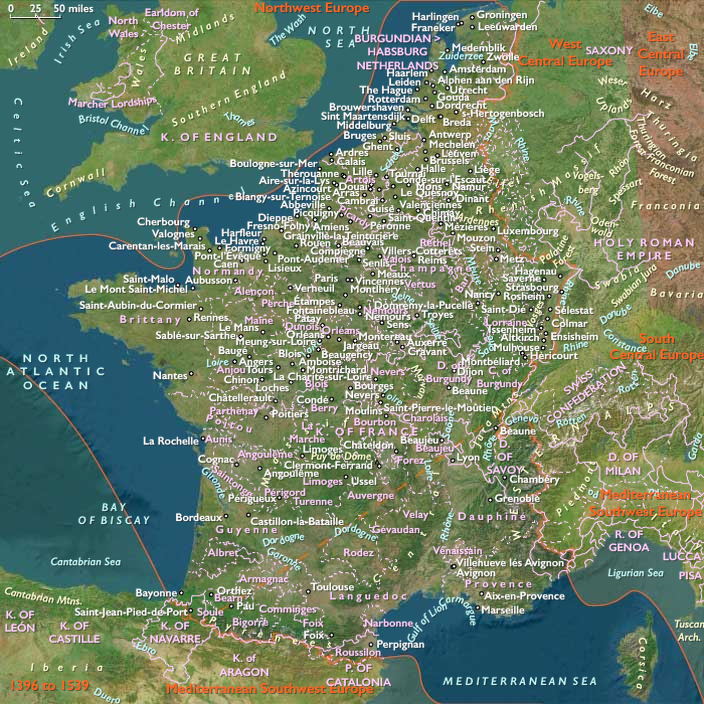
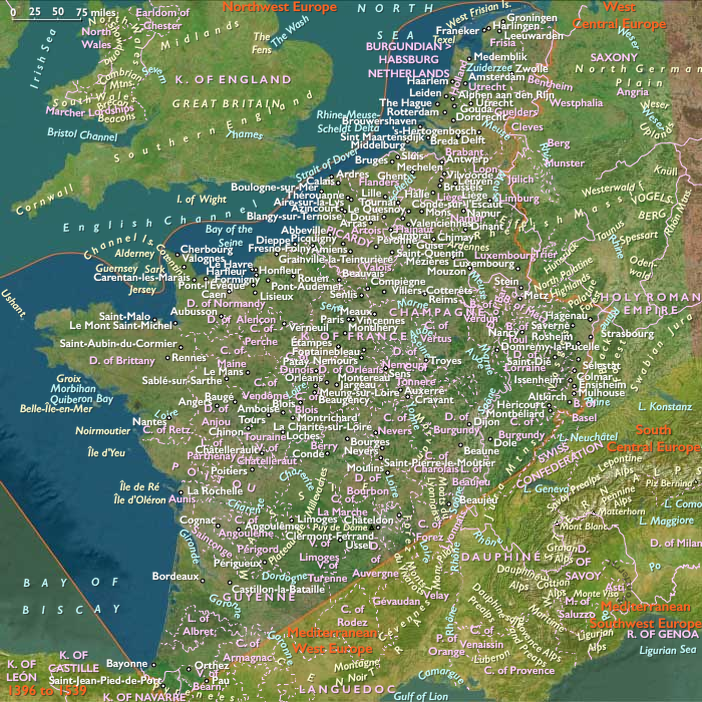
- The treaty of Bourges (July 15, 1412) attempted to defuse hostilities, securing:
- A temporary ceasefire between the Armagnacs and Burgundians.
- A royal intervention, reaffirming King Charles VI’s authority over both factions.
- Agreements for land and power-sharing, though neither side fully adhered to the terms.
- The treaty was officially confirmed in Auxerre on August 22, 1412, reinforcing the temporary truce.
III. The Fragility of Peace and Renewed War
- Despite the treaty, tensions remained unresolved, as both factions continued to distrust each other.
- By 1413, the war resumed, with the Cabochien Revolt in Paris, where Burgundian-aligned factions attempted to seize full control of the capital.
- The continued civil war left France vulnerable, ultimately allowing Henry V of England to launch his invasion in 1415, leading to the Battle of Agincourt.
The Peace of Bourges (1412) and its confirmation at Auxerre temporarily halted hostilities in the Armagnac-Burgundian Civil War, but the deeper power struggle remained unsolved, leading to continued internal strife and English intervention in France.
Locations
People
Groups
Topics
- Hundred Years' War
- Armagnac-Burgundian Civil War
- Hundred Years' War: Resumption of the war under Henry V
Commodoties
Subjects
Regions
Subregions
Years: 1412 - 1412
August
Locations
People
Groups
Topics
- Hundred Years' War
- Armagnac-Burgundian Civil War
- Hundred Years' War: Resumption of the war under Henry V
Commodoties
Subjects
Regions
Subregions