
The Parthians had begun to try to …
Years: 213BCE - 202BCE
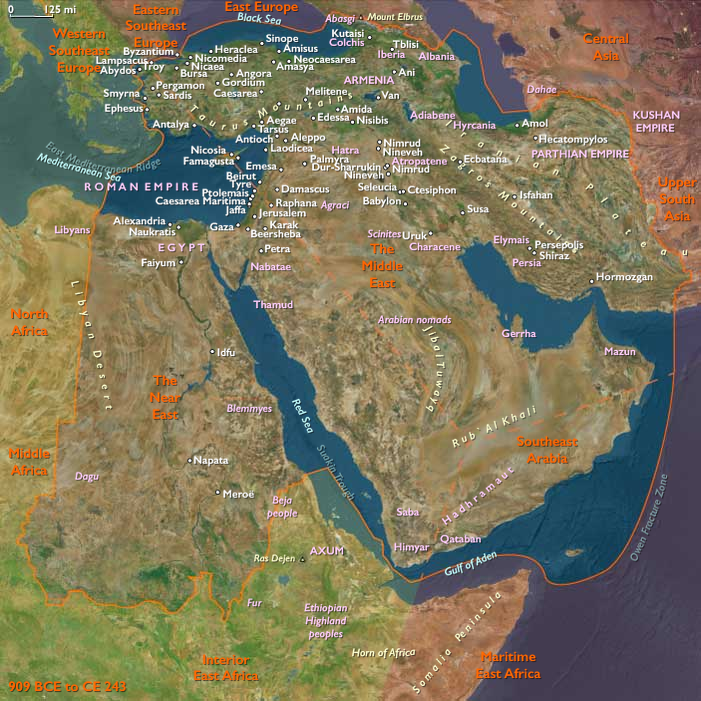
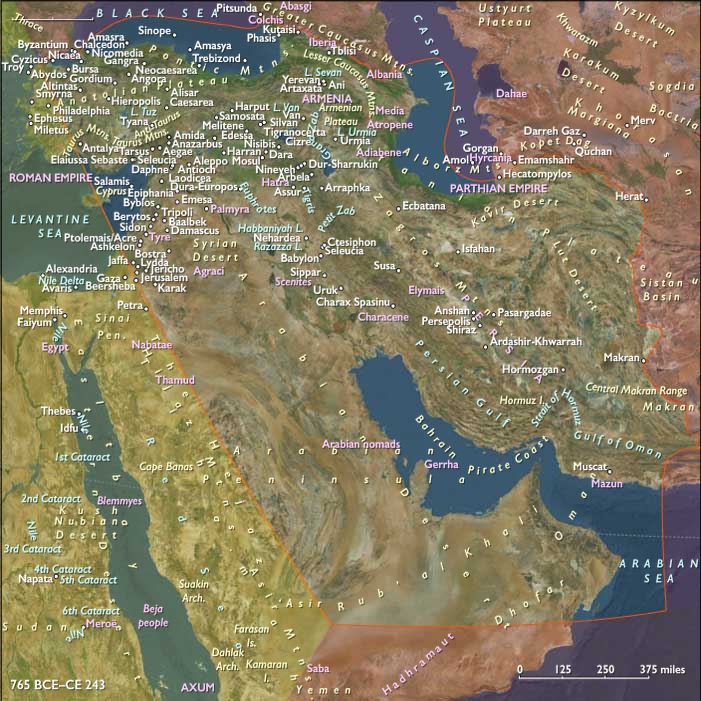
The Parthians had begun to try to conquer as much of the eastern Seleucid empire as possible after 238 BCE, joined in this endeavor by the now independent province of Bactria.
The Seleucid king Antiochus II Theos was at the time too busy fighting a war against Ptolemaic Egypt and so the Seleucids had lost most of their territory east of Persia and Media.
Antiochus III, an ambitious Seleucid king who has a vision of reuniting Alexander the Great's empire under the Seleucid dynasty, launches a campaign in 209 BCE to regain control of the eastern provinces, and after defeating the Parthians in battle, he successfully regains control over the region.
The Parthians are forced to accept vassal status and now only control the land conforming to the former Seleucid province of Parthia.
However, Parthia's vassalage is only nominal at best and only because the Seleucid army is on their doorstep.
For his retaking of the eastern provinces and establishing the Seleucid borders as far east as they had been under Seleucus I Nicator, Antiochus is awarded the title ‘great’ by his nobles.
Antiochus establishes a magnificent system of vassal states but has had to recognize the independence of two kingdoms, that of the Parthians and that of the Greco-Bactrian ruler Euthydemus, which had been no more than satrapies.
Luckily for the Parthians, the Seleucid Empire has many enemies, and it will not be long before Antiochus leads his forces west to fight Ptolemaic Egypt and the rising Roman Republic.
People
- Antiochus III the Great
- Euthydemus I
- Gaozu of Han
- Hannibal
- Philip V of Macedon
- Ptolemy V Epiphanes
- Quintus Fabius Maximus
Groups
- Egyptians
- Iranian peoples
- Rhodes, City-States of
- Sparta, Kingdom of
- Byzantium (Ionian Greek) city-state of
- Roman Republic
- Han, Chinese state of
- Aetolian League
- Greece, Hellenistic
- Greeks, Hellenistic
- Macedon, Antigonid Kingdom of
- Egypt, Ptolemaic Kingdom of
- Pergamon (Pergamum), Kingdom of
- Greco-Bactrian Kingdom
- Parthian Empire
- Seleucid Empire
- Qin Dynasty
- Chu, Western (Chinese state)
- Han Dynasty (Western)
Topics
- Classical antiquity
- Pre-Roman Iron Age of Northern Europe
- Punic War, Second (Hannibalic War)
- Macedonian War, First
- Syracuse, Siege of
- Seleucid–Parthian wars
- Bactrian-Syrian War
- Chu-Han Contention
- Cretan War
- Syrian War, Fifth
- Roman Age Optimum
Commodoties
Subjects
Regions
Subregions
Years: 213BCE - 202BCE
People
- Antiochus III the Great
- Euthydemus I
- Gaozu of Han
- Hannibal
- Philip V of Macedon
- Ptolemy V Epiphanes
- Quintus Fabius Maximus
Groups
- Egyptians
- Iranian peoples
- Rhodes, City-States of
- Sparta, Kingdom of
- Byzantium (Ionian Greek) city-state of
- Roman Republic
- Han, Chinese state of
- Aetolian League
- Greece, Hellenistic
- Greeks, Hellenistic
- Macedon, Antigonid Kingdom of
- Egypt, Ptolemaic Kingdom of
- Pergamon (Pergamum), Kingdom of
- Greco-Bactrian Kingdom
- Parthian Empire
- Seleucid Empire
- Qin Dynasty
- Chu, Western (Chinese state)
- Han Dynasty (Western)
Topics
- Classical antiquity
- Pre-Roman Iron Age of Northern Europe
- Punic War, Second (Hannibalic War)
- Macedonian War, First
- Syracuse, Siege of
- Seleucid–Parthian wars
- Bactrian-Syrian War
- Chu-Han Contention
- Cretan War
- Syrian War, Fifth
- Roman Age Optimum
Commodoties
Subjects
Regions
Subregions