
Filters:
The Parisii and the Roman Conquest of …
Years: 52BCE - 52BCE
December
The Parisii and the Roman Conquest of the Paris Basin (52 BCE)
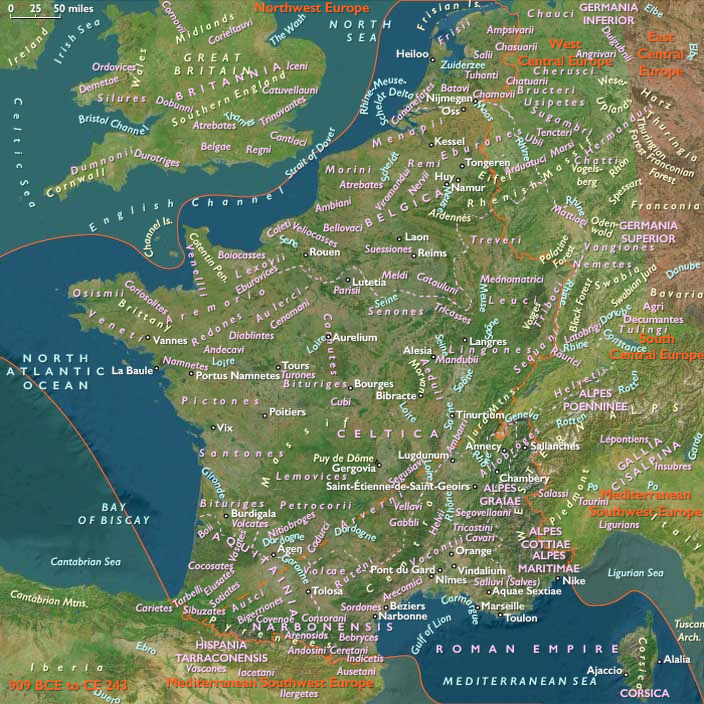
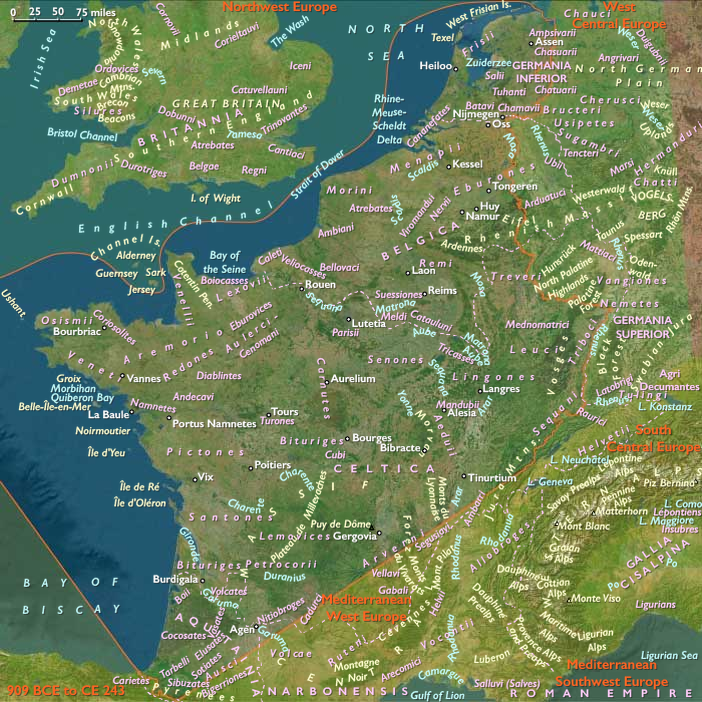
The Parisii, a sub-tribe of the Celtic Senones, inhabited the Paris basin near the Seine River from around 250 BCE. Their chief settlement, an oppidum called Lutetia (modern Paris), was a key trade and strategic center in northern Gaul.
The Parisii in the Gallic Revolt Against Rome (52 BCE)
- The Parisii allied with the Suessiones in support of Vercingetorix’s rebellion against Julius Caesar.
- They participated in the pan-Gallic uprising, resisting Roman expansion into central and northern Gaul.
- Their forces fought alongside other Gallic tribes at Alesia, where Vercingetorix was ultimately defeated.
The Roman Conquest of the Paris Basin
- After the Battle of Alesia (52 BCE) and the collapse of the Gallic coalition, Roman legions moved into the Parisii homeland.
- The Parisii, like other rebellious tribes, were subdued, and Roman rule was firmly established in the region.
- The Romans fortified Lutetia, eventually transforming it into an important Romanized settlement under Gallia Lugdunensis.
Legacy and Transformation Under Rome
- Lutetia (Lutece) became a key Gallo-Roman city, benefiting from trade, roads, and Roman infrastructure.
- The region gradually assimilated Roman culture, with the Latin language, Roman laws, and urbanization shaping its development.
- Over the centuries, Lutetia would grow into the medieval and modern city of Paris, preserving its ancient Gallic roots within its evolving Roman identity.
The fall of the Parisii and the conquest of the Paris basin marked a crucial step in Rome’s consolidation of Gaul, solidifying its control over northern France and laying the foundation for centuries of Roman influence in the region.
Locations
People
Groups
Topics
- Classical antiquity
- Pre-Roman Iron Age of Northern Europe
- Roman Age Optimum
- Roman Republic, Crisis of the
- Gallic Wars
Commodoties
Subjects
Regions
Subregions
Years: 52BCE - 52BCE
December
Locations
People
Groups
Topics
- Classical antiquity
- Pre-Roman Iron Age of Northern Europe
- Roman Age Optimum
- Roman Republic, Crisis of the
- Gallic Wars
Commodoties
Subjects
Regions
Subregions