
Filters:
National revival for both Czechs and Slovaks …
Years: 1840 - 1851
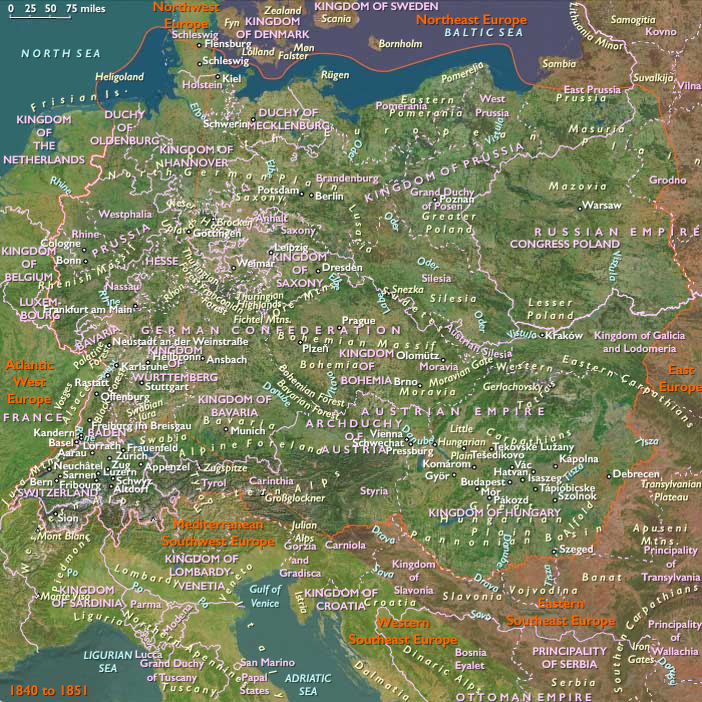
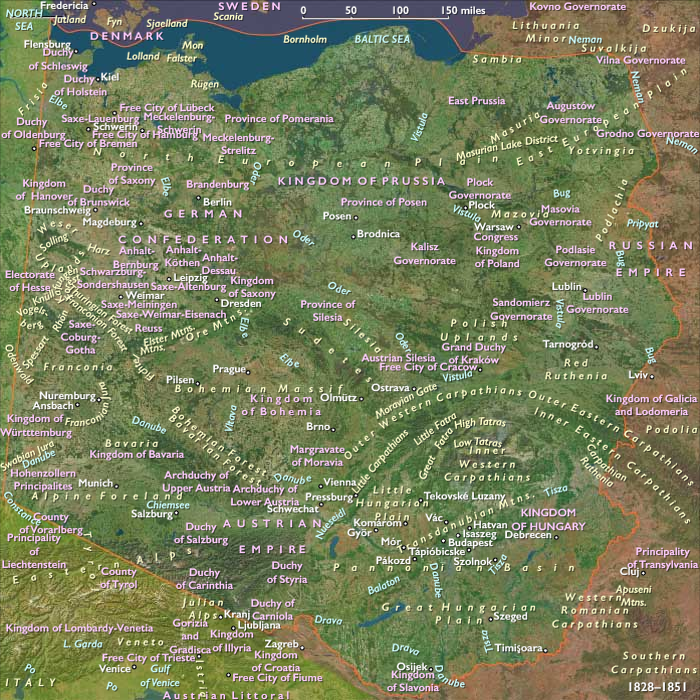
National revival for both Czechs and Slovaks had been begun by small groups of intellectuals.
At first, the national movements were confined to discussion of language, literature, and culture, but during the revolutions of 1848, the Czechs and Slovaks make bold political demands.
The revolutions of 1848 also reveal that the German and Hungarian liberals, who are opposed to Habsburg absolutism, are equally hostile to Czech and Slovak aspirations.
It has become clear that the Czech and Slovak national movements have to contend not only with Habsburg absolutism but also with increasingly virulent German and Hungarian nationalism.
At first, the national movements were confined to discussion of language, literature, and culture, but during the revolutions of 1848, the Czechs and Slovaks make bold political demands.
The revolutions of 1848 also reveal that the German and Hungarian liberals, who are opposed to Habsburg absolutism, are equally hostile to Czech and Slovak aspirations.
It has become clear that the Czech and Slovak national movements have to contend not only with Habsburg absolutism but also with increasingly virulent German and Hungarian nationalism.
Locations
People
Groups
- Germans
- Croats (South Slavs)
- Serbs (South Slavs)
- Poles (West Slavs)
- Czechs [formerly Bohemians] (West Slavs)
- Slovaks (West Slavs)
- Christians, Roman Catholic
- Moravian Margravate
- Bohemia, Kingdom of
- Slovenes (South Slavs)
- Ukrainians (East Slavs)
- Russian Empire
- Austrian Empire
Topics
- German Revolutions: 1840-1851
- Austrian Revolution & Reaction: 1840-51
- 1848, Revolutions of
- French Revolutions of 1848 and 1851
- Austrian Revolution of 1848-49
- German Revolution of 1848
- French Revolution of 1848 (February Revolution)
Subjects
Regions
Subregions
Years: 1840 - 1851
Locations
People
Groups
- Germans
- Croats (South Slavs)
- Serbs (South Slavs)
- Poles (West Slavs)
- Czechs [formerly Bohemians] (West Slavs)
- Slovaks (West Slavs)
- Christians, Roman Catholic
- Moravian Margravate
- Bohemia, Kingdom of
- Slovenes (South Slavs)
- Ukrainians (East Slavs)
- Russian Empire
- Austrian Empire
Topics
- German Revolutions: 1840-1851
- Austrian Revolution & Reaction: 1840-51
- 1848, Revolutions of
- French Revolutions of 1848 and 1851
- Austrian Revolution of 1848-49
- German Revolution of 1848
- French Revolution of 1848 (February Revolution)
Subjects
Regions
Subregions