
The Palladii are reckoned among the noblest …
Years: 431 - 431
The Palladii are reckoned among the noblest families of France and several of them held high rank in the Church of Gaul.
Palladius is the son of Exuperantius of Poitiers, of whom the contemporary pagan poet Rutilius Claudius Namatianus wrote: "Even now his father Exuperantius trains the Armoric sea-board to love the recovery of peace; he reestablishes the laws, brings freedom back and suffers not the inhabitants to be their servants' slaves."
Exuperantius was apparently praefectus praetorio Galliarum ("Praetorian prefect of the Gallic provinces") in 424 when killed in an army mutiny at Arles.
Prosper of Aquitaine describes him as a deacon.
Some writers regard Palladius as deacon of St. Germanus, but it appears more probable that he held the high rank of Deacon of Rome; it can hardly be supposed that a deacon of Auxerre would exercise such influence in Rome as that assigned to Palladius, and it is in accordance with St. Prosper's usage to indicate the Roman deacon by the simple title diaconus.
Palladius was married and had a young daughter.
He is described as a friend and younger kinsman by Namatianus.
In Rome, he had kissed his family goodbye in the manner of the Apostles, and lived as an ascetic in Sicily about 408/409, giving his daughter to a convent on that island.
He seems to have been ordained a priest about 415.
He had lived in Rome between 418–429, and appears to be the "Deacon Palladius" responsible for urging Pope Celestine I to send the bishop Germanus to Britain, where he guided "the Britons back to the Catholic faith."
It is a question whether or not it is the same person who, in 431, was sent as first bishop to the Christians of Ireland: Palladius, having been ordained by Pope Celestine, was sent as first bishop to the Irish believing in Christ.
Palladius landed at Hy-Garchon, where the town of Wicklow now stands.
The Irish writers of the lives of St. Patrick say, that St. Palladius had preached in Ireland a little before St. Patrick, but that he was soon banished by the king of Leinster, and returned to North Britain.
According to Muirchu, who lived two centuries later, in the Book of Armagh, God hindered him...and neither did those fierce and cruel men receive his doctrine readily, nor did he himself wish to spend time in a strange land, but returned to him who sent him.
Palladius was accompanied by four companions: Sylvester and Solinus, who remained after him in Ireland; and Augustinus and Benedictus, who followed him to Britain, but returned to their own country after his death.
Palladius is most strongly associated with Leinster, particularly with Clonard, County Meath.
Locations
People
Groups
- Ireland, ancient
- Gaul, Diocese of
- Christianity, Nicene
- Gaul, Praetorian prefecture of
- Britain, Sub-Roman
Topics
- Middle Subatlantic Period
- Late Antiquity
- Migration Period
- Fall of the Western Roman Empire
- Irish Raids in Britain
Commodoties
Subjects
Regions
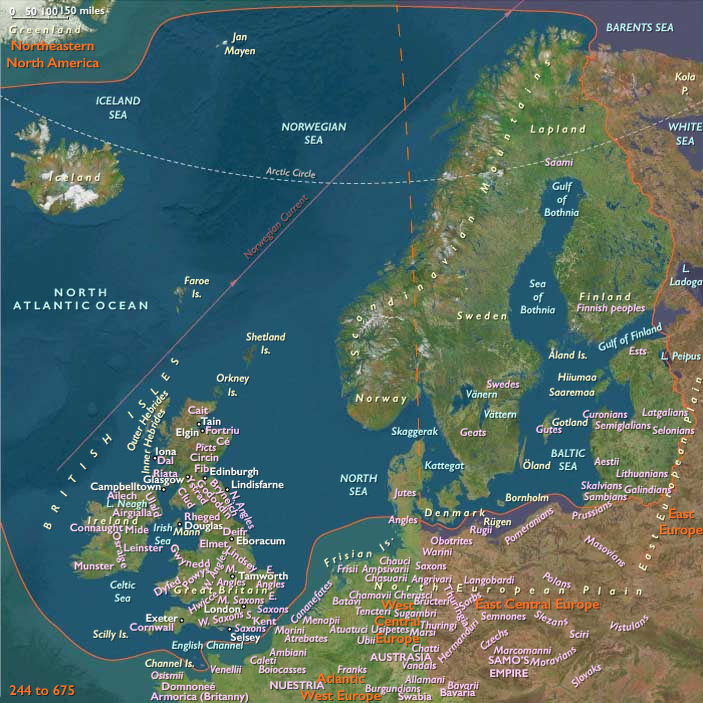
Subregions
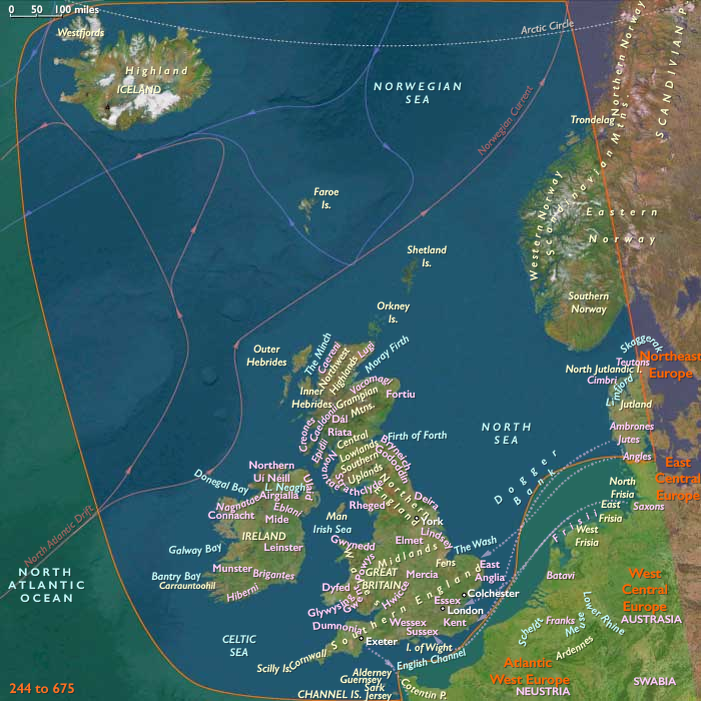
Related Events
Showing 10 events out of 58926 total
Years: 431 - 431
Locations
People
Groups
- Ireland, ancient
- Gaul, Diocese of
- Christianity, Nicene
- Gaul, Praetorian prefecture of
- Britain, Sub-Roman
Topics
- Middle Subatlantic Period
- Late Antiquity
- Migration Period
- Fall of the Western Roman Empire
- Irish Raids in Britain
Commodoties
Subjects
Regions
Subregions