
Jan van Eyck: Court Painter to Philip …
Years: 1430 - 1430
Jan van Eyck: Court Painter to Philip the Good and His Diplomatic Role (1425–1441)
Jan van Eyck (c. 1390–1441), one of the most influential painters of the Northern Renaissance, had an illustrious career that saw him serve two major ducal courts. He first worked for John III of Bavaria-Straubing in The Hague (1422–1424), where he was exposed to the court’s rich artistic culture. After John’s death in 1425, van Eyck entered the service of Philip the Good, Duke of Burgundy, where he became court painter and valet de chambre.
Van Eyck’s position under Philip the Good extended beyond painting, as he was entrusted with diplomatic missions, including the Burgundian marriage negotiations with Isabella of Portugal (1428–1429).
I. Early Career: The Hague and the Court of John III of Bavaria (1422–1424)
- Van Eyck’s earliest documented employment was in The Hague, where he worked for John III of Bavaria-Straubing.
- John III was a patron of the arts, and van Eyck was likely exposed to courtly and manuscript illumination traditions, influencing his detailed style and mastery of oil painting.
- Following John’s death in 1425, van Eyck entered the service of Philip the Good, Duke of Burgundy.
II. Court Painter to Philip the Good (1425–1441)
- Van Eyck initially resided in Lille for a year before settling in Bruges, where he would live until his death in 1441.
- He held the prestigious title of valet de chambre, indicating that his role extended beyond painting into court service and diplomacy.
- He was sent on several missions by Philip, though the exact nature of some of these assignments remains unclear.
III. Diplomatic Role: The Portuguese Marriage Delegation (1428–1429)
- In 1428–1429, van Eyck accompanied a Burgundian delegation to Portugal to negotiate Philip’s marriage to Isabella of Portugal.
- He painted two portraits of Isabella as part of the negotiations, allowing Philip to see his prospective bride before committing to the marriage.
- Philip married Isabella in 1430, marking a successful conclusion to the mission.
IV. Legacy and Influence
- Van Eyck’s work at the Burgundian court elevated the status of painters, proving that artists could hold prestigious courtly positions beyond just painting commissions.
- His attention to detail, mastery of oil painting, and use of light and perspective revolutionized Northern European art.
- His diplomatic role illustrated the increasing importance of artists in courtly and political affairs, bridging art and statecraft.
Jan van Eyck’s service to Philip the Good was more than just artistic—he played a key role in court diplomacy, particularly in the Burgundian-Portuguese marriage negotiations of 1428–1429, while pioneering new artistic techniques that defined the Northern Renaissance.
Locations
People
Groups
Topics
Commodoties
Subjects
Regions
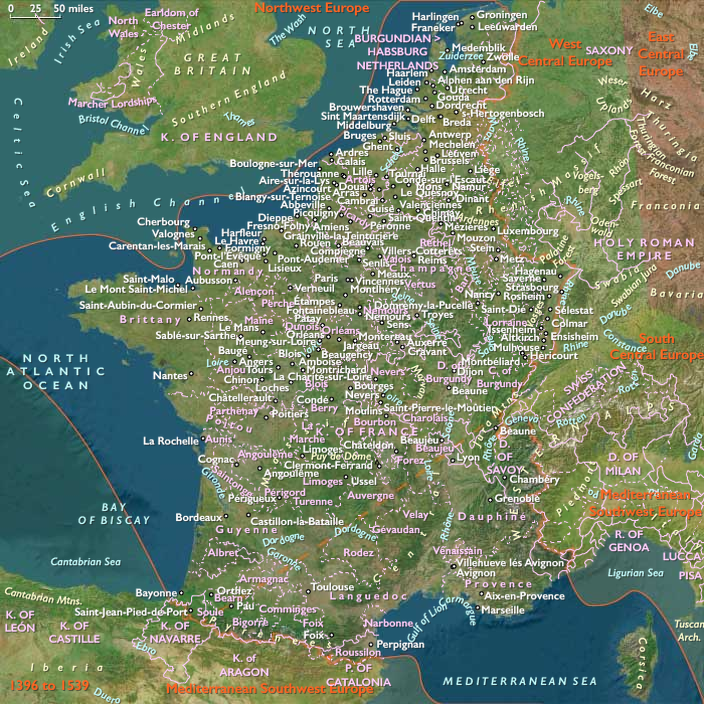
Subregions
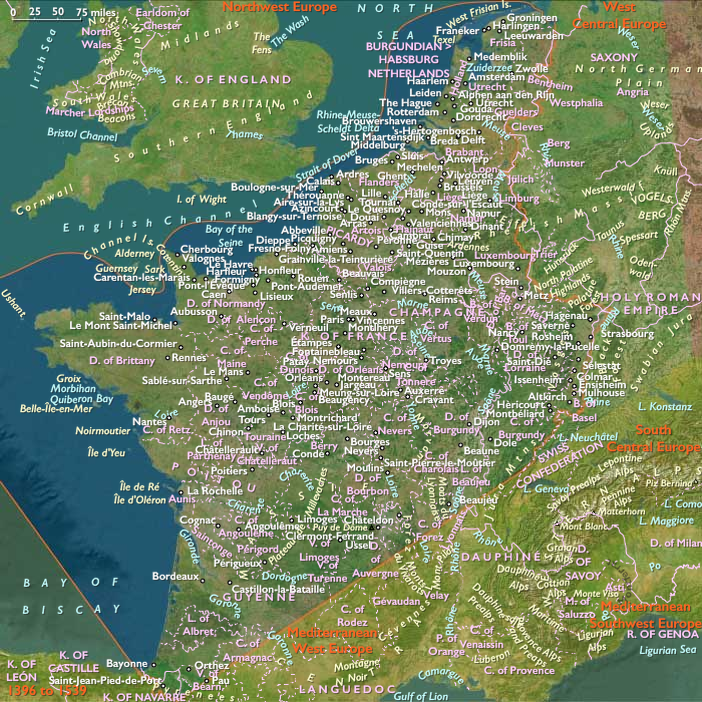
Years: 1430 - 1430
Locations
People
Groups
Topics
Commodoties
Subjects
Regions
Subregions