
Filters:
The Page-Ladson prehistory site (8JE591), a deep …
Years: 13389BCE - 12130BCE
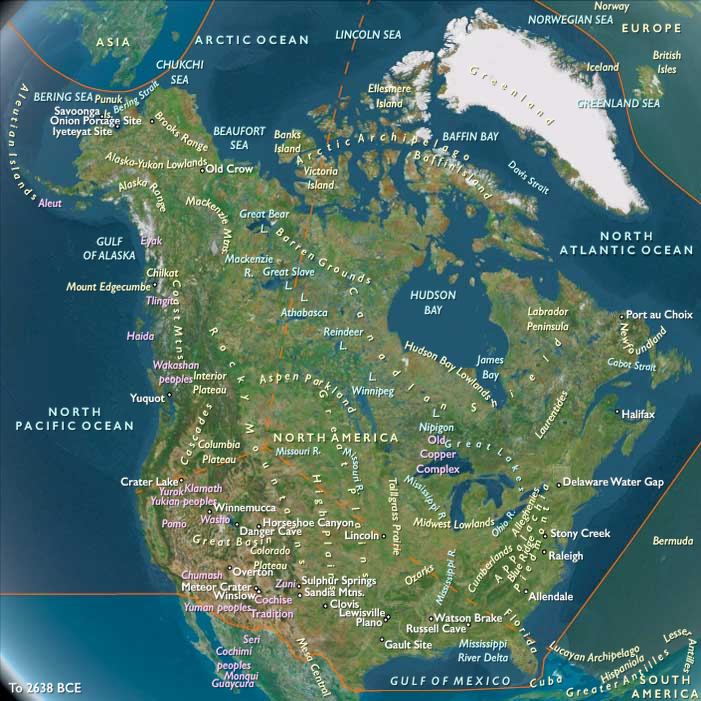
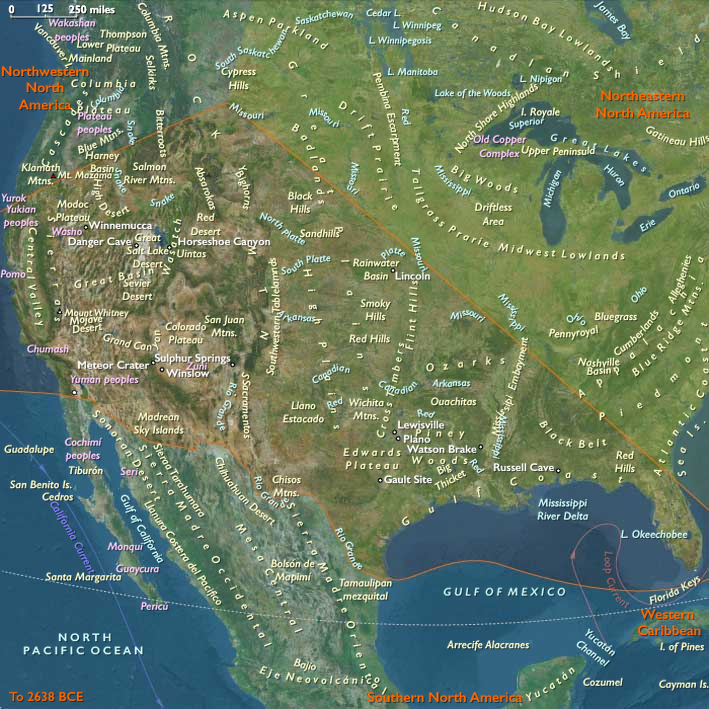
The Page-Ladson prehistory site (8JE591), a deep sinkhole in the bed of the karstic Aucilla River (between Jefferson and Taylor counties in the Big Bend region of Florida), has stratified deposits of late Pleistocene and early Holocene animal bones and human artifacts.
A group of eleven artifacts found there has an average age of 15,405 to 14,146 calendar years Before Present (12,425 ± 32 14C years BP).
The earliest dates for artifacts recovered from the site are between one thousand and fifteen hundred years before the advent of the Clovis culture.
The site is the first pre-Clovis site discovered in southeastern North America.
Page-Ladson is about sixty meters by forty-five meters wide and ten meters deep.
Its significance is that the dating of the artifacts places humans at the location more than one thousand five hundred years prior to earlier evidence and challenges theories that humans quickly decimated large game populations in the area once they arrived.
A group of eleven artifacts found there has an average age of 15,405 to 14,146 calendar years Before Present (12,425 ± 32 14C years BP).
The earliest dates for artifacts recovered from the site are between one thousand and fifteen hundred years before the advent of the Clovis culture.
The site is the first pre-Clovis site discovered in southeastern North America.
Page-Ladson is about sixty meters by forty-five meters wide and ten meters deep.
Its significance is that the dating of the artifacts places humans at the location more than one thousand five hundred years prior to earlier evidence and challenges theories that humans quickly decimated large game populations in the area once they arrived.
Locations
Topics
Commodoties
Subjects
Regions
Subregions
Years: 13389BCE - 12130BCE
Locations
Topics
Commodoties
Subjects
Regions
Subregions