
The pagan Procopius, the sole surviving relative …
Years: 365 - 365
September
The pagan Procopius, the sole surviving relative of the emperor Julian, had taken part in Julian's campaign against the Persian Empire in 363.
Entrusted with leading thirty thousand men towards Armenia, he had joined King Arsaces and later returned to Julian’s camp.
At the time of Julian's death, there had been rumors that he had intended Procopius to be his successor, but when Jovian was elected emperor by the Roman army, Procopius had gone into hiding to preserve his life.
Though Jovian made accommodations to appease this potential claimant, Procopius fell increasingly under suspicion in the first year of Valens' reign.
The ancient historians differ on the exact details of Procopius's life in hiding, but agree that he returned to public knowledge at Chalcedon before the house of the senator Strategius.
suffering from starvation and ignorant of current affairs.
By this time, Jovian was dead, and Valentinian I had shared the purple with his brother.
The incapable and suspicious Valens has inherited the eastern portion of an empire that had recently retreated from most of its holdings in Mesopotamia and Armenia because of the treaty that his predecessor had made with the Sassanid Empire.
His first priority after the winter of 365 is to move east in hopes of shoring up the situation.
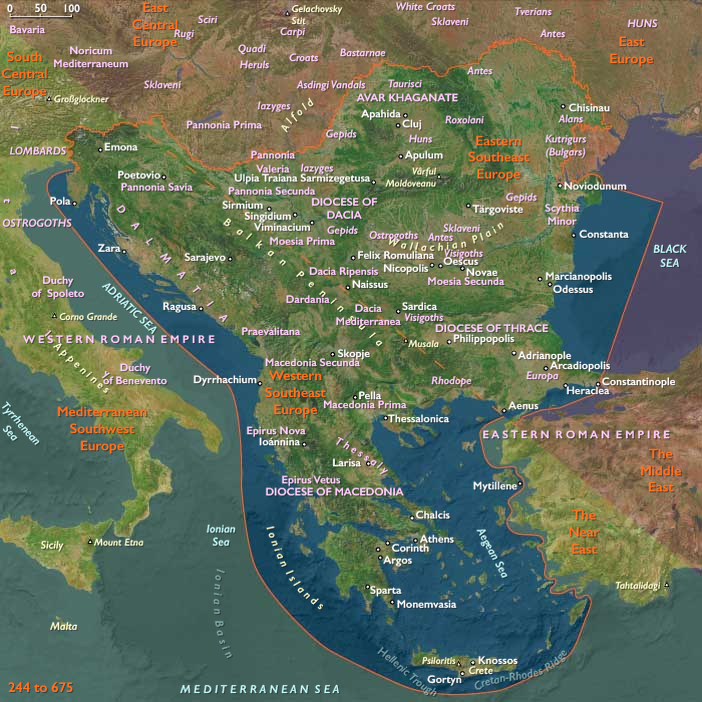
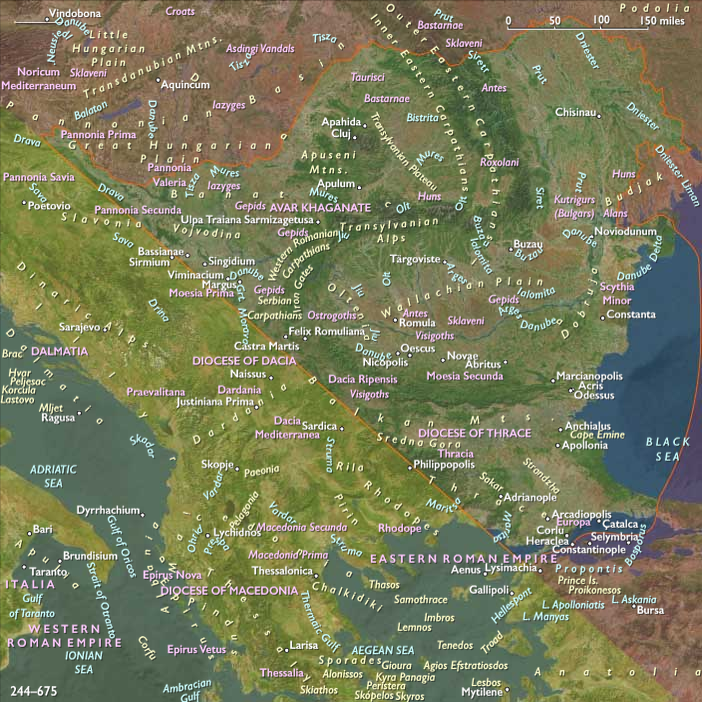
By the autumn of 365, he has reached Cappadocian Caesarea when he learns that Procopius, by bribing two legions passing by Constantinople, had on September 28 proclaimed himself emperor in the imperial city.
Though his early reception in the city seems to have been lukewarm, Procopius wins favor quickly by using propaganda to his advantage: he seals off the city to outside reports and begins spreading rumors that Valentinian had died; he begins minting coinage flaunting his connections to the Constantinian dynasty; and he further exploits dynastic claims by using the widow and daughter of Constantius II to act as showpieces for his regime.
This program meets with some success, particularly among soldiers loyal to the Constantinians and eastern intellectuals who have already begun to feel persecuted by the Valentinians.
Locations
People
Groups
- Polytheism (“paganism”)
- Persian people
- Armenian people
- Armenia, Kingdom of
- Persian Empire, Sassanid, or Sasanid
- Thrace, Diocese of
- East, or Oriens, Praetorian prefecture of
- Roman Empire: Valentinian dynasty (Rome)
Topics
Commodoties
Subjects
Regions
Subregions
Related Events
Showing 10 events out of 59675 total
Years: 365 - 365
September
Locations
People
Groups
- Polytheism (“paganism”)
- Persian people
- Armenian people
- Armenia, Kingdom of
- Persian Empire, Sassanid, or Sasanid
- Thrace, Diocese of
- East, or Oriens, Praetorian prefecture of
- Roman Empire: Valentinian dynasty (Rome)
Topics
Commodoties
Subjects
Regions
Subregions