
Egypt first unifies the small, independent …
Years: 1821 - 1821
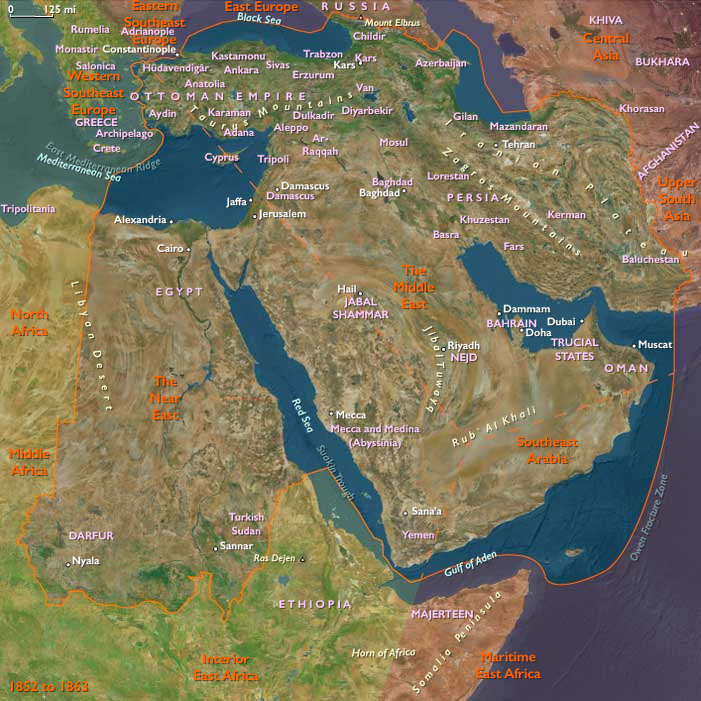
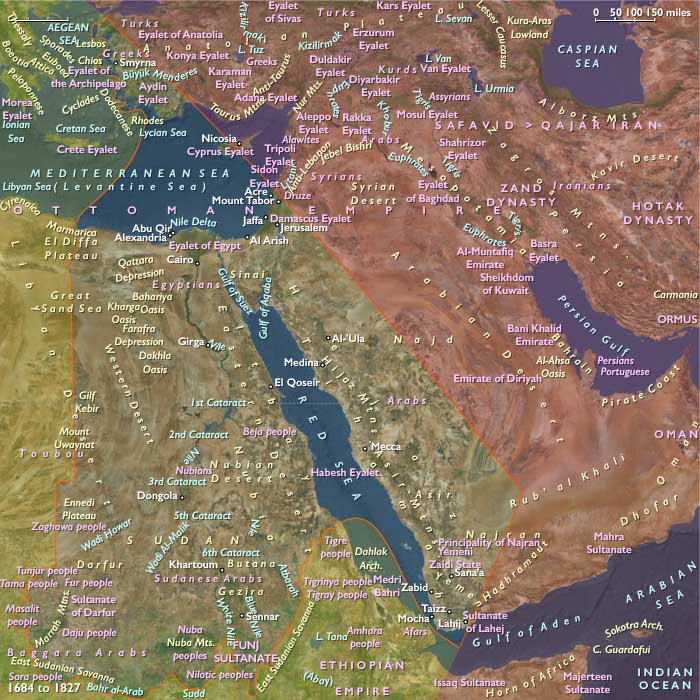
Egypt first unifies the small, independent Sudanese states in 1820—21.
Fazogli, established by the Funj after their conquest of the kingdom of Fazughli in 1685, lies between the Blue Nile and the Sobat River, and includes the mountains in the modern Asosa Zone of the Ethiopian Benishangul-Gumuz Region.
The west slope of the hills drains the White Nile.
The area is believed to be rich in gold deposits, which leads to an Egyptian military expedition under the leadership of Ismail bin Muhammad Ali, son of Muhammad Ali Pasha, the nominally Ottoman khedive of Egypt, into the area in part to determine the truth of this belief, as well as to capture some thirty thousand inhabitants to be slaves.
The last Funj sultan, Badi VI, surrenders to Ismail on June 12 and the Egyptians occupy Sennar without a fight the next day.
Using Sennar as a base, the Egyptians move upstream along the Blue Nile searching for what they believed to be rich sources of gold—although they are disappointed—and capture Fazogli, marking the furthest extent of their conquests in this region, before they turn back.
Ismail is accompanied by Frédéric Cailliaud, George Waddington, and George Bethune English, all of whom will later write accounts of the expedition.
Pasha Mohammad Ali will later organize Fazogli into a number of sheikhdoms to govern its inhabitants.
Later geologists who survey the area for gold include Josef von Russegger.
Although Caillaud fails to find any sizeable deposits of gold in the mountains along the modern Sudan-Ethiopia border, he does make a sufficiently detailed survey of the area to be published after his return to France in 1827.
Locations
People
Groups
Commodoties
Subjects
Regions
Subregions
Related Events
Showing 10 events out of 20353 total
Years: 1821 - 1821
Locations
People
Groups
Commodoties
Subjects
Regions
Subregions