
The origins of the Thracians remain obscure, …
Years: 1197BCE - 1054BCE
The origins of the Thracians remain obscure, in absence of written historical records.
Evidence of proto-Thracians in the prehistoric period depends on remains of material culture.
It is generally proposed that a proto-Thracian people developed from a mixture of indigenous peoples and Indo-Europeans from the time of Proto-Indo-European expansion in the Early Bronze Age when the latter, around 1500 BCE, conquered the indigenous peoples.
Pastoral activities begin to dominate Thracian economic life early in the Iron Age, about 1200 BCE.
Villages, which consist of up to one hundred small, rectangular dwellings constructed from wood or reeds and earthen mortar with straw roofs, multiply and become more crowded.
The first historical record about the Thracians is found in the Iliad, where they are described as allies of the Trojans in the Trojan War against the Greeks.
Both the ethnonym Thracian and the toponym Thrace are exonyms developed by the Greeks.
Locations
Groups
Topics
Subjects
Regions
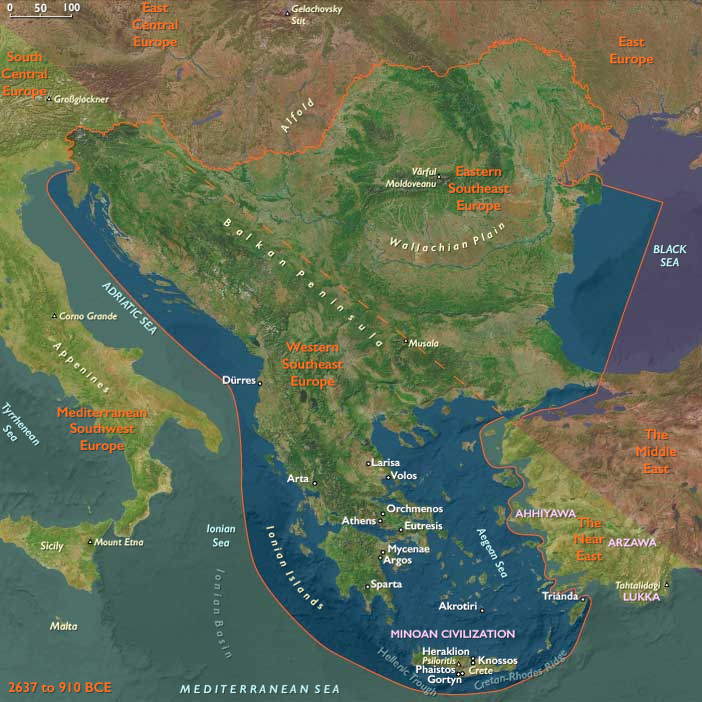
Subregions
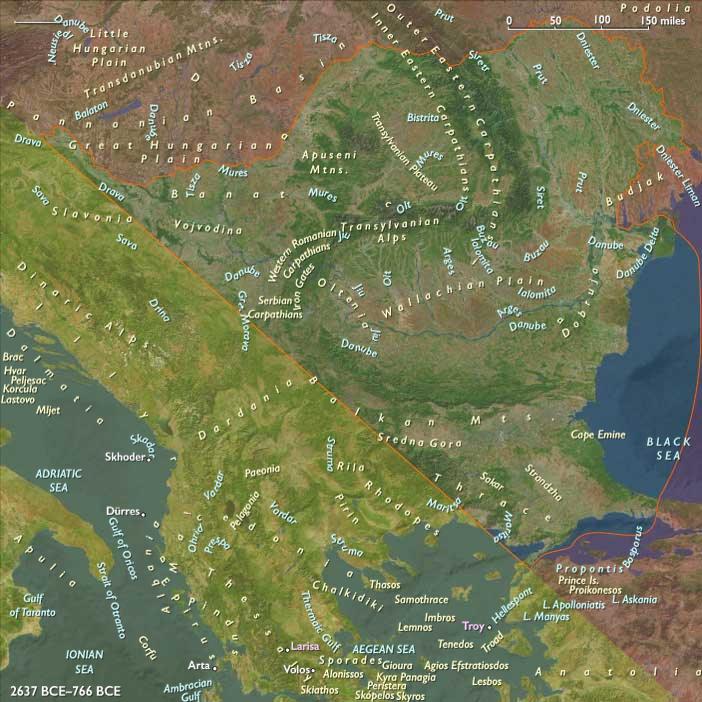
Years: 1197BCE - 1054BCE
Locations
Groups
Topics
Subjects
Regions
Subregions