
Arabia in general and the gulf in …
Years: 1684 - 1827
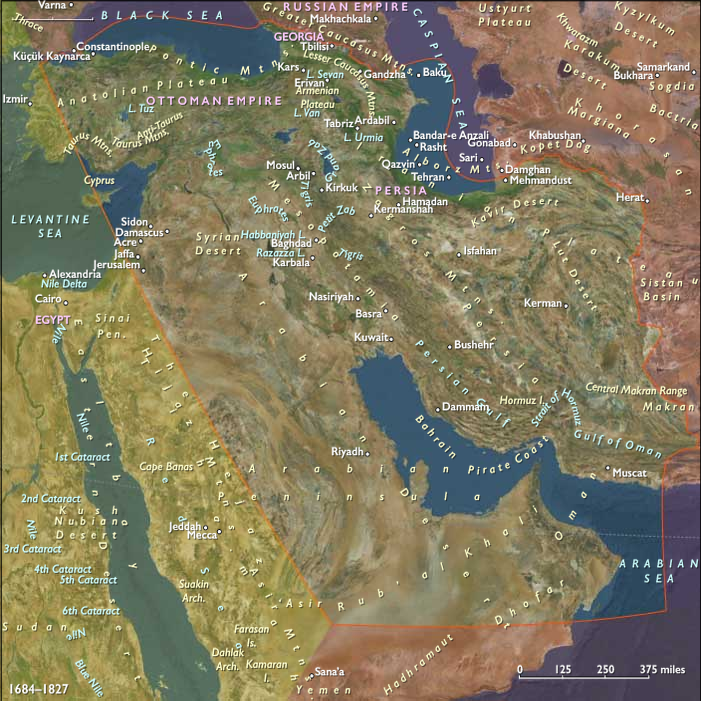
Arabia in general and the gulf in particular experience a turbulent time in the eighteenth and nineteenth centuries.
To the southeast, the Al Said of Oman are extending their influence northward, and from Iraq the Ottoman Turks are extending their influence southward.
From the east, both the Iranians and the British are becoming increasingly involved in Arab affairs.
The most significant development in the region, however, is the Wahhabi movement.
The name Wahhabi derives from Muhammad ibn Abd al Wahhab, who dies in 1792.
He had grown up in an oasis town in central Arabia where he studied Hanbali law, usually considered the strictest of Islamic legal schools, with his grandfather.
While still a young man, he had left home and continued his studies in Medina and then in Iraq and Iran.
When he returns from Iran to Arabia in the late 1730s, he attacks as idolatry many of the customs followed by tribes in the area who venerate rocks and trees.
He extend his criticism to practices of the Twelve Imam Shia, such as veneration of the tombs of holy men.
He focuses on the central Muslim principle that there is only one God and that this God does not share his divinity with anyone.
From this principle, his students begin to refer to themselves as muwahhidun (sing., muwahhid), or "unitarians."
Their detractors refer to them as "Wahhabis."
Muhammad ibn Abd al Wahhab considers himself a reformer and looks for a political figure to give his ideas a wider audience.
He finds this person in Muhammad ibn Saud, the emire of Ad Diriyah, a small town near Riyadh.
The two swear a traditional Muslim pledge in 1744 in which they promise to work together to establish a new state (which will later become present-day Saudi Arabia) based on Islamic principles.
The limited but successful military campaigns of Muhammad ibn Saud cause Arabs from all over the peninsula to feel the impact of Wahhabi ideas.
The Wahhabis become known for a fanaticism similar to that of the early Kharijites.
This fanaticism helps to intensify conflicts in the gulf.
To the southeast, the Al Said of Oman are extending their influence northward, and from Iraq the Ottoman Turks are extending their influence southward.
From the east, both the Iranians and the British are becoming increasingly involved in Arab affairs.
The most significant development in the region, however, is the Wahhabi movement.
The name Wahhabi derives from Muhammad ibn Abd al Wahhab, who dies in 1792.
He had grown up in an oasis town in central Arabia where he studied Hanbali law, usually considered the strictest of Islamic legal schools, with his grandfather.
While still a young man, he had left home and continued his studies in Medina and then in Iraq and Iran.
When he returns from Iran to Arabia in the late 1730s, he attacks as idolatry many of the customs followed by tribes in the area who venerate rocks and trees.
He extend his criticism to practices of the Twelve Imam Shia, such as veneration of the tombs of holy men.
He focuses on the central Muslim principle that there is only one God and that this God does not share his divinity with anyone.
From this principle, his students begin to refer to themselves as muwahhidun (sing., muwahhid), or "unitarians."
Their detractors refer to them as "Wahhabis."
Muhammad ibn Abd al Wahhab considers himself a reformer and looks for a political figure to give his ideas a wider audience.
He finds this person in Muhammad ibn Saud, the emire of Ad Diriyah, a small town near Riyadh.
The two swear a traditional Muslim pledge in 1744 in which they promise to work together to establish a new state (which will later become present-day Saudi Arabia) based on Islamic principles.
The limited but successful military campaigns of Muhammad ibn Saud cause Arabs from all over the peninsula to feel the impact of Wahhabi ideas.
The Wahhabis become known for a fanaticism similar to that of the early Kharijites.
This fanaticism helps to intensify conflicts in the gulf.
People
Groups
- Iranian peoples
- Arab people
- Omanis
- Persian people
- Islam
- Muslims, Sunni
- Muslims, Kharijite
- Muslims, Shi'a
- Muslims, Ibadi
- Ismailism
- Qarmatians
- Ottoman Empire
- Bani Yas (Arab tribe)
- Persia, Safavid Kingdom of
- Sabah, House of
- Abyssinia (also called "Mecca and Medina"), Ottoman eyalet of
- Oman, Second Imamate of
- Yaruba dynasty
- Thani, House of
- Ra's al-Khaymah, or Ras al-Khaimah, Emirate of
- Abu Dhabi, Emirate of
- Al Qasimi (Adnani Arabian tribe)
- Al Khalifa family
- Sharjah (ash-Shariqah), Emirate of
- Wahhabism
- Diriyah, Emirate of
- Oman, Sultanate of
- Ajman, or 'Ujman, Emirate of
- Kuwait, Sheikhdom of
- Umm al-Qaywayn, or Umm al-Quwain, Emirate of
- Dubai, Emirate of
- al-Fujayrah, or Fujairah, Emirate of
- Bahrain, Saudi-Wahhabi
Commodoties
Subjects
Regions
Subregions
Related Events
Showing 10 events out of 30218 total
Years: 1684 - 1827
People
Groups
- Iranian peoples
- Arab people
- Omanis
- Persian people
- Islam
- Muslims, Sunni
- Muslims, Kharijite
- Muslims, Shi'a
- Muslims, Ibadi
- Ismailism
- Qarmatians
- Ottoman Empire
- Bani Yas (Arab tribe)
- Persia, Safavid Kingdom of
- Sabah, House of
- Abyssinia (also called "Mecca and Medina"), Ottoman eyalet of
- Oman, Second Imamate of
- Yaruba dynasty
- Thani, House of
- Ra's al-Khaymah, or Ras al-Khaimah, Emirate of
- Abu Dhabi, Emirate of
- Al Qasimi (Adnani Arabian tribe)
- Al Khalifa family
- Sharjah (ash-Shariqah), Emirate of
- Wahhabism
- Diriyah, Emirate of
- Oman, Sultanate of
- Ajman, or 'Ujman, Emirate of
- Kuwait, Sheikhdom of
- Umm al-Qaywayn, or Umm al-Quwain, Emirate of
- Dubai, Emirate of
- al-Fujayrah, or Fujairah, Emirate of
- Bahrain, Saudi-Wahhabi
Commodoties
Subjects
Regions
Subregions