
James Cook’s second voyage of discovery departs …
Years: 1772 - 1772
July
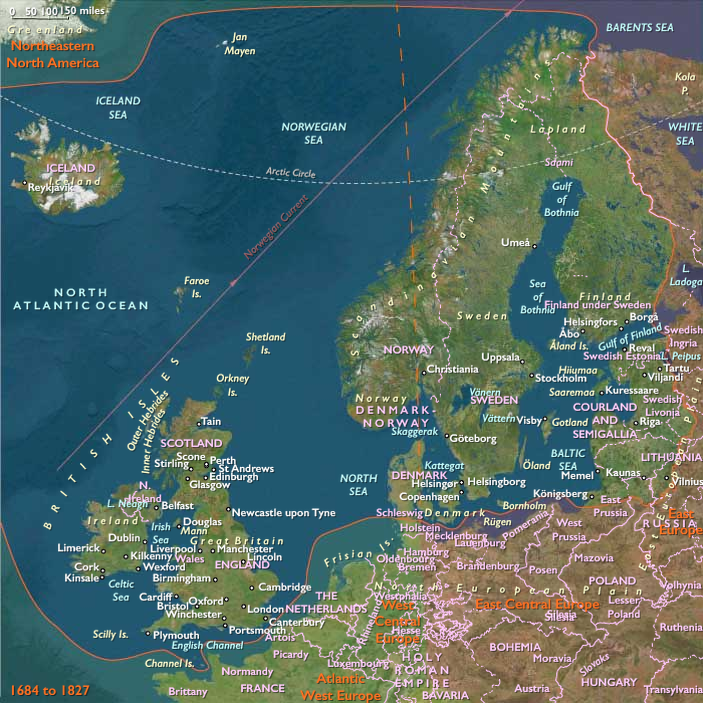
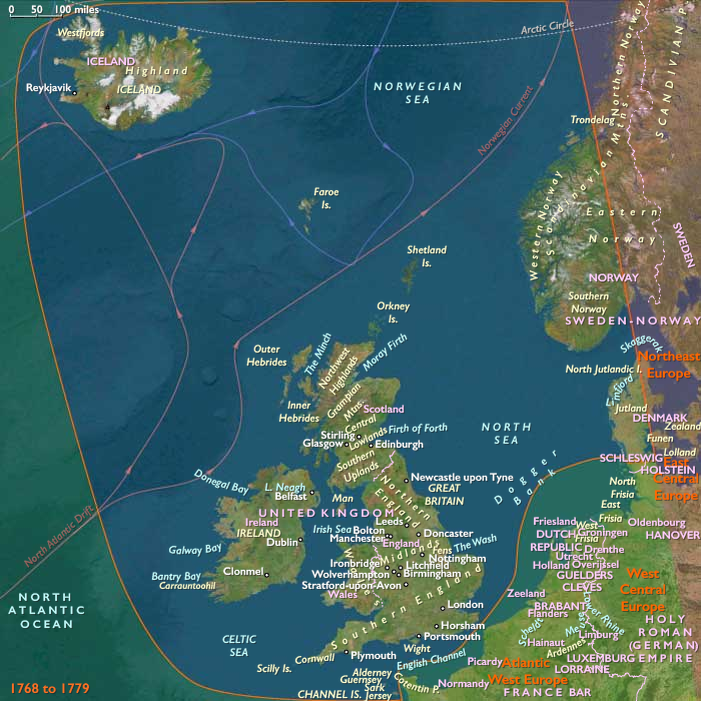
James Cook’s second voyage of discovery departs Plymouth Sound on Monday, July 13, 1772.
Proof of the existence of a passage south of New Guinea now known as Torres Strait had been been found in the testimony of Luis Váez de Torres' by Alexander Dalrymple, a member of the Royal Society of London, while translating some Spanish documents captured in the Philippines in 1752.
This discovery led Dalrymple to publish An Historical Collection of the Several Voyages and Discoveries in the South Pacific Ocean in 1770–1771 which had aroused widespread interest in his claim of the existence of an unknown continent.
Soon after his return from his first voyage in 1771, Cook, promoted in August to the rank of commander, had been commissioned by the Royal Society to make a second voyage in search of the supposed southern continent, Terra Australis Incognita.
On his first voyage, Cook had demonstrated by circumnavigating New Zealand that it was not attached to a larger landmass to the south.
Although he had charted almost the entire eastern coastline of Australia, showing it to be continental in size, the Terra Australis is believed to lie further south.
Despite this evidence to the contrary, Alexander Dalrymple and others of the Royal Society still believe that a massive southern continent should exist.
Cook commands HMS Resolution on this voyage, while Tobias Furneaux commands its companion ship, HMS Adventure.
Resolution had begun her career as the 462-ton North Sea collier Marquis of Granby, launched at Whitby in 1770, purchased by the Royal Navy in 1771 for £4,151, and converted to naval specifications for a cost of £6,565.
She is 111 feet (34 meters) long and 35 feet (11 meters) abeam.
She was originally registered as HMS Drake, but for fear this would upset the Spanish, she had been renamed Resolution on December 25, 1771.
She was fitted out at Deptford with the most advanced navigational aids of the day, including an azimuth compass made by Henry Gregory, ice anchors and the latest apparatus for distilling fresh water from sea water.
Twelve light six-pounder guns and twelve swivel guns were carried.
At his own expense Cook has brass door-hinges installed in the great cabin.
HMS Adventure had begun her career as the 340 ton North Sea collier Marquis of Rockingham, launched at Whitby in 1771.
She was purchased by the Navy that year for £2,103 and named Rayleigh, then renamed Adventure.
She is 97 feet (30 meters) long, 28 feet (8.5 meters) abeam and her draft is 13 feet (4.0 meters), and carries ten guns.
Both were built at the Fishburn yard at Whitby and purchased from Captain William Hammond of Hull.
Cook has been asked to test the Larcum Kendall K1 chronometer on this voyage.
The Board of Longitude had asked Kendall to copy and develop John Harrison's fourth model of a clock (H4) useful for navigation at sea.
The first model finished by Kendall in 1769 was an accurate copy of H4, cost £450, and is known today as K1.
Although constructed like a watch, the chronometer has a diameter of 13 centimeters and weighs 1.45 kg.
Three other clocks, constructed by John Arnold w, are carried but will not withstand the rigors of the journey.
The performance of the clocks is recorded in the logbooks of astronomers William Wales[ and William Bayly and as early as 1772 Wales had noted that the watch by Kendall was 'infinitely more to be depended on'.
Provisions loaded onto the vessels for the voyage include 59,531 pounds (27,003 kg) of biscuit, 7,637 four-lb (appox 1,8 kg) pieces of salt beef, 14,214 two-lb (approx 1 kg) pieces of salt pork, 19 tuns of beer, 1,397 imperial gallons (6,350 l) of spirits 1,900 pounds (860 kg) of suet and 210 gallons of 'Oyle Olive'.
As anti-scorbutics they take nearly 20,000 pounds (9,100 kg) of 'Sour Krout' and 30 imperial gallons (140 liters) of 'Mermalade of Carrots'.
Both ships carry livestock, including bullocks, sheep, goats (for milk), hogs and poultry (including geese).
The crews have fishing gear (supplied by Onesimus Ustonson) and a water purification system is carried for distilling sea-water or purifying foul fresh-water.
Various pieces of hardware (such as knives and axes) and trinkets (beads, ribbons, medallions) to be used for barter or as gifts for the natives are also taken aboard.
Furneaux, commander of Adventure, is an experienced explorer, having served on Samuel Wallis's circumnavigation in Dolphin in 1766–1768.
He heads a crew of eighty-one, which includes Joseph Shank as first lieutenant, and Arthur Kempe as second lieutenant.
There are also twelve marines headed by Lieutenant James Scott, Furneaux's personal servant, James Tobias Swilley, and, as master's mate John Rowe, who is a relation of Furneaux.
It was originally planned that the naturalist Joseph Banks and what he considered to be an appropriate entourage would sail with Cook, so a heightened waist, an additional upper deck and a raised poop deck were built on Resolution to suit Banks.
This refit cost £10,080 12s 9d.
However, in sea trials the ship was found to be top-heavy, and under Admiralty instructions the offending structures had been removed in a second refit at Sheerness, at a further cost of £882 3s 0d.
Banks subsequently refused to travel under the resulting "adverse conditions."
The writer Samuel Johnson was briefly considered as a replacement, but declined the offer.
Instead the position is taken by Johann Reinhold Forster and his son, Georg, who are taken on as Royal Society scientists for the voyage.
Resolution carries a crew of 112; as senior lieutenants Robert Cooper and Charles Clerke and among the midshipmen George Vancouver and James Burney.
The master is Joseph Gilbert; Isaac Smith, a relation of Cook's wife, is also aboard.
Proof of the existence of a passage south of New Guinea now known as Torres Strait had been been found in the testimony of Luis Váez de Torres' by Alexander Dalrymple, a member of the Royal Society of London, while translating some Spanish documents captured in the Philippines in 1752.
This discovery led Dalrymple to publish An Historical Collection of the Several Voyages and Discoveries in the South Pacific Ocean in 1770–1771 which had aroused widespread interest in his claim of the existence of an unknown continent.
Soon after his return from his first voyage in 1771, Cook, promoted in August to the rank of commander, had been commissioned by the Royal Society to make a second voyage in search of the supposed southern continent, Terra Australis Incognita.
On his first voyage, Cook had demonstrated by circumnavigating New Zealand that it was not attached to a larger landmass to the south.
Although he had charted almost the entire eastern coastline of Australia, showing it to be continental in size, the Terra Australis is believed to lie further south.
Despite this evidence to the contrary, Alexander Dalrymple and others of the Royal Society still believe that a massive southern continent should exist.
Cook commands HMS Resolution on this voyage, while Tobias Furneaux commands its companion ship, HMS Adventure.
Resolution had begun her career as the 462-ton North Sea collier Marquis of Granby, launched at Whitby in 1770, purchased by the Royal Navy in 1771 for £4,151, and converted to naval specifications for a cost of £6,565.
She is 111 feet (34 meters) long and 35 feet (11 meters) abeam.
She was originally registered as HMS Drake, but for fear this would upset the Spanish, she had been renamed Resolution on December 25, 1771.
She was fitted out at Deptford with the most advanced navigational aids of the day, including an azimuth compass made by Henry Gregory, ice anchors and the latest apparatus for distilling fresh water from sea water.
Twelve light six-pounder guns and twelve swivel guns were carried.
At his own expense Cook has brass door-hinges installed in the great cabin.
HMS Adventure had begun her career as the 340 ton North Sea collier Marquis of Rockingham, launched at Whitby in 1771.
She was purchased by the Navy that year for £2,103 and named Rayleigh, then renamed Adventure.
She is 97 feet (30 meters) long, 28 feet (8.5 meters) abeam and her draft is 13 feet (4.0 meters), and carries ten guns.
Both were built at the Fishburn yard at Whitby and purchased from Captain William Hammond of Hull.
Cook has been asked to test the Larcum Kendall K1 chronometer on this voyage.
The Board of Longitude had asked Kendall to copy and develop John Harrison's fourth model of a clock (H4) useful for navigation at sea.
The first model finished by Kendall in 1769 was an accurate copy of H4, cost £450, and is known today as K1.
Although constructed like a watch, the chronometer has a diameter of 13 centimeters and weighs 1.45 kg.
Three other clocks, constructed by John Arnold w, are carried but will not withstand the rigors of the journey.
The performance of the clocks is recorded in the logbooks of astronomers William Wales[ and William Bayly and as early as 1772 Wales had noted that the watch by Kendall was 'infinitely more to be depended on'.
Provisions loaded onto the vessels for the voyage include 59,531 pounds (27,003 kg) of biscuit, 7,637 four-lb (appox 1,8 kg) pieces of salt beef, 14,214 two-lb (approx 1 kg) pieces of salt pork, 19 tuns of beer, 1,397 imperial gallons (6,350 l) of spirits 1,900 pounds (860 kg) of suet and 210 gallons of 'Oyle Olive'.
As anti-scorbutics they take nearly 20,000 pounds (9,100 kg) of 'Sour Krout' and 30 imperial gallons (140 liters) of 'Mermalade of Carrots'.
Both ships carry livestock, including bullocks, sheep, goats (for milk), hogs and poultry (including geese).
The crews have fishing gear (supplied by Onesimus Ustonson) and a water purification system is carried for distilling sea-water or purifying foul fresh-water.
Various pieces of hardware (such as knives and axes) and trinkets (beads, ribbons, medallions) to be used for barter or as gifts for the natives are also taken aboard.
Furneaux, commander of Adventure, is an experienced explorer, having served on Samuel Wallis's circumnavigation in Dolphin in 1766–1768.
He heads a crew of eighty-one, which includes Joseph Shank as first lieutenant, and Arthur Kempe as second lieutenant.
There are also twelve marines headed by Lieutenant James Scott, Furneaux's personal servant, James Tobias Swilley, and, as master's mate John Rowe, who is a relation of Furneaux.
It was originally planned that the naturalist Joseph Banks and what he considered to be an appropriate entourage would sail with Cook, so a heightened waist, an additional upper deck and a raised poop deck were built on Resolution to suit Banks.
This refit cost £10,080 12s 9d.
However, in sea trials the ship was found to be top-heavy, and under Admiralty instructions the offending structures had been removed in a second refit at Sheerness, at a further cost of £882 3s 0d.
Banks subsequently refused to travel under the resulting "adverse conditions."
The writer Samuel Johnson was briefly considered as a replacement, but declined the offer.
Instead the position is taken by Johann Reinhold Forster and his son, Georg, who are taken on as Royal Society scientists for the voyage.
Resolution carries a crew of 112; as senior lieutenants Robert Cooper and Charles Clerke and among the midshipmen George Vancouver and James Burney.
The master is Joseph Gilbert; Isaac Smith, a relation of Cook's wife, is also aboard.
Locations
People
- Alexander Dalrymple
- Charles Clerke
- Georg Forster
- George Vancouver
- James Burney
- James Cook
- Joseph Banks
- Onesimus Ustonson
- Samuel Johnson
- Tobias Furneaux
- William Bayly
- William Hodges
- William Wales
Groups
Topics
- Exploration of Oceania, European
- Voyages of scientific exploration, European and American
- Cook, Second Voyage of James
Subjects
Regions
Subregions
Related Events
Showing 10 events out of 25898 total
Years: 1772 - 1772
July
Locations
People
- Alexander Dalrymple
- Charles Clerke
- Georg Forster
- George Vancouver
- James Burney
- James Cook
- Joseph Banks
- Onesimus Ustonson
- Samuel Johnson
- Tobias Furneaux
- William Bayly
- William Hodges
- William Wales
Groups
Topics
- Exploration of Oceania, European
- Voyages of scientific exploration, European and American
- Cook, Second Voyage of James
Subjects
Regions
Subregions