
The origin of the ethnic Iranian peoples/Persian …
Years: 861BCE - 850BCE
The origin of the ethnic Iranian peoples/Persian peoples are traced to the Ancient Iranian peoples, who were part of the ancient Indo-Iranians and themselves part of the greater Indo-European linguistic family.
The Ancient Iranian peoples had arrived in parts of the Iranian plateau circa 1000 BCE.
Important Iranic tribes such as Old Persians, Medes, Parthians, Bactrians, Scythians, and the Avesta people will use the name Arya (Iranian), which was a collective definition, denoting peoples who were aware of belonging to a generally common ethnic stock, speaking very closely related languages, and mainly sharing a religious tradition that centers on the worship of Ahura Mazda.
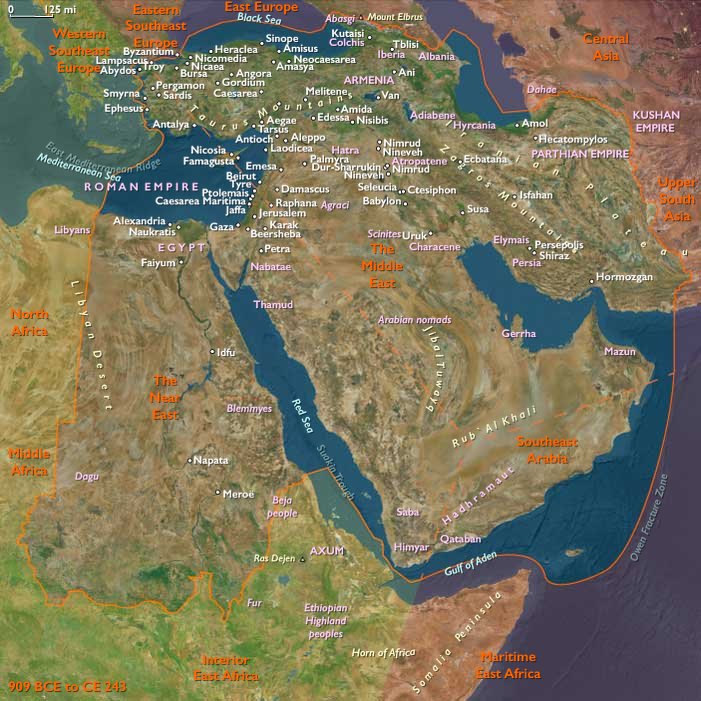
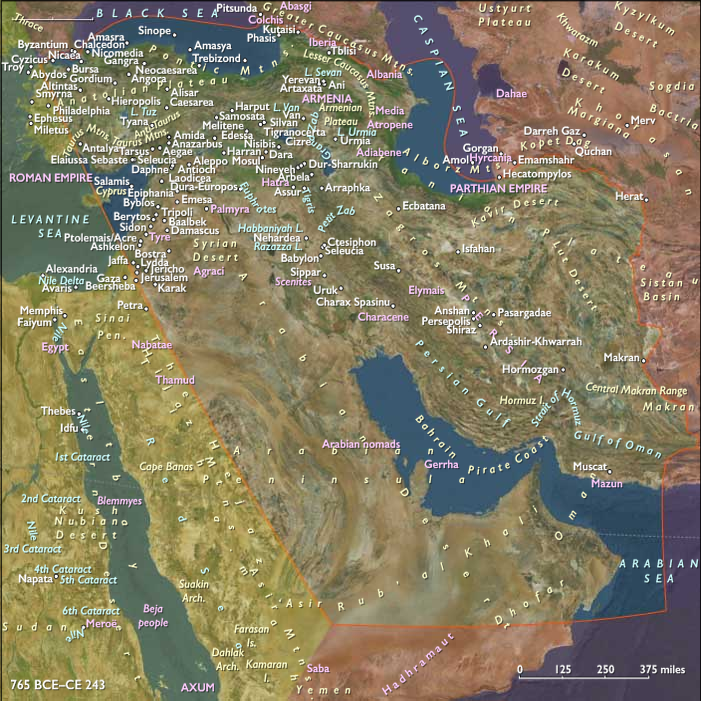
The Old Persians, who are one of these ethnic Iranian groups, were originally nomadic, pastoral people in the western Iranian plateau and by 850 BCE are calling themselves the Parsa and their constantly shifting territory Parsua for the most part localized around Persis (Pars), bounded on the west by the Tigris river and on the south by the Persian Gulf.
The first known written record of the term Persian is from Assyrian inscriptions of the ninth century BCE, which mention both Parsuash and Parsua.
Locations
People
Groups
Topics
- Younger Subboreal Period
- Iron Age, Near and Middle East
- Assyrian Wars of c. 909-c. 746 BCE
- Iron Age Cold Epoch
Commodoties
Subjects
- Commerce
- Language
- Sculpture
- Painting and Drawing
- Environment
- Labor and Service
- Fashion
- Decorative arts
- Style
- Conflict
- Faith
- Government
- Technology
Regions
Subregions
Years: 861BCE - 850BCE
Locations
People
Groups
Topics
- Younger Subboreal Period
- Iron Age, Near and Middle East
- Assyrian Wars of c. 909-c. 746 BCE
- Iron Age Cold Epoch
Commodoties
Subjects
- Commerce
- Language
- Sculpture
- Painting and Drawing
- Environment
- Labor and Service
- Fashion
- Decorative arts
- Style
- Conflict
- Faith
- Government
- Technology
Regions
Subregions