The Origins of the First Crusade and …
Years: 1096 - 1107
The Origins of the First Crusade and Its Launch in 1095
The origins of the Crusades, particularly the First Crusade (1095–1099), remain a subject of historical debate, with scholars attributing the movement to a combination of political, social, religious, and military factors. The Crusades were shaped by eleventh-century European dynamics, the reformist agenda of the papacy, and the broader conflict between Christianity and Islam in both Europe and the Middle East.
The Political and Religious Background of the First Crusade
1. The Role of the Papacy and Church Reform
- The Gregorian Reform Movement within the Church had strengthened papal authority in the eleventh century.
- Pope Urban II, a reformist pope, sought to assert Rome’s leadership over Christendom, including Eastern Christianity.
- The Crusade provided an opportunity for the papacy to unify Christian warriors under a religious cause while expanding papal influence over both secular rulers and Eastern Christendom.
2. The Byzantine Appeal for Military Aid
- The Byzantine Empire, led by Emperor Alexios I Komnenos, had suffered significant territorial losses to the Seljuq Turks, particularly in Anatolia after the Battle of Manzikert (1071).
- Alexios, facing a deteriorating military situation, appealed to Pope Urban II in 1095, requesting western knights to help repel the Seljuqs and reclaim lost Byzantine lands.
3. The Expansion of Christian Warfare and the Idea of Holy War
- In the decades leading up to the First Crusade, Christian rulers in Iberia and Sicily had launched military campaigns against Muslim-held territories.
- The Crusades fit into this broader trend of religious warfare, framed as a divine mission to reclaim Christian lands from Muslim rule.
The Launch of the First Crusade (November 27, 1095)
- Pope Urban II officially launched the First Crusade on November 27, 1095, at the Council of Clermont in France.
- His initial goal was to respond to the Byzantine plea for aid, calling on Christian knights to take up arms in defense of the Eastern Church.
- However, an additional goal quickly emerged—the liberation of Jerusalem and the Holy Land from Muslim rule, which soon became the central objective of the Crusade.
- The Crusade was framed as a religious duty, with participants promised spiritual rewards, including remission of sins.
Consequences and the Path Forward
- The Crusade sparked an unprecedented movement, drawing thousands of knights, nobles, and commoners from across Western Europe.
- It redefined Christian-Muslim relations, setting the stage for centuries of conflict and interaction between Latin Christendom and the Islamic world.
- The campaign ultimately led to the capture of Jerusalem in 1099, establishing the first Crusader states in the Levant.
The First Crusade, launched in 1095, was a product of both immediate military necessity and long-standing religious tensions, blending Byzantine requests for aid with the broader ambition of reclaiming the Holy Land.
People
Groups
- Jews
- Germans
- Greeks, Medieval (Byzantines)
- Islam
- Muslims, Sunni
- Abbasid Caliphate (Baghdad)
- German, or Ottonian (Roman) Empire
- Turkmen people
- French people (Latins)
- France, (Capetian) Kingdom of
- Seljuq Empire (Isfahan)
- Christians, Roman Catholic
- Christians, Eastern Orthodox
- Rum, Sultanate of
- Damascus, Seljuq Emirate of
- Roman Empire, Eastern: Komnenos dynasty, restored
- Antioch, Principality of
- Edessa, County of
- Jerusalem, Latin Kingdom of
- Palestine, Frankish (Outremer)
- Damascus, Burid Emirate of
Topics
Commodoties
Subjects
Regions
Subregions
Related Events
Filter results
Showing 10 events out of 50218 total
The First Crusade (1096–1099): From Pilgrimage to Military Campaign
The First Crusade began as a widespread religious pilgrimage from France and Germany but soon evolved into a military expedition by Roman Catholic Europe to reclaim the Holy Land from Muslim rule. The campaign ultimately resulted in the capture of Jerusalem in 1099, marking one of the most significant events in medieval history.
Origins: A Mass Movement of Pilgrims and Warriors
- The Crusade attracted people from all social classes, including:
- Knights, seeking military glory and spiritual rewards.
- Peasants and serfs, some of whom saw the Crusade as a path to freedom or salvation.
- Minor nobles, looking for land and opportunities in the East.
- Many sold or mortgaged their lands to fund the journey, highlighting the economic and personal sacrifices required to undertake the expedition.
Journey to the Holy Land
- The Crusaders traveled over land and by sea, first gathering in Constantinople before advancing toward Jerusalem.
- The journey was long and perilous, involving battles, sieges, and encounters with both Muslim and Byzantine forces.
- The First Crusade was distinct from later ones in that it was not led by kings, but rather by a mix of noble lords and church leaders.
Outcome: The Capture of Jerusalem (1099)
- After a three-year campaign, the Crusaders stormed Jerusalem in July 1099, establishing the first Crusader states in the Levant.
- The capture of the city was brutal, with massacres of Muslim and Jewish inhabitants, reinforcing the fierce religious fervor of the movement.
Significance and Legacy
- The First Crusade set a precedent for further military campaigns in the Middle East, shaping Christian-Muslim relations for centuries.
- It established European political and military presence in the Levant, leading to the formation of Crusader states such as the Kingdom of Jerusalem.
- The economic and social impact was vast, as many Western nobles and knights remained in the Holy Land, while others returned home financially drained or politically transformed.
The First Crusade was a unique fusion of pilgrimage and warfare, demonstrating the power of religious ideology to mobilize vast segments of European society and reshape the political landscape of the medieval world.
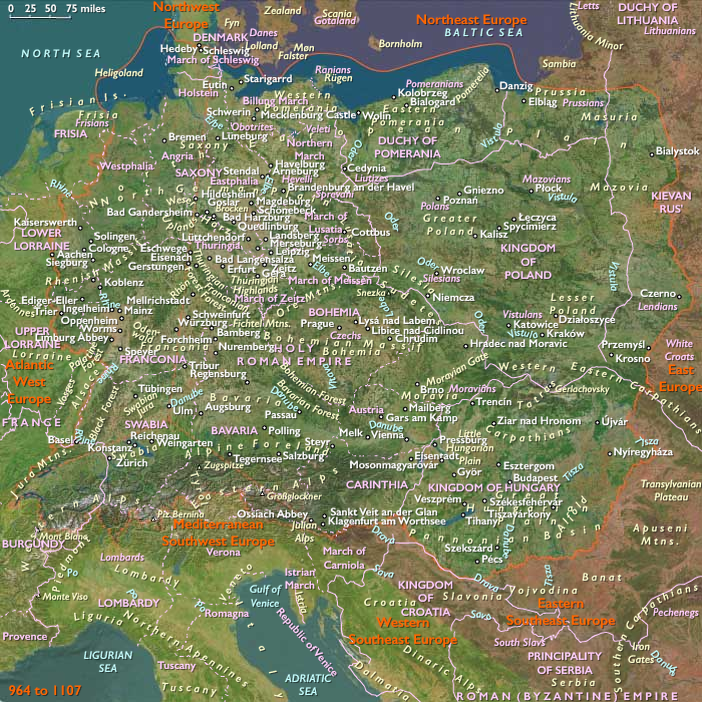
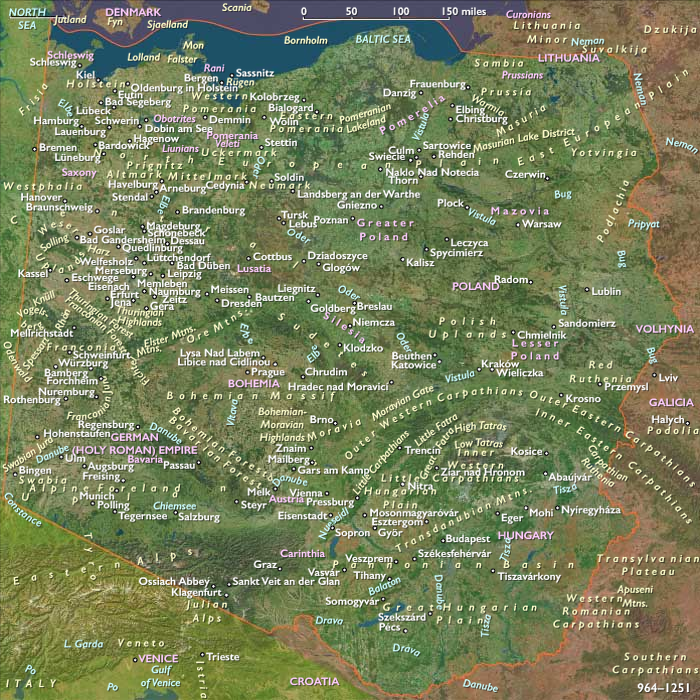
East Central Europe (1096–1107 CE): Coloman’s Hungarian Consolidation, Polish Fragmentation under Władysław I and Zbigniew, and Bohemian Stability under Bretislav II
Between 1096 and 1107 CE, East Central Europe—comprising modern-day Poland, Czechia, Slovakia, Hungary, and the eastern portions of Germany and Austria east of 10°E and north of the defined southeastern boundary—experienced critical political, dynastic, and cultural shifts. King Coloman the Learned solidified Hungarian stability and expanded royal authority, Poland remained politically fragmented under the rule of Władysław I Herman and his sons, and Bohemia enjoyed stability and regional influence under Bretislav II. These developments reshaped regional dynamics and set lasting precedents for future medieval statehood.
Political and Military Developments
Hungarian Consolidation and Expansion under Coloman
-
Coloman the Learned (r. 1095–1116) secured internal peace in Hungary after Ladislaus I’s successful reign. He expanded Hungarian influence, notably annexing Croatia (1102), effectively ruling it as part of a personal union. His reforms strengthened legal structures, royal administration, and military capabilities.
Polish Dynastic Fragmentation and Rivalries
-
After Władysław I Herman’s death in 1102, Poland experienced intensified internal conflicts between his sons, Zbigniew and Bolesław III Wrymouth, leading to fragmented territories, internal instability, and weakened royal authority throughout this period.
Stability and Influence of Bohemia under Bretislav II
-
Duke Bretislav II of Bohemia (r. 1092–1100) maintained Přemyslid stability and aligned Bohemia with imperial interests, reinforcing its regional status. His reign was marked by strengthened governance, improved administrative efficiency, and enhanced regional diplomacy.
Imperial Influence under Henry IV and Henry V
-
The Holy Roman Emperors Henry IV and his son Henry V (from 1106) maintained active involvement in East Central European affairs, shaping alliances, succession disputes, and regional power dynamics, especially influencing Bohemia’s strategic alignment.
Economic and Technological Developments
Hungarian Prosperity and Economic Expansion
-
Under Coloman’s reign, Hungary’s economic prosperity grew significantly, benefiting from expanded trade with Byzantium, Venice, and Central European markets. Urban centers flourished, bolstered by increased commercial activity and improved infrastructure.
Polish Economic Disruption and Localized Recovery
-
Poland’s internal dynastic struggles temporarily disrupted economic activity, yet key urban centers (Kraków, Gniezno) continued local recovery, maintaining trade and commerce despite instability.
Continued Bohemian Urban and Economic Growth
-
Prague and other Bohemian towns remained economically robust under Bretislav II, benefiting from stable governance, increased trade, and enhanced urban infrastructure.
Cultural and Artistic Developments
Hungarian Cultural Renaissance under Coloman
-
Coloman the Learned, renowned for his intellectual interests, actively promoted ecclesiastical institutions, supported literary and scholarly activities, and initiated cultural projects, fostering a Hungarian cultural revival and intellectual flourishing.
Bohemian Ecclesiastical and Cultural Vitality
-
Bretislav II’s patronage supported ecclesiastical building programs, monastic foundations, and manuscript production, significantly enriching Bohemia’s cultural and religious life, particularly in Prague.
Polish Cultural Continuity amid Political Instability
-
Despite political fragmentation, Polish monasteries, ecclesiastical institutions, and cultural centers preserved scholarly traditions and cultural identity, providing continuity during ongoing turmoil.
Settlement and Urban Development
Expansion of Hungarian Urban Centers
-
Coloman actively supported urban growth in key Hungarian cities, notably Esztergom, Székesfehérvár, and Zagreb, strengthening administrative efficiency, economic vitality, and regional governance.
Continued Bohemian Urban Prosperity
-
Prague and other Bohemian urban centers experienced continued growth and fortification under Bretislav II, reinforcing their economic and political roles.
Polish Urban Resilience amid Dynastic Strife
-
Major Polish cities, including Kraków and Gniezno, showed resilience and maintained incremental development, ensuring continued administrative and economic significance despite political challenges.
Social and Religious Developments
Consolidation of Ecclesiastical Authority
-
Christianity remained dominant throughout the region, with strengthened ecclesiastical authority evident under Coloman in Hungary and Bretislav II in Bohemia, shaping governance, education, and cultural identities.
Dynastic Power and Aristocratic Influence
-
Dynastic and aristocratic structures continued to solidify, with Hungarian royal authority notably strengthened under Coloman. Meanwhile, Poland’s weakened central authority enhanced aristocratic influence, altering political governance patterns for subsequent decades.
Long-Term Consequences and Historical Significance
The era 1096–1107 CE significantly shaped the medieval trajectory of East Central Europe. Hungary under Coloman experienced significant territorial expansion and cultural flourishing, Poland faced severe dynastic fragmentation and weakened royal authority, and Bohemia maintained stable governance and strengthened regional influence under Bretislav II. These developments profoundly influenced regional alliances, political identities, cultural traditions, and societal structures, laying foundational elements that endured throughout subsequent medieval centuries.
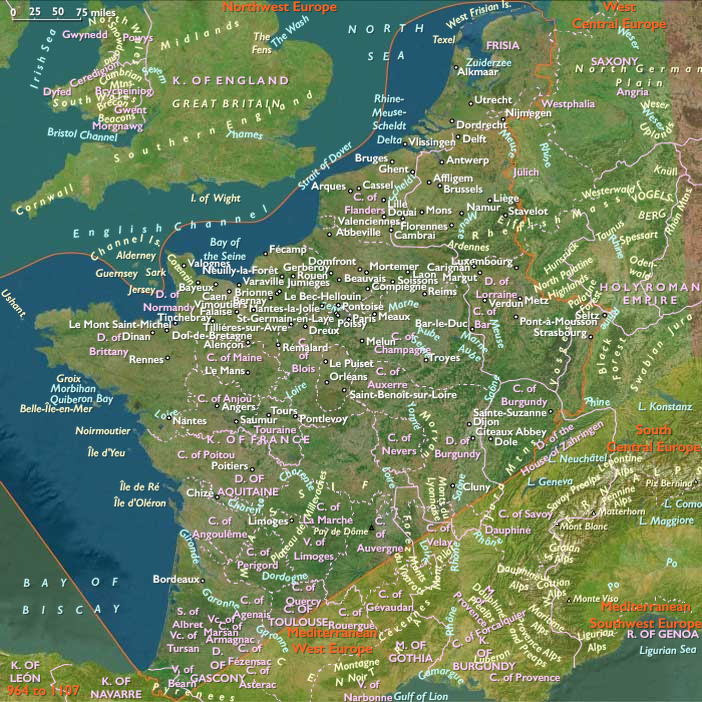
The Massacres of Jewish Communities During the First Crusade (1096)
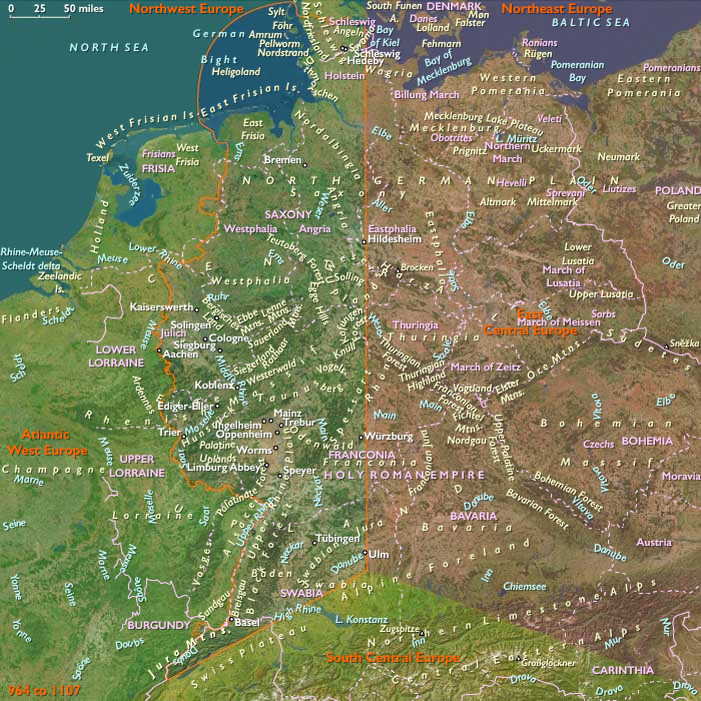
The First Crusade (1096–1099) brought with it one of the first large-scale outbreaks of anti-Jewish violence in medieval Europe. As bands of Crusaders moved toward the Holy Land, irregular groups known as the "People’s Crusade" began their campaign not against Muslims in the East, but against Jewish communities in the Rhineland and elsewhere in northwestern Europe. This widespread persecution led to mass killings, forced conversions, and the flight of Jewish survivors to the more tolerant Slavic lands in the East.
The Breakdown of Jewish-Christian Relations
- Prior to 1096, there was a tenuous coexistence between Jewish communities and their Christian neighbors in parts of northwestern Europe.
- However, as the fervor of the Crusades intensified, many Crusaders saw non-Christians within Europe as enemies of the faith, turning their violence toward local Jewish populations.
- Some Crusaders sought money to fund their journey by targeting Jewish communities for plunder and extortion.
The Pogroms of 1096: The Rhineland Massacres
- The People’s Crusade, a loosely organized force of peasants, knights, and minor nobles, took a brutal detour through the Rhineland, attacking Jewish settlements in major cities.
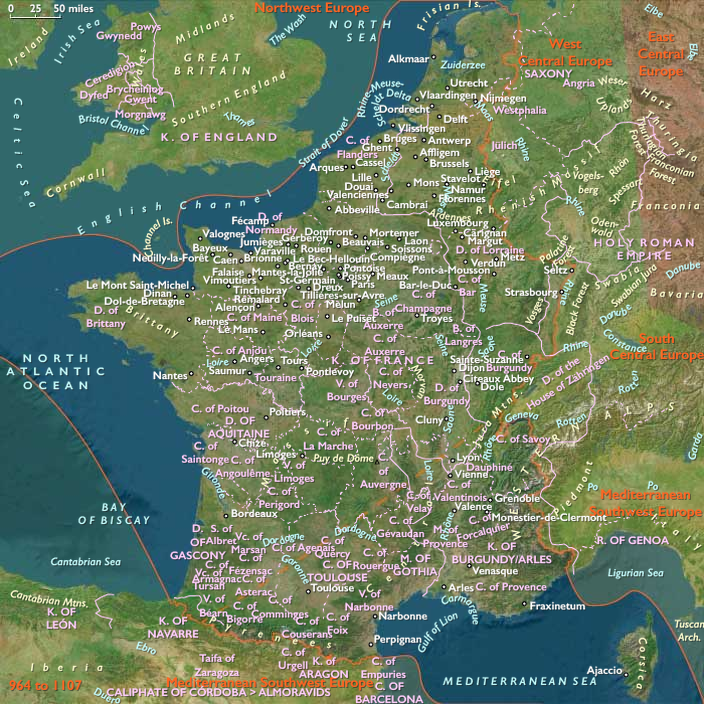
- The worst atrocities occurred in Worms, Mainz, Speyer, and Cologne, where entire Jewish populations were massacred.
- Crusaders killed indiscriminately, murdering men, women, and children, often in horrific ways.
- Many Jewish families committed mass suicide rather than fall into the hands of the Crusaders.
- Some Jewish survivors fled eastward, seeking refuge in the more tolerant Slavic lands, particularly Poland and Kievan Rus’.
Emperor Henry IV’s Response
- Emperor Henry IV denied any involvement in forced conversions carried out by the Crusaders.
- He offered Jews who had been forcibly baptized the opportunity to return to Judaism, though many had already lost their homes and communities.
The Scale of the Atrocities
- Approximately 5,000 Jews perished in Germany and northern France during April, May, and June of 1096.
- This represented over one-quarter of the total Jewish population in these regions.
- The massacres of 1096 set a precedent for future waves of anti-Jewish violence, particularly during later Crusades.
Consequences and Legacy
- The Rhineland massacres of 1096 were a turning point in Jewish-Christian relations in medieval Europe, marking the first large-scale, organized persecutions of Jewish communities.
- Jewish survivors increasingly sought refuge in Eastern Europe, where Jewish communities flourished for centuries under more tolerant Slavic rulers.
- The events of 1096 foreshadowed future anti-Jewish pogroms in medieval Europe, demonstrating how religious movements like the Crusades could be exploited to justify ethnic violence.
The massacres of 1096 were a dark chapter in the history of the First Crusade, illustrating how religious fanaticism and political instability combined to unleash unprecedented violence against Jewish communities in medieval Europe.
Any hope of normal relations between Constantinople and the West disintegrates as the crusading movement, motivated partly by a desire to recapture the holy city of Jerusalem, partly by the hope of acquiring new territory, increasingly encroaches on imperial preserves and frustrates Emperor Alexios' foreign policy, which is primarily directed toward the reestablishment of imperial authority in Anatolia.
His relations with Muslim powers are disrupted on occasion and former valued imperial possessions, such as Antioch, pass into the hands of arrogant Western princelings, who even introduce Latin Christianity in place of Greek.
Thus, it is during Alexios' reign that the last phase of the clash between the Latin West and the Greek East is inaugurated.
He does regain some control over western Anatolia; he also advances into the southeast Taurus region, securing much of the fertile coastal plain around Adana and Tarsus, as well as penetrating farther south along the Syrian coast.
Neither Alexios nor succeeding Komnenian emperors will be able to establish permanent control over the Latin crusader principalities, however.
Continual Latin (particularly Norman) attacks, constant thrusts from Muslim principalities, the rising power of Hungary and the Balkan principalities—all conspire to surround Byzantium with potentially hostile forces.
Even Alexios' diplomacy, whatever its apparent success, cannot avert the continual erosion that will ultimately lead to the Ottoman conquest.
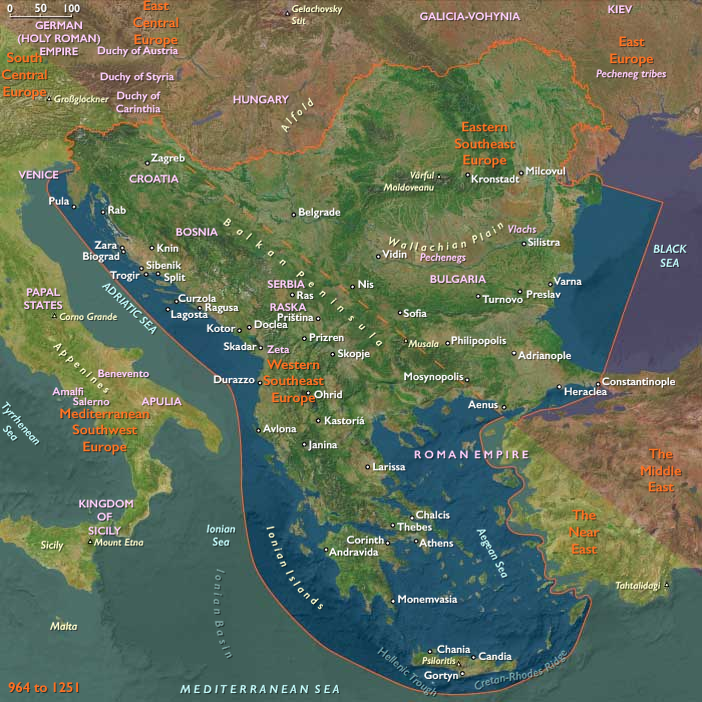
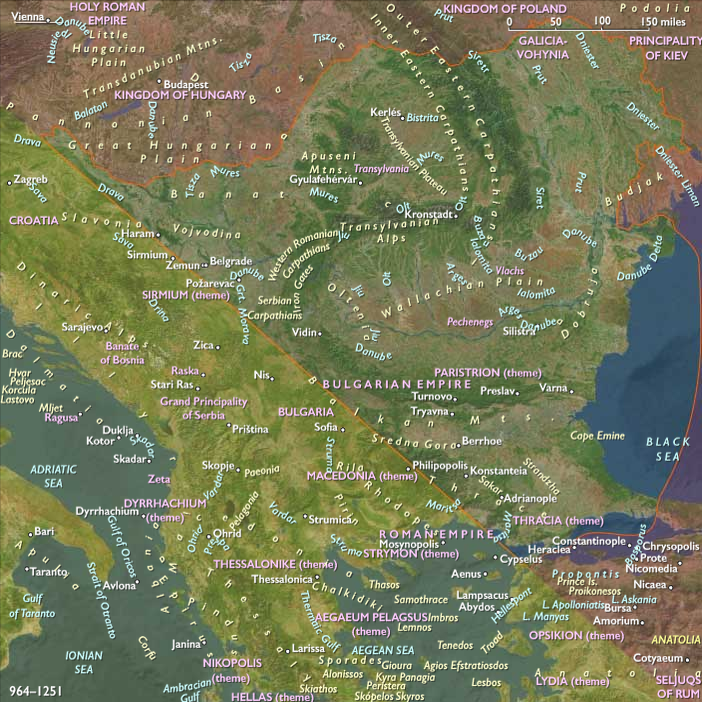
Eastern Southeast Europe (1096–1107 CE): The Crusades, Byzantine Ambitions, and Shifting Alliances
Settlement and Migration Patterns
Stability Amid Crusader and Nomadic Pressures
Between 1096 and 1107 CE, Eastern Southeast Europe continued to maintain demographic stability, even as the geopolitical landscape was increasingly complicated by crusading movements and nomadic pressures.
Political and Military Developments
Encroachment of the Crusading Movement
Relations between Constantinople and Western powers deteriorated significantly due to the crusading movement. Initially motivated by religious zeal and territorial ambitions to recapture Jerusalem, the crusaders progressively encroached on Byzantine territories, complicating Emperor Alexios I Komnenos's diplomatic efforts and foreign policy objectives, particularly his primary goal of reestablishing imperial authority in Anatolia.
Disruption of Byzantine-Muslim Relations
The crusading incursions disrupted Byzantine diplomatic relations with neighboring Muslim powers, further destabilizing the empire's strategic situation. Territories once valuable to the Byzantine Empire, such as Antioch, fell under control of Western princelings who replaced Greek Orthodoxy with Latin Christianity, exacerbating tensions between East and West.
Partial Restoration of Imperial Control
Despite these setbacks, Alexios I Komnenos achieved limited successes. He regained control over parts of western Anatolia and advanced into the southeast Taurus region, securing fertile coastal areas around Adana and Tarsus. He also penetrated further south along the Syrian coast, demonstrating a measure of renewed imperial strength and strategic capability.
Persistent External Threats
The Byzantine Empire continued to face multiple simultaneous threats. In addition to crusaders and Muslim principalities, nomadic groups such as the Pechenegs and Cumans, along with the rising power of Hungary and Balkan principalities, created a hostile geopolitical environment. These pressures significantly challenged Byzantine sovereignty and stability.
Limitations of Komnenian Authority
Neither Alexios nor his successors managed to establish permanent control over the Latin crusader states. Continued Norman aggression and the enduring threats from neighboring Muslim territories consistently undermined Byzantine security. Alexios' diplomatic maneuvers, though tactically astute, ultimately could not halt the gradual erosion of imperial power that eventually led to the Ottoman conquest.
Economic and Technological Developments
Economic Strain Amidst Military and Diplomatic Efforts
Ongoing military conflicts and diplomatic complexities placed significant economic strain on Byzantine resources. Efforts to sustain and equip military forces, coupled with the disruptions caused by crusading activities, limited overall economic recovery and growth.
Fortification and Defensive Prioritization
The empire continued enhancing defensive infrastructure, fortifying critical territories to withstand pressures from both crusaders and nomadic incursions. Military fortifications and logistical preparedness remained top priorities for maintaining territorial integrity.
Cultural and Artistic Developments
Cultural Resilience and Continuity
Despite severe geopolitical challenges, Byzantine cultural and artistic traditions persisted. Imperial and ecclesiastical patronage continued supporting intellectual and artistic activities, contributing significantly to the cultural resilience and identity of the empire.
Social and Religious Developments
Orthodox Christianity Under Pressure
Orthodox Christianity continued as a crucial element of societal cohesion but increasingly faced challenges from the encroachment of Latin Christianity brought by crusading forces. The introduction of Western ecclesiastical practices disrupted local religious traditions and deepened religious divides.
Ongoing Influence of Religious Movements
Alternative religious movements, notably the Bogomils, maintained their presence and influence in peripheral and rural areas, providing ongoing diversity in regional religious practices.
Long-Term Consequences and Historical Significance
The period from 1096 to 1107 CE marked the intensification of pressures from the Crusades, complicated Byzantine diplomatic efforts, and exposed inherent weaknesses within the empire. While Emperor Alexios made notable territorial gains, the cumulative pressures from external threats and internal vulnerabilities set the stage for sustained geopolitical and religious shifts in Eastern Southeast Europe.
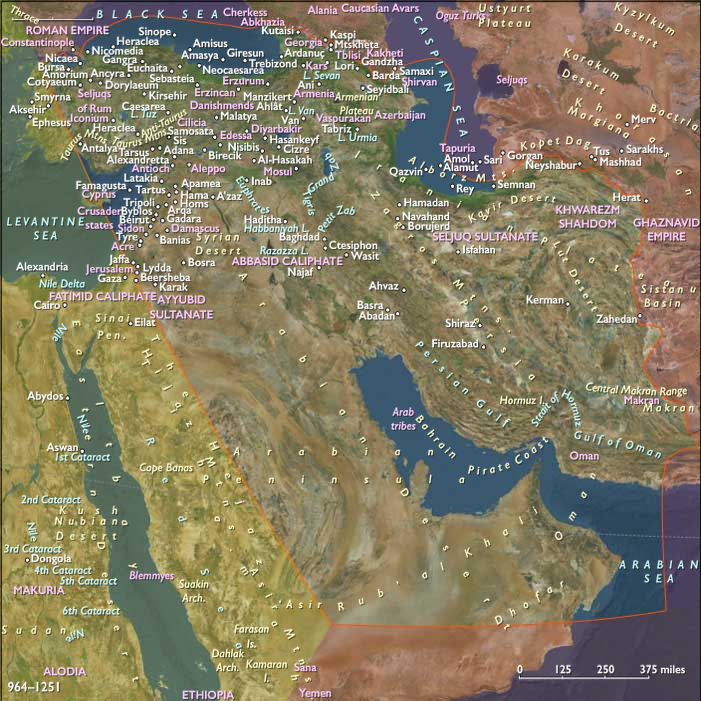
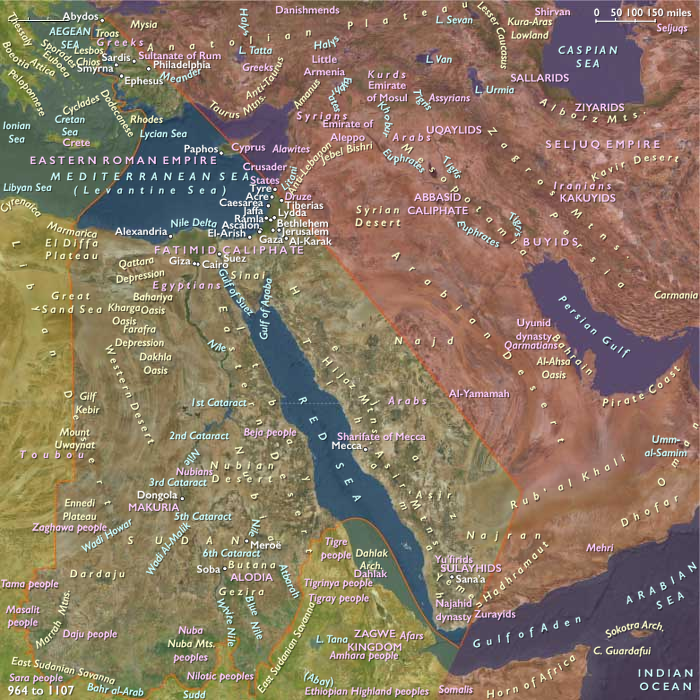
The First Crusade is largely concerned with Jerusalem, a city which has not been under Christian dominion for for hundred and sixty-one years, and the crusader army refuses to return the land to the control of the East Roman Empire.
The status of the First Crusade as defensive or as aggressive in nature remains controversial.
The Crusaders, on arrival at Jerusalem, invest the city and capture it in July 1099, massacring many of the city's Muslim, Christian, and Jewish inhabitants.
The Crusaders declare the Kingdom of Jerusalem, which approximates the borders of the present Israeli state.
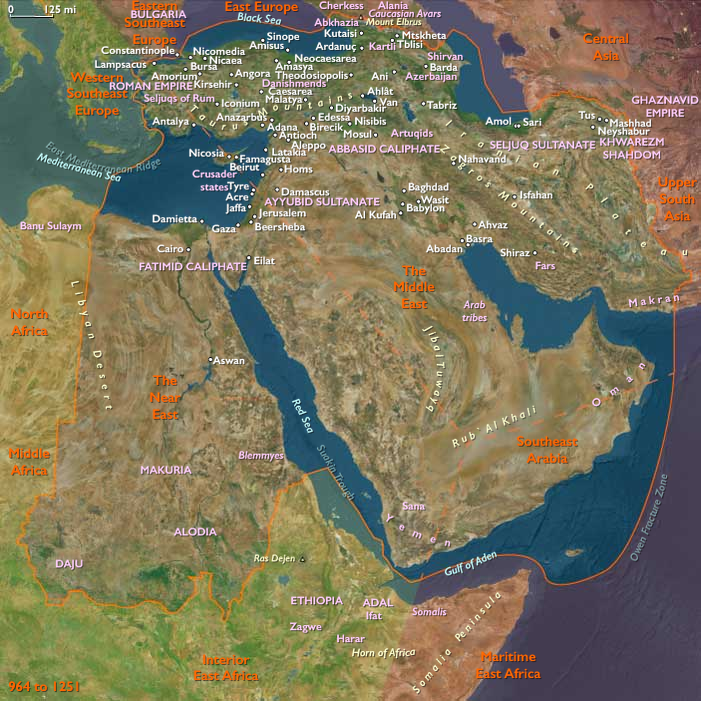
Their gains in Syria and Palestine enable them to establish fiefdoms under the suzerainty of the King of Jerusalem: the Principality of Antioch, the County of Edessa, and, soon after, the County of Tripoli.
The Muslim forces of Mosul and Damascus, the western emirates in the Hamadan fold, halt the Christian advance.
The old order in the East collapses as Christian crusaders slaughter Jews and Muslims alike and carve new states from the Seljuq and Fatimid realms in Syria and Palestine, and the Seljuq sultanate of Rüm (i.e., Rome), extends its empire throughout the former imperial lands of Anatolia.
The successful crusade had prompted a call for reinforcements from the newly established Kingdom of Jerusalem, and Pope Paschal II, successor to Pope Urban II (who will die before learning of the outcome of the crusade that he had called), urges a new expedition.
He especially urges those who have taken the crusade vow but have never departed, and those who had turned back while on the march, some of whom are already scorned at home and face enormous pressure to return to the east.
The First Crusade will be followed by the Second to the Ninth Crusades, but the gains made will last for less than two centuries.
It is also the first major step since the fall of the Western Roman Empire towards reopening international trade in the West.
The Great Famine and Plague of 1097: A Crisis in France and the First Crusade
The year 1097 was marked by widespread famine and plague, with reports suggesting 100,000 deaths in France and 50,000 in Palestine and Egypt. Though historical sources on this crisis are limited, it is clear that the First Crusade was severely affected, with the epidemic claiming the lives of many crusaders, including the papal legate Adhemar of Le Puy.
Famine and Plague in France (1097)
- Some sources claim 100,000 people perished in France due to famine and disease, though detailed records are scarce.
- The causes likely included:
- Poor harvests leading to widespread food shortages.
- Weakened infrastructure as many nobles, knights, and peasants had departed on the First Crusade, reducing agricultural labor.
- Outbreaks of disease, worsened by malnutrition and crowded conditions in cities.
- The crisis may have weakened France’s ability to continue supporting the Crusade with provisions and reinforcements.
Famine and Plague in the Near East (1097)
- The Crusaders in Palestine and Egypt also suffered from famine and outbreaks of disease, with some sources estimating 50,000 dead.
- The conditions in the Levant were worsened by:
- Sieges and military campaigns, which disrupted supply lines and created starvation conditions.
- Extreme heat and unsanitary conditions, leading to the spread of infectious diseases.
- Weakened immune systems among crusaders due to malnutrition and exhaustion.
The Death of Adhemar of Le Puy and Its Impact
- Adhemar of Le Puy, the papal legate and spiritual leader of the First Crusade, died from illness on August 1, 1098, during the siege of Antioch.
- His death deeply affected the Crusaders, as he had been a unifying figure, helping to settle disputes among rival commanders.
- Without Adhemar, the Crusader leadership became more divided, contributing to internal conflicts among the Crusading lords.
Consequences of the 1097 Famine and Plague
- The high mortality rates in both France and the Near East created logistical and military challenges for the Crusaders.
- Weakened forces and disease-ravaged armies slowed the progress of the First Crusade, increasing the hardships faced during sieges and battles.
- The death of Adhemar of Le Puy left the Crusaders without strong spiritual leadership, forcing them to rely more on secular lords for direction.
Though sources are limited, the famine and plague of 1097 was a major crisis that affected both Western Europe and the Crusader armies, shaping the course of the First Crusade and straining the resources of the Christian kingdoms.
Many Serbs move inland from coastal Doclea following the imperial takeover to the mountainous hinterland centered on the town of Ras, from which the kingdom of Rascia (Raska) derives its name.
Mediterranean Southwest Europe (1096–1107 CE): The First Crusade, Almoravid Expansion, and Cultural Crossroads
The era 1096–1107 CE in Mediterranean Southwest Europe is marked by significant religious and military upheaval due to the First Crusade, Almoravid expansion into Iberia, and continued cultural exchange and scholarly vitality.
The First Crusade and Its Impact
In 1096 CE, the First Crusade is formally launched by Pope Urban II, profoundly reshaping Europe's religious, military, and political landscapes. Though primarily focused on the Holy Land, the mobilization has significant repercussions throughout Mediterranean Southwest Europe. Ports and cities, particularly in Italy, experience increased economic activity, logistical preparations, and cultural interactions prompted by the passage of Crusader armies toward the Eastern Mediterranean.
Almoravid Expansion into Iberia
In Iberia, the Almoravids, a Berber Muslim dynasty originating from North Africa, intensify their presence and military campaigns, decisively intervening in the fractured political landscape of the taifa kingdoms. By 1099 CE, the Almoravids capture key cities including Valencia, significantly reshaping political alliances and restoring stronger Muslim unity across southern Iberia, countering the advances of the Christian kingdoms.
Continued Cultural Synthesis in Toledo
Toledo, under Christian rule since 1085 CE, continues thriving as a critical center of cultural and scholarly synthesis. Arab, Jewish, and Christian traditions interact dynamically within the city, leading to significant scholarly achievements. Toledo’s active translation efforts, especially from Arabic and Greek into Latin, persist in transmitting classical knowledge and fostering intellectual revival across Western Europe.
Norman Strength in Southern Italy and Sicily
Norman authority remains robust in southern Italy and Sicily, fostering relative political stability and promoting economic growth in these regions. Under Norman rule, Sicily becomes a pivotal crossroads for cultural interaction, trade, and scholarship between the Islamic Mediterranean, Latin Europe, and the Byzantine East.
Scholarly and Cultural Vitality
Throughout the period, Jewish and Mozarab communities remain central to the intellectual and cultural vitality of Mediterranean Southwest Europe. Scholarly centers, such as Lucena, sustain vibrant intercultural dialogue and academic excellence, reinforcing the region’s reputation as a dynamic hub of medieval learning.
Economic Prosperity and Technological Continuity
Economic stability continues, underpinned by sustained technological advancements like the Catalan forge, boosting iron production and enhancing agricultural productivity, urban expansion, and military readiness. The region's economic foundations remain strong despite broader political and military upheavals.
Legacy of the Era
The era 1096–1107 CE profoundly influences Mediterranean Southwest Europe through the dramatic impacts of the First Crusade, Almoravid expansions, and the ongoing scholarly and cultural synthesis in Toledo. These developments significantly shape regional dynamics, laying essential groundwork for transformative medieval and early-modern transitions.
Atlantic Southwest Europe (1096–1107 CE): Consolidation of Portuguese Autonomy, Alfonso VI’s Late Reign, and Regional Stabilization
Between 1096 and 1107 CE, Atlantic Southwest Europe—including Galicia, northern and central Portugal, Asturias, Cantabria, and northern Spain south of the Franco-Spanish border (43.05548° N, 1.22924° W)—experienced significant political stabilization, territorial consolidation, and sustained economic prosperity. In the Kingdom of León-Castile, the latter reign of Alfonso VI (1072–1109 CE) focused on reinforcing administrative structures and securing territorial gains, especially in the critical frontier areas. In Portugal, Raymond of Burgundy (1093–1107 CE) decisively strengthened regional autonomy, significantly revitalizing local governance and laying enduring foundations for future sovereignty. Concurrently, the Navarre-Aragón union, governed by Peter I (1094–1104 CE) and later by Alfonso I "the Battler" (1104–1134 CE), maintained regional stability amid broader Iberian complexities, preserving internal cohesion and identity.
Political and Military Developments
Alfonso VI’s Territorial Consolidation and Late Reign Stability
In his later years, Alfonso VI concentrated on consolidating extensive territorial acquisitions, notably maintaining the strategic city of Toledo. He reinforced administrative efficiency, frontier security, and territorial repopulation along the Duero and Tagus rivers. Although his ambitious southern advances slowed, Alfonso’s rule continued providing essential political stability, profoundly shaping regional governance and territorial integrity.
Strengthening of Portuguese Autonomy under Raymond of Burgundy
Count Raymond of Burgundy significantly consolidated Portuguese autonomy during his tenure, effectively fortifying frontier defenses, administrative structures, and local governance. His capable administration notably stabilized Portuguese regional identity, territory, and civic governance, laying essential groundwork for future Portuguese independence. Raymond’s death in 1107 marked a transitional moment but left a robust foundation for the county’s future.
Navarre-Aragón Stability under Peter I and Alfonso I
Navarre-Aragón maintained stability under Peter I’s leadership, carefully navigating diplomatic complexities amid Castilian expansion and interactions with Islamic taifa kingdoms. Upon Peter’s death in 1104, his brother, Alfonso I ("the Battler"), succeeded him, ushering in a more assertive era. However, the region’s internal stability and governance cohesion remained intact, significantly influencing northern Iberian politics.
Economic Developments
Sustained Economic Prosperity
Regional economies continued flourishing, supported by stable agriculture (grain, vineyards, olives), livestock husbandry, artisanal crafts, and mining activities, especially precious metals from Galicia and Asturias. Stable political conditions reinforced economic growth, frontier repopulation, and territorial integration efforts.
Continued Expansion of Maritime and Pilgrimage Commerce
Coastal settlements, particularly Bracara Augusta (Braga) and smaller northern Portuguese ports, expanded vibrant maritime trade networks, significantly enhancing regional connections with Atlantic and Mediterranean markets. The pilgrimage routes to Santiago de Compostela further supported robust commercial activities, strengthening economic resilience and regional prosperity.
Cultural and Religious Developments
Santiago de Compostela’s Continued Prominence
Pilgrimage activity to Santiago de Compostela remained robust, consolidating its role as a leading European spiritual and cultural center. The city’s ecclesiastical authority, economic prosperity, and cultural exchanges were strengthened significantly by ongoing pilgrimage influx, profoundly shaping regional identity and cultural prominence.
Ecclesiastical Authority and Community Stability
Influential bishoprics—including Braga, Lugo, Asturica Augusta, and Santiago de Compostela—provided strong local governance, moral authority, and educational leadership. Their ongoing influence significantly reinforced community stability, regional cohesion, and cultural continuity.
Monastic Intellectual Vitality
Monastic communities actively maintained scholarly traditions, manuscript preservation, agricultural innovation, and intellectual pursuits. Their sustained cultural and educational roles significantly preserved regional historical heritage and cultural resilience.
Enduring Cultural Syncretism
Integration of orthodox Christianity with indigenous Celtic and Iberian traditions remained strong, particularly in rural Galicia, Asturias, and northern Portugal. This cultural fusion significantly reinforced regional identity, cultural distinctiveness, and social resilience during political stabilization.
Civic Identity and Governance
Solidified León-Castile Governance Structures
Under Alfonso VI’s later rule, governance structures became increasingly stable, supported by effective local aristocratic and ecclesiastical cooperation. Territorial consolidation and repopulation notably strengthened regional civic identities, reinforcing political cohesion and territorial integrity.
Portuguese Regional Identity and Stability
Raymond of Burgundy’s effective administration decisively consolidated Portuguese autonomy, territorial cohesion, and administrative structures, significantly shaping civic identity and governance stability. His capable governance laid critical groundwork for Portugal’s future national sovereignty and regional cohesion.
Stable Governance in Navarre-Aragón
The Navarre-Aragón union maintained territorial integrity, stable local governance, and resilient civic identity under Peter I and subsequently Alfonso I "the Battler." This political stability preserved regional autonomy and diplomatic maneuverability amid broader Iberian political dynamics.
Notable Tribal Groups and Settlements
-
Astures and Cantabri: Continued providing critical frontier security, governance stability, and regional cohesion, significantly supporting León-Castile’s territorial consolidation and political stability.
-
Galicians and Lusitanians: Played pivotal roles in maintaining economic prosperity, cultural vitality, and localized governance stability, notably reinforcing Santiago’s prominence and Portuguese territorial autonomy.
-
Basques (Navarre): Maintained resilient regional identity and internal cohesion amid Navarre-Aragón political integration, significantly shaping regional governance structures and cultural continuity.
Long-Term Significance and Legacy
Between 1096 and 1107 CE, Atlantic Southwest Europe:
-
Experienced significant political consolidation and territorial stabilization under Alfonso VI’s late reign, decisively reshaping Iberian political structures and territorial cohesion.
-
Achieved decisive strengthening of Portuguese regional autonomy and governance under Raymond of Burgundy, laying essential foundations for future Portuguese national sovereignty.
-
Preserved stable governance and regional autonomy within Navarre-Aragón, navigating diplomatic complexities and preserving internal cohesion.
-
Continued economic prosperity, pilgrimage traditions, ecclesiastical authority, and cultural resilience, significantly shaping the medieval trajectory and enduring legacy of the region.
This decisive era consolidated regional political stability, strengthened civic identities, and reinforced economic resilience, profoundly influencing Atlantic Southwest Europe’s historical trajectory and lasting medieval legacy.
Years: 1096 - 1107
People
Groups
- Jews
- Germans
- Greeks, Medieval (Byzantines)
- Islam
- Muslims, Sunni
- Abbasid Caliphate (Baghdad)
- German, or Ottonian (Roman) Empire
- Turkmen people
- French people (Latins)
- France, (Capetian) Kingdom of
- Seljuq Empire (Isfahan)
- Christians, Roman Catholic
- Christians, Eastern Orthodox
- Rum, Sultanate of
- Damascus, Seljuq Emirate of
- Roman Empire, Eastern: Komnenos dynasty, restored
- Antioch, Principality of
- Edessa, County of
- Jerusalem, Latin Kingdom of
- Palestine, Frankish (Outremer)
- Damascus, Burid Emirate of