
The Divine Right of Kings and the …
Years: 1252 - 1395
The Divine Right of Kings and the Royal Council in Medieval Portugal
From the reign of Afonso Henriques onward, Portuguese monarchs ruled by divine right, a principle that legitimized their absolute authority as being ordained by God. This system remained in place until the establishment of a constitutional monarchy in the early 19th century.
The Role of the Royal Council
The early Portuguese kings were assisted by a royal council, composed of their closest advisers and allies, primarily drawn from the higher nobility and clergy. This council played a crucial role in governance, providing strategic, legal, and administrative guidance to the monarch.
Key Functionaries of the Royal Court
The royal council was supported by a group of high-ranking functionaries, each responsible for critical aspects of administration:
- Chancellor – The most powerful official, responsible for keeping the royal seal and overseeing the king’s official documents.
- Notary – Advised on legal matters and ensured that royal decrees adhered to established law and custom.
- Scribe – Drafted the king’s letters and official records, as many early kings were illiterate and relied on written communication through trusted clerks.
- Majordomo – Commanded the king’s household guard, overseeing court security and the protection of the royal family.
The Centralization of Royal Power
While the royal council initially functioned as an advisory body, Portuguese monarchs increasingly centralized authority, reducing noble influence and strengthening the Crown’s direct control over the kingdom’s administration. This gradual transformation laid the groundwork for a more bureaucratic state, which would later evolve into a constitutional monarchy.
Locations
People
Groups
- Benedictines, or Order of St. Benedict
- Islam
- Portuguese people
- León, Kingdom of
- Burgundy, Duchy of
- Christians, Roman Catholic
- Portugal, (second) County of
- Hospitallers of St. John of Jerusalem
- Templar, Knights (Poor Knights of Christ and of the Temple of Solomon)
- Almohad Caliphate
- Portugal, Burgundian (Alfonsine) Kingdom of
- Santiago, Order of
- Calatrava, Order of
- Franciscans, or Order of St. Francis
- Calatrava, Order of
- Dominicans, or Order of St. Dominic
Topics
Subjects
Regions
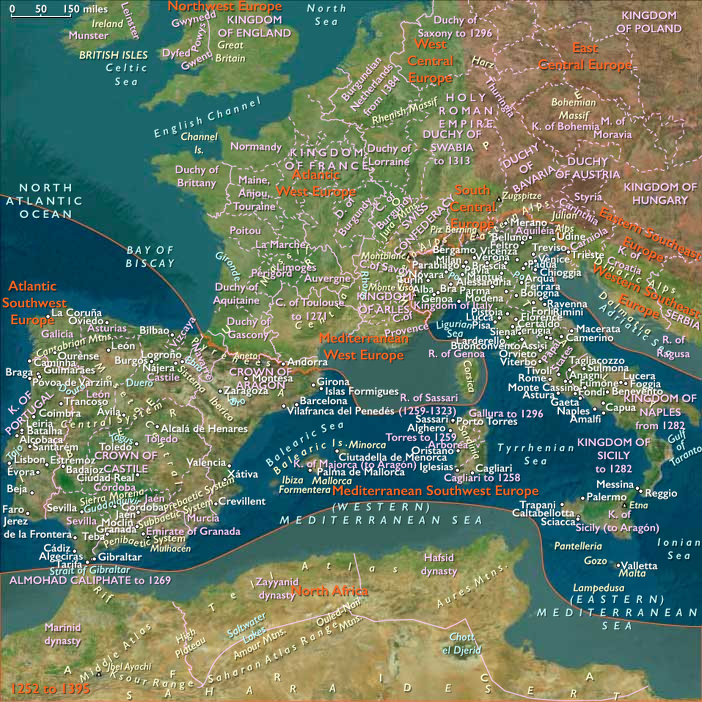
Subregions
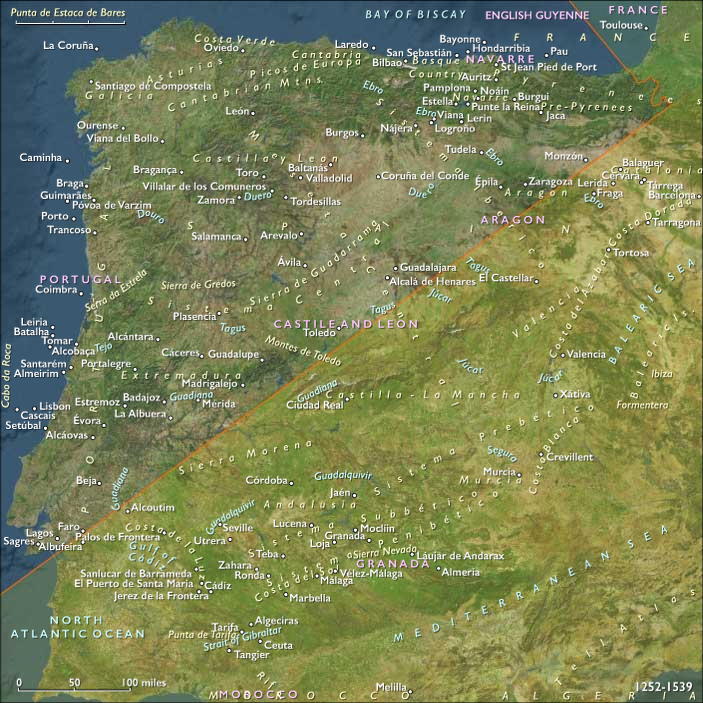
Years: 1252 - 1395
Locations
People
Groups
- Benedictines, or Order of St. Benedict
- Islam
- Portuguese people
- León, Kingdom of
- Burgundy, Duchy of
- Christians, Roman Catholic
- Portugal, (second) County of
- Hospitallers of St. John of Jerusalem
- Templar, Knights (Poor Knights of Christ and of the Temple of Solomon)
- Almohad Caliphate
- Portugal, Burgundian (Alfonsine) Kingdom of
- Santiago, Order of
- Calatrava, Order of
- Franciscans, or Order of St. Francis
- Calatrava, Order of
- Dominicans, or Order of St. Dominic
Topics
Subjects
Regions
Subregions