
Filters:
The Battle of Bouvines (July 27, 1214): …
Years: 1214 - 1214
July
The Battle of Bouvines (July 27, 1214): Philip II’s Decisive Victory
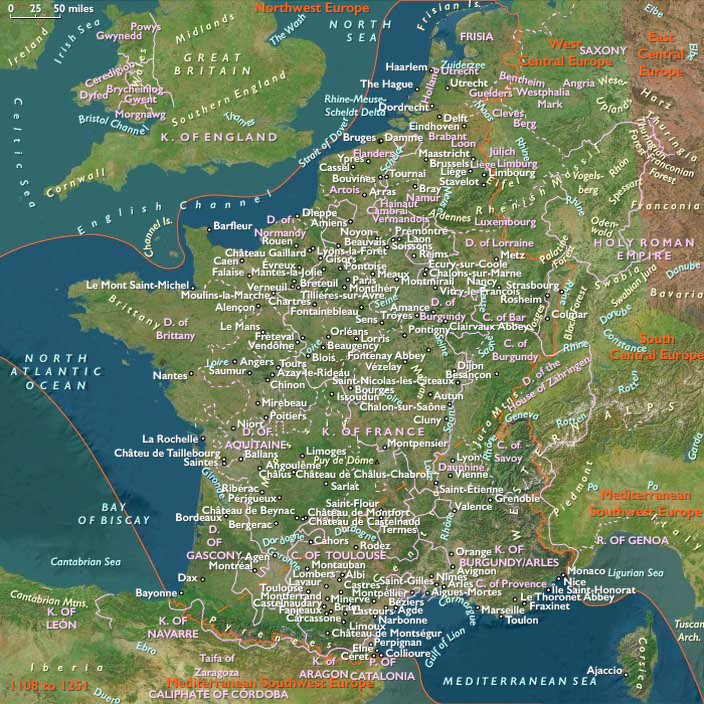
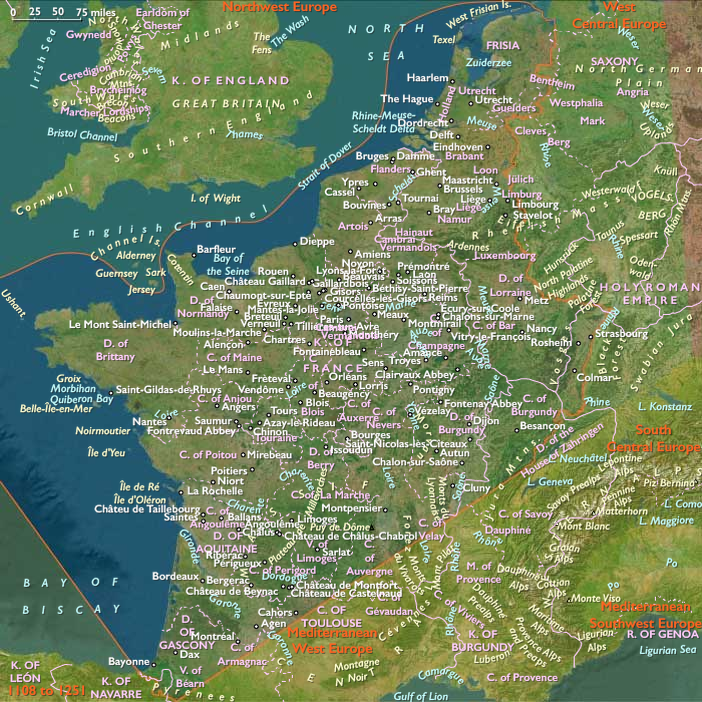
On July 27, 1214, the French and Anglo-Flemish-Imperial armies unexpectedly found themselves in close proximity near the Bridge of Bouvines, a tributary of the River Lys. This led to the climactic battle of Bouvines, where Philip II of France, despite being outnumbered, achieved a decisive victory over the coalition of Otto IV, King John of England, and Count Ferdinand of Flanders.
The Forces at Bouvines
- Philip II’s French army numbered around 15,000 troops.
- The Allied coalition (composed of German, Flemish, English, and Boulognese forces) had approximately 25,000 troops, giving them a numerical advantage.
- However, Philip’s well-organized and loyal army contrasted with the divided and poorly coordinated allies, leading to their eventual collapse.
The Battle: A Close Struggle
- Philip II fought on the front lines, but during the intense combat, he was unhorsed by Flemish pikemen.
- His plate mail armor saved his life, preventing a fatal blow.
- Meanwhile, the French knights and infantry pushed back the allied forces, particularly targeting the Imperial and Flemish divisions.
The Turning Point: Otto Flees, and Ferdinand Is Captured
- Otto IV’s horse was wounded and panicked, carrying the emperor off the field. Seeing their leader flee in disarray, the Imperial troops lost morale and broke ranks.
- Count Ferdinand of Flanders was severely wounded and captured, leaving the Flemish forces leaderless.
- With their commanders either captured or fleeing, the remaining coalition forces realized the battle was lost and began to retreat.
Philip’s Pursuit and Final Victory
- The French forces initially pursued the fleeing troops, but Philip, assessing the situation strategically, ordered a recall.
- With nightfall approaching and the number of captured prisoners already overwhelming, he wisely chose to secure his victory rather than risk further engagements.
- His troops had pursued little more than a mile before he halted them, ensuring that his valuable prisoners—including Ferdinand of Flanders—remained secure.
Consequences of the Battle of Bouvines
-
Philip II Secures French Dominance
- This victory consolidated Capetian rule over Normandy, Anjou, Maine, and Poitou, permanently weakening English claims in France.
- Philip’s prestige soared, cementing his legacy as one of France’s greatest medieval kings.
-
Otto IV Loses Imperial Authority
- Otto’s humiliating flight from the battlefield shattered his reputation, leading to his eventual deposition as Holy Roman Emperor.
- His rival, Frederick II of Hohenstaufen, soon replaced him, ushering in a new era in German politics.
-
John of England Is Left Isolated
- John’s allies were decisively crushed, leaving him vulnerable in England.
- Discontent among his English barons grew, culminating in the First Barons’ War (1215–1217) and the signing of Magna Carta.
-
The Fate of Count Ferdinand of Flanders
- Captured in battle, Ferdinand was imprisoned for 13 years in Paris, solidifying Philip’s control over Flanders.
The Battle of Bouvines (1214) was the most significant victory of Philip II’s reign, securing France’s dominance over England and the Holy Roman Empire, while shaping the political landscape of medieval Europe.
Locations
People
- Blanche of Castile
- Frederick II
- Infante Ferdinand of Portugal
- John of England
- Louis VIII of France
- Otto IV of Brunswick
- Pandulf Verraccio
- Philip II of France
- Pope Innocent III
- Renaud of Boulogne
Groups
- Germans
- Papal States (Republic of St. Peter)
- Flemish people
- Flanders, County of
- Holy Roman Empire
- French people (Latins)
- France, (Capetian) Kingdom of
- Christians, Roman Catholic
- Portugal, Burgundian (Alfonsine) Kingdom of
- England, (Plantagenet, Angevin) Kingdom of
Topics
- Guelphs and Ghibellines
- German Civil War of 1197-1214
- Anglo-French War of 1202-14
- Bouvines, Battle of
Commodoties
Subjects
Regions
Subregions
Years: 1214 - 1214
July
Locations
People
- Blanche of Castile
- Frederick II
- Infante Ferdinand of Portugal
- John of England
- Louis VIII of France
- Otto IV of Brunswick
- Pandulf Verraccio
- Philip II of France
- Pope Innocent III
- Renaud of Boulogne
Groups
- Germans
- Papal States (Republic of St. Peter)
- Flemish people
- Flanders, County of
- Holy Roman Empire
- French people (Latins)
- France, (Capetian) Kingdom of
- Christians, Roman Catholic
- Portugal, Burgundian (Alfonsine) Kingdom of
- England, (Plantagenet, Angevin) Kingdom of
Topics
- Guelphs and Ghibellines
- German Civil War of 1197-1214
- Anglo-French War of 1202-14
- Bouvines, Battle of
Commodoties
Subjects
Regions
Subregions