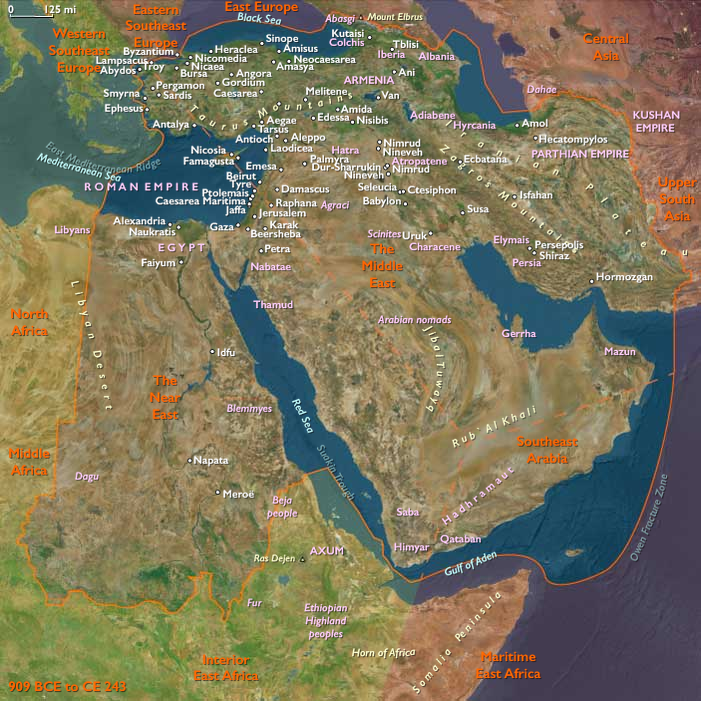
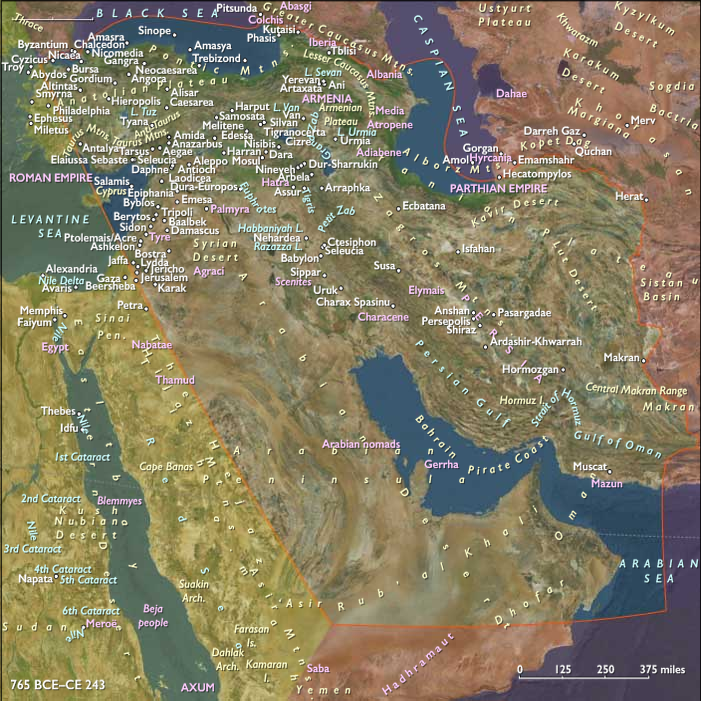
The Third Syrian War, also known as the Laodicean War or War of Berenice, begins with one of the many succession crises that plagues the Hellenistic states.
Antiochus II leaves two ambitious mothers, his repudiated wife Laodice and Berenice Syra, the daughter of Egypt's Ptolemy II, in a competition to put their respective sons on the throne.
Laodice claims that Antiochus had named her son heir while on his deathbed, but Berenice argues that her newly born son is the legitimate heir.
Berenice asks her brother Ptolemy III, the new Ptolemaic king, to come to Antioch and help place her son on the throne.
When Ptolemy arrives, Berenice and her child have been assassinated.
Ptolemy declares war on Laodice's newly crowned son, Seleucus II, in 246 BCE, and campaigns with great success.
He wins major victories over Seleucus in Syria and Anatolia, briefly occupies Antioch and, as a recent cuneiform discovery proves, even reaches Babylon.
These victories are marred by the loss of the Cyclades to Antigonus Gonatas in the Battle of Andros.
Seleucus has his own difficulties.
His domineering mother asks him to grant co-regency to his younger brother, Antiochus Hierax, as well as rule over Seleucid territories in Anatolia.
Antiochus promptly declares independence, undermining Seleucus' efforts to defend against Ptolemy.
Ptolemy, in exchange for a peace in 241 BCE, is awarded new territories on the northern coast of Syria, including Seleucia Pieria, the port of Antioch.
The Ptolemaic kingdom is at the height of its power.